Which Activity Bus Is Right for Your Situation?
Activity buses serve five distinct buyer types — and your right spec varies significantly depending on how you plan to use the vehicle. Use this matrix to narrow your shortlist before you start browsing listings.
| Buyer Type | Recommended Bus Type | Typical Budget | Key Consideration |
|---|
| School District | Type C or D conventional (Thomas C2, Blue Bird All American RE), 48–72 passenger | $35,000–$219,000 (used–new) | Must meet FMVSS 222 seat standards; CDL required for GVWR over 26,001 lbs; verify state activity-bus endorsement rules |
| Church / Nonprofit | MFSAB cutaway (Ford E-350/E-450, Chevy 3500) on Collins or Starcraft body, 14–24 passenger | $17,500–$125,000 (used–new) | Stay at or under 14 passengers + driver and under 26,001 lbs GVWR to avoid CDL; gasoline chassis lowers maintenance cost vs. diesel for low-mileage fleets |
| Skoolie Conversion | Flat-nose Type C (Thomas Flat Nose, Blue Bird FE), 35–47 ft, pre-2010 diesel | $10,900–$40,000 | Ceiling height 6'3"+; avoid DPF/SCR diesel emissions systems (2007+); inspect frame crossmembers for rust before purchase |
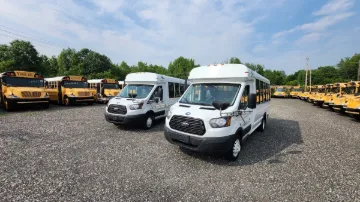
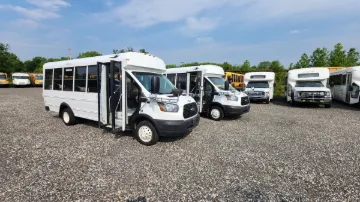
| Shuttle Operator | Ford Transit or Chevy 3500-based MFSAB, 12–24 passenger, under 150k miles | $18,000–$85,000 | Activity-bus classification may require additional DOT authority for interstate routes; confirm with state DMV before purchase |
| Exporter | Any Type C/D diesel, 150,000–250,000 miles acceptable, no restrictions on emissions compliance | $10,900–$35,000 | Confirm destination country's left/right-hand-drive requirements; check export title and lien clearance before shipping |
Activity Bus Types: Capacity, Size, and CDL Requirements
School bus classifications (Type A through D) are set by the National Highway Traffic Safety Administration (NHTSA) and apply to activity buses as well. The table below gives you the specs you need before you start calling sellers.
| Type | Passenger Capacity | Typical Length | GVWR Class | CDL Required? | Used Price Range |
|---|
| Type A (MFSAB) | 10–24 passengers | 20–27 ft | Class 3–5 (up to 19,500 lbs) | No, if ≤14 passengers + driver and GVWR under 26,001 lbs | $17,500–$125,000 |
| Type B | 16–36 passengers | 23–35 ft | Class 5–6 (up to 26,000 lbs) | Borderline — verify GVWR on the data plate | $20,000–$65,000 |
| Type C (Conventional) | 24–72 passengers | 35–40 ft | Class 7–8 (26,001–33,000 lbs) | Yes — Class B CDL + P and S endorsements required | $20,000–$177,000 |
| Type D (Transit-Style RE) | 36–90 passengers | 35–40 ft | Class 8 (33,001+ lbs) | Yes — Class B CDL + P and S endorsements required | $30,000–$219,000 |
Price ranges based on current BusesForSale.com inventory. CDL thresholds are federal minimums — your state may impose stricter rules. Always verify with your state DMV before purchase. See our school bus weight limits and GVWR guide for a deeper breakdown.
Activity Bus Body Types Explained
"Activity bus" is a use classification, not a body style. You'll see the same MFSAB route designation on everything from a compact Ford E-350 cutaway to a full-size Thomas C2. Knowing the body-style differences saves you time on your search — and keeps you from buying more bus than you can legally operate.
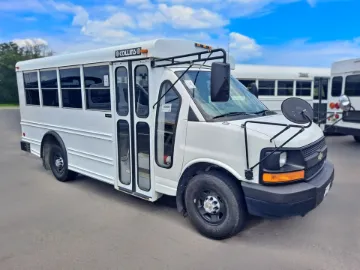
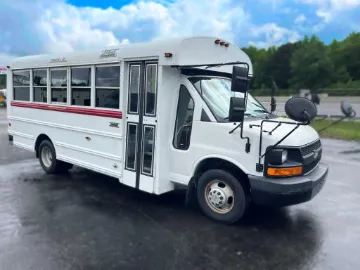
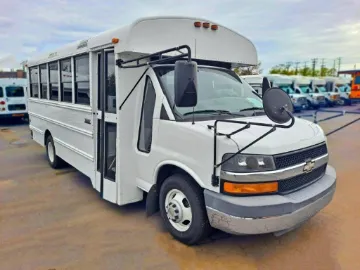
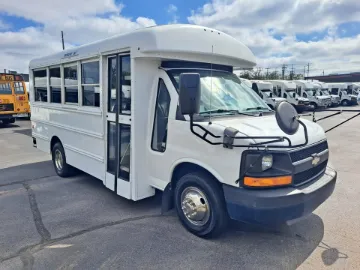
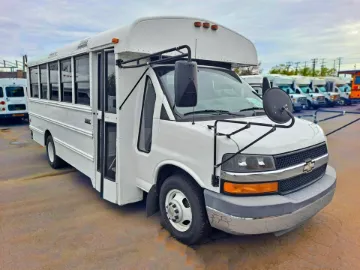
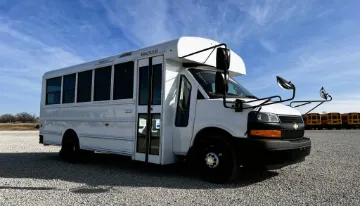
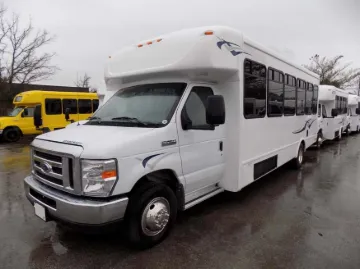
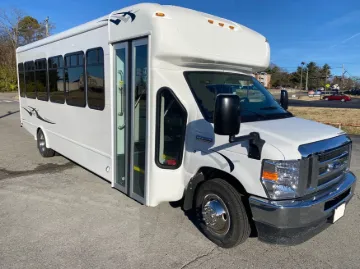
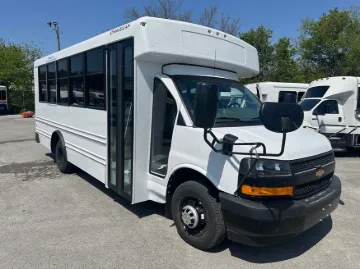
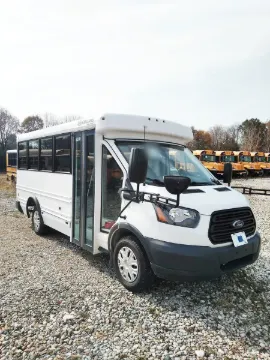
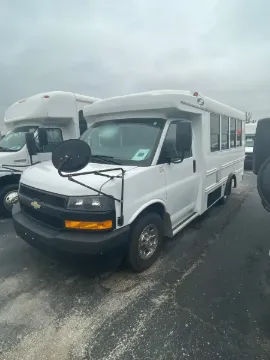
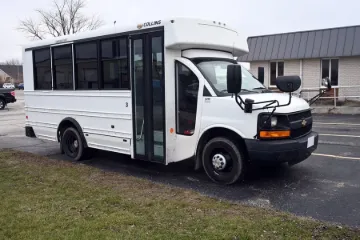
MFSAB cutaway (the most common activity bus). A Multi-Function School Activity Bus (MFSAB) body is built on a standard van or medium-duty cutaway chassis — think Ford E-350, Ford E-450, Chevrolet 3500, or GMC 4500. Bodies are installed by converters like Collins, Starcraft, Arrow, and Magellan, typically seating 12–24 passengers. You'll find MFSAB cutaways on our platform ranging from $17,500 to $125,000 depending on year, mileage, and builder. Most fall under 26,001 lbs GVWR. That's what makes them the go-to choice for churches and nonprofits — you don't need a CDL driver on the payroll.
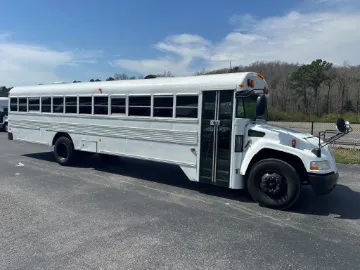
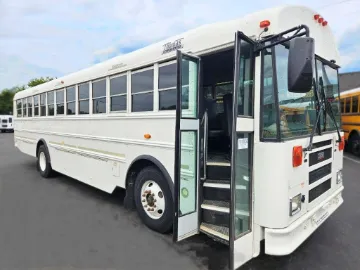
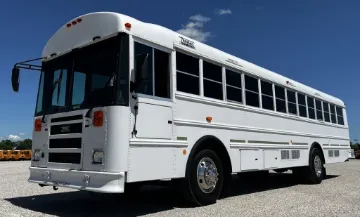
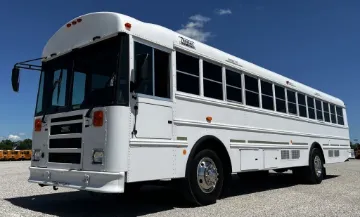
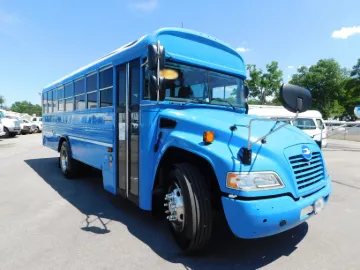
Conventional (Type C) school bus body. The classic doghouse-nose bus — engine hood in the front, driver's compartment set back. Builders like Thomas Built (C2, HDX), Blue Bird (All American), and IC Bus produce conventional bodies on Freightliner, International, and proprietary chassis. Type C activity buses seat 24–72 and run roughly $20,000–$177,000 used. A 2016 Thomas Freightliner C2 with 88,000 miles recently listed at $51,000 — a useful benchmark as you price your search. Plan on a Class B CDL with Passenger (P) and School Bus (S) endorsements to operate one legally.
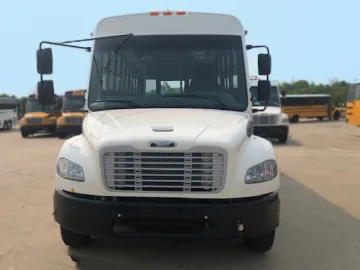
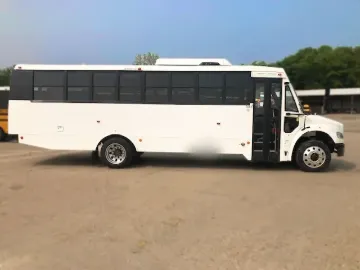
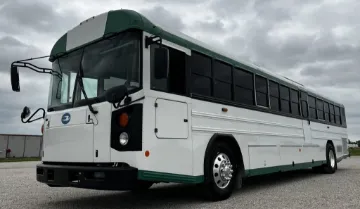
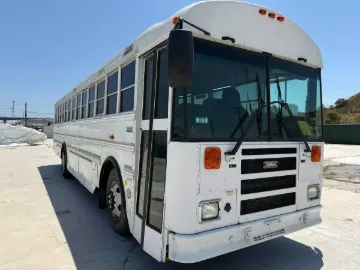
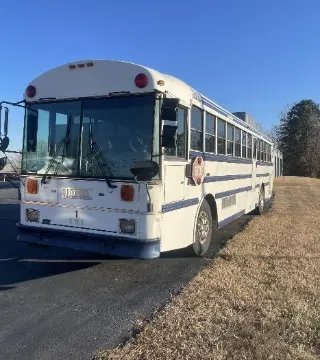
Flat-nose (Type C/D transit-style front). Flat-nose buses — including the Thomas Flat Nose, Blue Bird FE, and IC transit-style units — put the driver over or ahead of the front axle. They offer excellent maneuverability in tight school lots and more interior length per overall vehicle length. Skoolie converters favor these for their generous ceiling height (often 6'2"–6'5" interior clear). Our current flat-nose activity bus listings range from $10,900 to $51,000.
Transit-style rear-engine (Type D). The Blue Bird All American RE, Thomas Saf-T-Liner HDX, and similar rear-engine models offer the highest capacity per footprint and the smoothest ride — the engine is at the back, away from the passenger compartment. These are the vehicles of choice for large school districts running high-volume activity routes. Expect $30,000–$219,000 depending on configuration and age. New 2025–2026 Thomas units with 44–48 passenger capacity currently list between $196,000 and $219,000.
Buying Guides for Activity Bus Owners
The purchase price is only the beginning. Before you write the check, you need to understand the compliance, operating, and ownership costs that follow the bus home. These guides cover what you need to know.
Popular Activity Bus Models on BusesForSale.com
These are the brands and models currently active in our activity bus inventory, based on live listing data. Click through to browse available units.
- Thomas Built Buses (C2, HDX, Flat Nose, Saf-T-Liner EF) — the most common conventional activity bus in school district fleets; diesel-powered, purpose-built school bus chassis. Browse Thomas activity buses →
- Blue Bird (All American, Vision, FE Flat Nose) — a leading manufacturer offering Type C and D configurations with diesel and alternative-fuel options. Browse Blue Bird activity buses →
- Collins Bus (MFSAB on Ford and Chevrolet chassis) — the dominant builder for non-CDL cutaway activity buses; available on Ford E-350, E-450, and GMC 4500 chassis. Browse Collins MFSAB buses →
- Starcraft Bus (MFSAB on Ford and Chevrolet chassis) — cutaway-body competitor to Collins; common in church and nonprofit fleets. Browse Starcraft activity buses →
- IC Bus (CE, RE series) — International's school bus line; available in Type C and D configurations with Navistar DT466 and MaxxForce engine platforms. Browse IC Bus activity buses →
⚑ Model-specific landing pages for Thomas C2, Blue Bird All American, Collins MFSAB, Starcraft, and IC Bus do not currently exist in the BusesForSale.com URL structure. These links fall back to the activity-buses category page. Recommend creating dedicated model pages at /buses/thomas-c2, /buses/blue-bird-all-american, etc. to capture high-intent model search queries.
Frequently Asked Questions About Activity Buses
How much does a used activity bus cost?
Used activity bus prices on our platform currently start around $10,900 for older high-mileage units — a 2008 Blue Bird Vision at 126,000 miles is a real example. Recent-year, low-mileage used units run up to $85,000. New 2025–2026 Thomas and IC Bus activity buses list between $108,000 and $219,000. If you want a reliable used diesel Type C with under 90,000 miles, budget $30,000–$55,000.
What mileage is too high for a used activity bus?
Activity buses built on full school bus chassis (Thomas, Blue Bird, IC Bus) with diesel engines are designed for 250,000–350,000 miles when properly maintained. Most buyers treat 150,000 miles as the threshold for a thorough pre-purchase inspection — particularly of the engine, transmission, and frame. Cutaway MFSAB units on van chassis (Ford E-350, Chevy 3500) typically age out sooner; 120,000–150,000 miles warrants extra scrutiny.
Do I need a CDL to drive an activity bus?
It depends on the vehicle's GVWR (Gross Vehicle Weight Rating) and passenger count. Under federal rules, you need a CDL if your bus exceeds 26,001 lbs GVWR or carries 16 or more passengers including the driver. Most Collins and Starcraft MFSAB cutaways on a Ford E-350 or Chevy 3500 chassis fall below both thresholds — so you're likely fine. Full-size Thomas or Blue Bird conventional buses? You'll always need a Class B CDL with P and S endorsements. Check the data plate — your bus's GVWR is stamped right there.
What is an MFSAB and how is it different from a school bus?
If you're shopping for an MFSAB (Multi-Function School Activity Bus), here's the key distinction: it transports students only to school-sponsored activities — field trips, athletic events, club outings — never on a regular home-to-school route. That single distinction changes the regulatory framework: MFSABs don't require the same yellow color, flashing lights, or stop-arm equipment as home-to-school school buses in most states. They do still have to meet FMVSS 222 seating standards. If you're unsure, check your state department of education's rules.
Can you legally convert an activity bus into a skoolie?
Yes — once you buy an activity bus out of school service, you can retitle it as a non-school-use vehicle and convert it. Your key steps: retitle at your state DMV, remove school bus markings (yellow paint, stop arm, lights), and ensure your conversion meets local RV or vehicle habitability codes if you plan to register it as an RV. Some states make this straightforward; others require inspection. See our bus inspection and registration guide for a step-by-step checklist.
What should I inspect before buying a used activity bus?
When you inspect a used activity bus, focus on five areas: (1) frame crossmembers — you're looking for rust, cracks, and prior welds; (2) engine and transmission — check for oil leaks, blue smoke, and fluid condition; (3) brakes and air system — inspect drums, shoes, and the air dryer if equipped; (4) body and floor — soft floor spots tell you water got in somewhere; (5) service records — DOT inspection logs show you whether the bus was maintained by a fleet or an individual. Budget $150–$300 for an independent pre-purchase inspection. It's almost always worth it.