Which Double Decker Bus Is Right for You?
Double decker buses attract two very different types of buyers: commercial operators who want maximum passenger capacity, and converters who want the unique two-story platform. Your use case should drive every decision — body style, origin, age, and price. Here's how the main buyer types match up.
Double Decker Bus Buyer-Fit Matrix — busesforsale.com| Buyer Type | Recommended Bus | Typical Budget (Used) | Key Consideration |
|---|
| Charter / Tour Operator | Van Hool TD925 (73–77 passenger) | $150,000–$330,000 | Service history and mileage; TD925 units with 300,000–640,000 miles are common. Verify restroom, A/C, and ADA lift condition. CDL with P endorsement required. |
| Event / Wedding / Party | Vintage British unit (open-top or closed) | $55,000–$175,000 | Visual appeal and structural integrity matter more than mileage. Check rust on frame rails and body seams; import paperwork and title history. |
| Skoolie / RV Conversion | British double decker (Leyland, Scania, Volvo B7) | $55,000–$130,000 | Two floors give you ~600–800 sq ft of buildable space. Lower deck for living; upper for sleeping or roof deck. Check structural rust, roof condition, and steering system. |
| Collector / Museum | Routemaster, Guy Arab, Daimler (1940s–1960s) | $95,000–$400,000 | Originality and provenance command premium prices. Restoration cost can equal or exceed purchase price. Verify engine and transmission type before buying. |
| Commuter Shuttle Operator | Van Hool TD925 or Volvo B7 open/closed top | $65,000–$200,000 | ADA compliance, route clearance height, and driver availability (Class B CDL) are the practical hurdles. Verify bridge heights on your route before purchase. |
| Exporter / International Buyer | Any running unit — condition negotiable | $30,000–$100,000 | Running/drivable condition preferred; title must be clear. Export documentation requirements vary by destination country. Left-hand-drive units command a premium in some markets. |
Double Decker Bus Types: Dimensions, Capacity & Price Ranges
Not all double deckers are the same size. The gap between a vintage Routemaster and a modern Van Hool TD925 is enormous — different height, different width, different intended purpose. Here's how the main types on the U.S. used market compare.
Double Decker Bus Specifications — busesforsale.com| Bus Type | Passenger Capacity | Overall Height | Length | CDL Required? | Typical Used Price |
|---|
Van Hool TD925
Modern U.S.-spec coach | 73–77 seated | ~14.0 ft (170 in) | 45 ft | Yes — Class B CDL + P endorsement | $150,000–$330,000 |
British Transit (Leyland Olympian, Volvo B7)
Closed or open-top | 70–84 seated | ~14.5 ft (closed) / ~13.0 ft (open-top) | 33–40 ft | Yes — Class B CDL | $55,000–$130,000 |
Vintage British (Routemaster, Guy Arab, Daimler)
1940s–1970s | 56–72 seated | ~14.0–14.5 ft | 26–30 ft | Yes — Class B CDL | $95,000–$400,000 |
Converted / Limo Double Decker
e.g., 1995 Dennis Dragon Limo Conversion | 30–50 (reconfigured) | ~13.5–14.5 ft | 30–40 ft | Yes — Class B CDL | $55,000–$120,000 |
Open-Top Sightseeing
e.g., Volvo B7 Open Top | 60–80 seated | ~13.0 ft (open deck) | 30–40 ft | Yes — Class B CDL | $60,000–$130,000 |
Height clearance is your first routing check. At 13.5–14.5 ft, double deckers are taller than most single-deck coaches (typically 12–13 ft). Many older bridges, parking garages, and low overhangs on U.S. streets will be a problem. Plan your route before you buy, not after.
Double Decker Bus Models: What's on the U.S. Market
The double decker market in the U.S. is split between modern Belgian-built coaches and a steady stream of imported British units. Each comes with very different costs, use cases, and maintenance realities. Here's what you'll encounter.
Van Hool TD925 — The Modern U.S. Standard
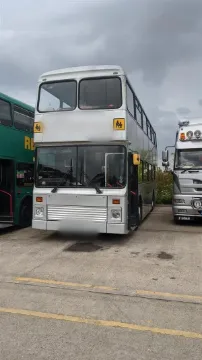
If you need a double decker that can pass a DOT inspection tomorrow and carry 73–77 passengers in comfort, the Van Hool TD925 is the answer. Built in Belgium for the North American market, these units were originally deployed by corporate commuter operations and sightseeing services. You'll find 2009–2017 model years listed here, most with 300,000–640,000 miles. Prices run $150,000–$330,000 depending on year and condition. Restrooms, A/C, ADA lifts, and luggage storage are standard. Parts sourcing in North America is manageable but not as simple as domestic makes — factor that into your maintenance planning.
Leyland Olympian & Titan — The British Workhorse
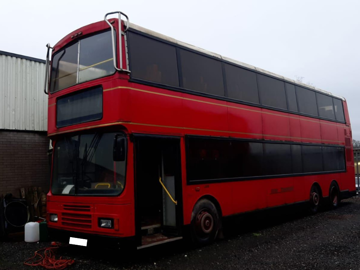
The Leyland Olympian (1980–1997) is the most common British double decker on the U.S. used market. Built for urban transit in the UK, these units are mechanically robust, with Gardner or Cummins diesel engines and familiar Allison automatics in later builds. At $55,000–$130,000, they're the entry point for event operators and conversion buyers. The earlier Leyland Titan PD2 (1950s–1960s) commands a collector premium — a 1965 PD2 is listed here at $109,000. For conversion projects, the Olympian's flat floor and structural steel framing are particularly well-suited.
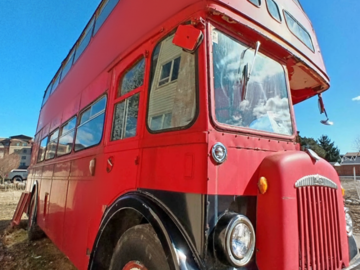
Routemaster, Guy Arab & Vintage Collectibles
The AEC Routemaster is the most iconic double decker ever built — the original red London bus. A pristine 1964 example is listed here at $400,000. Guy Arabs (1940s–1960s) and Daimler Fleetlines from the same era occupy the same collector tier. These aren't daily-driver buses — they're investments, film/event assets, and museum pieces. Restoration costs can be significant: expect $30,000–$100,000 for a full mechanical and cosmetic refresh on a vintage British unit. Buy only from sellers who can document the provenance and mechanical history.
Volvo B7 & Scania — Open-Top Options
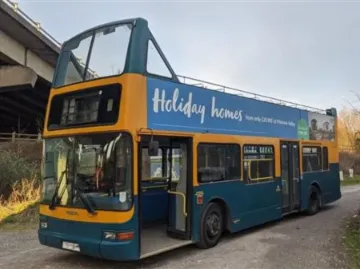
Open-top double deckers are purpose-built for sightseeing, tours, and outdoor events. The Volvo B7 Open Top (listed here at $65,000) and the 1992 Scania Front Loader ($55,000) are the most common examples on the U.S. market. At roughly 13 ft tall with the top deck open, they clear more bridges than closed-top units — a real operational advantage in older cities. You'll want weather protection planning for the upper deck: retractable covers or passenger communication systems for rain events. Both make excellent branded sightseeing platforms.
Double Decker Conversions — Limo, Event & RV Builds
The 1995 Dennis Dragon Limo Bus Conversion listed here ($90,000) illustrates what's possible with a double decker platform: the lower deck becomes a luxury event space while the upper deck serves as a viewing lounge or sleeping area. For RV-style conversions, a British double decker gives you approximately 600–800 sq ft of buildable space across two floors — far more than a standard skoolie. Lower deck ceiling heights on Olympian-class buses run 6.5–7 ft. Upper deck ceilings are shorter (typically 5.5–6 ft) due to the roofline. Account for that in your floor plan.
Essential Reading Before You Buy
Weight, GVWR & Bridge Clearance. A loaded Van Hool TD925 can exceed 60,000 lbs. Height at 14 ft trips low bridges. Both GVWR and overall height affect where you can legally operate. Our bus weight limits and GVWR guide covers how to read the data plate, what weight classes mean in practice, and which thresholds trigger CDL requirements.
Insurance for Charter & Event Buses. Insuring a 77-passenger double decker coach for commercial passenger service is a specialized market. Your coverage requirements depend on whether you operate under a DOT authority, your passenger count, and the type of service. Our bus insurance types and coverage guide breaks down what operators typically need — and what they routinely underestimate.
Inspection Before You Buy. High-mileage Van Hool coaches and imported British buses need different inspection priorities. For coaches, focus on air brake integrity, ADA lift function, and transmission service records. For vintage British units, prioritize frame corrosion, rust in floor pans, and steering system play. Our bus pre-purchase inspection and registration guide walks through the 7-step process.
Motorcoach & Double Decker Conversion Guide. Thinking about converting a double decker into an RV, mobile event space, or limo build? Conversion complexity on a double decker is higher than a standard motorcoach — two floors, two electrical zones, structural load considerations on upper-deck modifications. Our motorcoach and bus conversion buyer's guide covers what to look for in a conversion-ready shell.
Double deckers are a specialized market. If height restrictions, price, or CDL requirements are a barrier, one of these categories may fit your operation better.