Which Mini Bus Is Right for You?
Mini buses cover more use cases than any other bus category on the lot. Whether you're spending the congregation's budget or sourcing transport for drop-off morning, your right fit depends on passenger count, driver licensing, and whether you need ADA access. Here's how the main buyer types stack up.
Mini bus buyer-fit matrix by use case| Buyer Type | Recommended Size | Typical Budget (Used) | Key Consideration |
|---|
| Church / nonprofit | Small to mid (8–20 passengers) | $8,000 – $22,000 | Non-CDL operability is critical — stay under 26,001 lbs GVWR and 15 passengers to avoid CDL requirement. Low mileage and clean interior matter for congregation perception. |
| Daycare / school | Small to mid (8–20 passengers) | $10,000 – $25,000 | Parents judge the vehicle on drop-off morning — prioritize clean presentation, seatbelts, and visible safety features. Confirm your state's child transport licensing rules before purchase. |
| Camps / youth programs | Mid to large mini (15–30 passengers) | $12,000 – $30,000 | Durability over aesthetics — expect rough road use and frequent loading. Storage capacity and seating flexibility matter more than interior finish. Confirm CDL requirement above 15 passengers. |
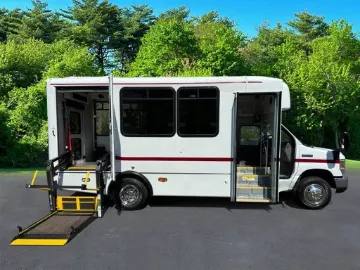
| Senior transport | Mid (14–20 passengers), low-floor preferred | $15,000 – $35,000 | ADA lift or low-floor boarding is often required — budget an additional $5,000–$12,000 for a factory-installed wheelchair lift if not already equipped. Kneeling suspension and Q'Straint securement systems add usability for mobility-impaired riders. |
| ADA / accessibility operator | Mid to large mini (14–30 passengers), lift-equipped | $18,000 – $40,000 | Confirm lift capacity (600 lb minimum for power chairs), securement track count, and ADA compliance with your funding source requirements. Low-floor transit-style bodies reduce lift travel and improve boarding speed. |
Mini Bus Capacity and Specifications
Mini buses don't follow a federal type classification the way school buses do — your sizing is defined by passenger count and gross vehicle weight rating (GVWR — the maximum safe loaded weight). The GVWR you choose determines whether your driver needs a CDL, which affects your entire operating model.
Mini bus size classes: capacity, length, GVWR, CDL requirement, and used price range| Size Class | Passenger Capacity | Typical Length | GVWR Class | CDL Required? | Used Price Range |
|---|
| Small mini bus | 8 – 14 passengers | 18 – 22 ft | Under 14,500 lbs (Class 4–5) | No CDL required in most states | $8,000 – $20,000 |
| Mid-size mini bus | 15 – 20 passengers | 22 – 28 ft | 14,501 – 26,000 lbs (Class 5–6) | CDL Class B required above 26,000 lbs GVWR — verify by vehicle | $12,000 – $28,000 |
| Large mini bus | 21 – 30 passengers | 28 – 35 ft | Over 26,000 lbs (Class 6–7) | CDL Class B + P endorsement required | $18,000 – $40,000 |
CDL rules vary by state and by whether you're transporting passengers for compensation. Confirm requirements with your state DMV before purchase. ADA-equipped units in any size class may add $5,000–$12,000 to your budget.
Mini Bus Body Styles Explained
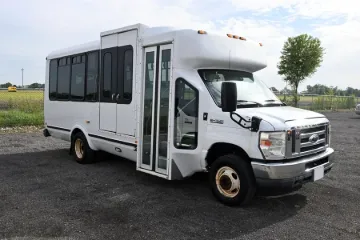
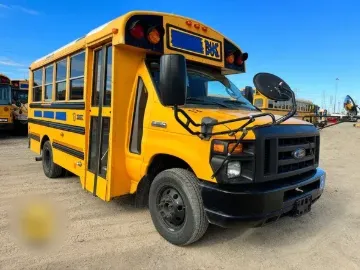
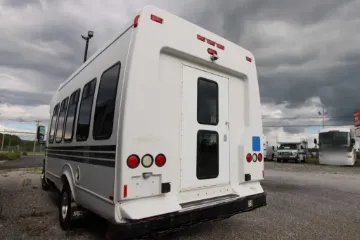
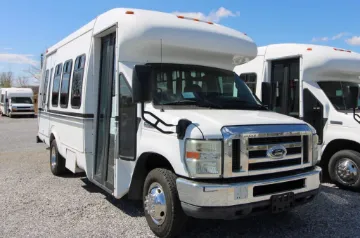
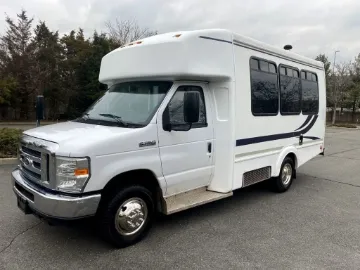
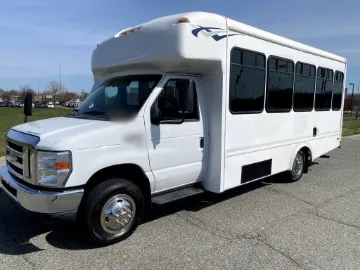
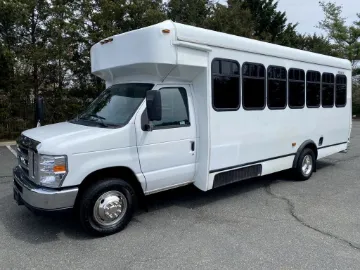
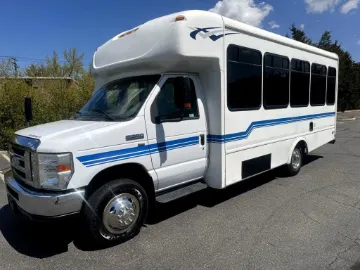
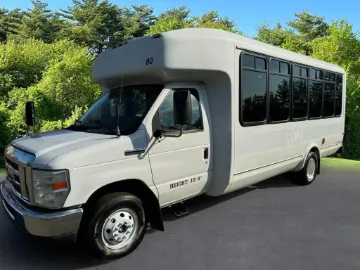
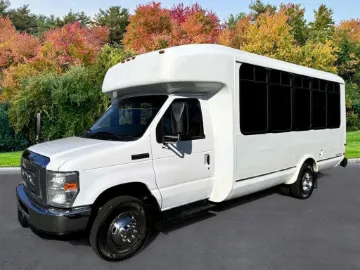
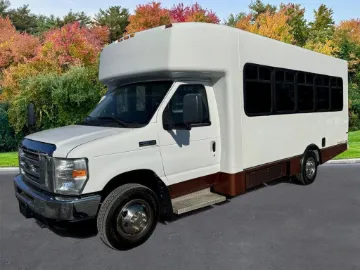
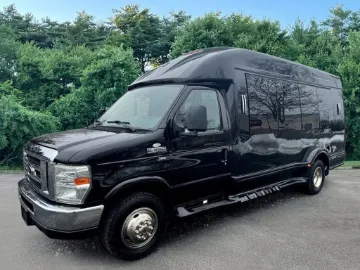
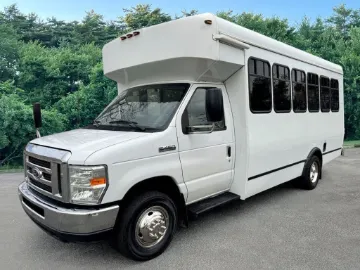
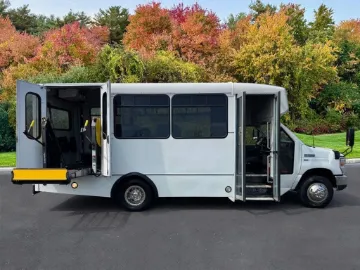
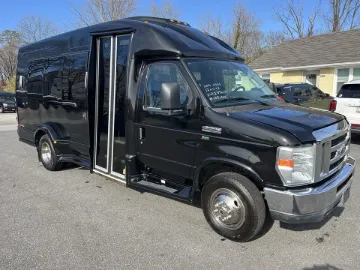
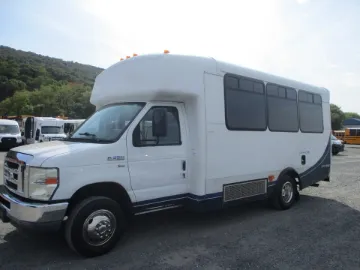
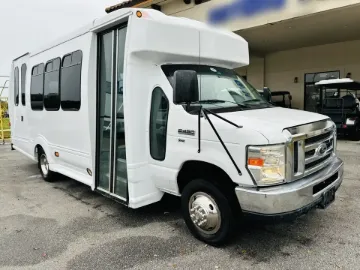
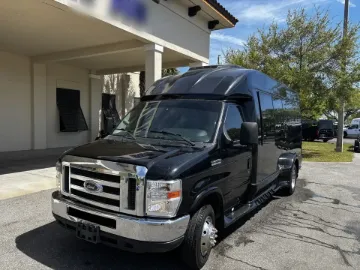
Cutaway / Van-Conversion on Ford E450 or E350 Chassis. The most common mini bus you'll find in used inventory. A bus body is bolted to a Ford E450 (up to 14,500 lbs GVWR) or E350 (up to 11,500 lbs GVWR) cutaway chassis — the cab is kept, and the rear is replaced by a purpose-built passenger compartment. You get 8–14 seats, a manageable footprint, and non-CDL operation in most configurations. The Ford chassis means parts are widely available and mechanics are easy to find in almost any market.
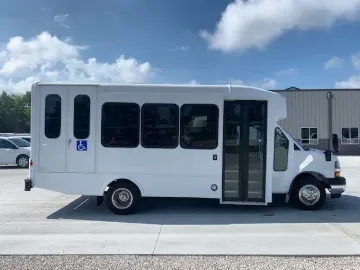
Best for: churches needing Sunday transport, daycares running daily pickup routes, and small camp programs. ADA lift kits are available as factory or aftermarket options on both E450 and E350 platforms — confirm lift capacity and securement before you buy a pre-equipped unit.
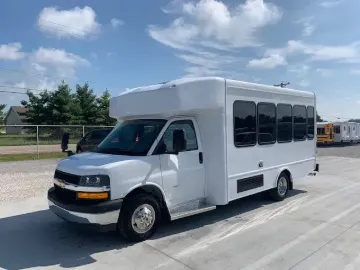
Body-on-Chassis (Conventional Mini Bus). A heavier-duty option where a full bus body is mounted on a medium-duty truck chassis — typically Chevrolet 4500/5500, Ford F-550, or similar Class 5–6 platforms. You get 15–30 seats and a more substantial structure than a cutaway, with better noise isolation and a longer service life under heavy use. GVWR commonly runs 19,000–26,000 lbs, which straddles the CDL threshold — verify the specific vehicle before you assume non-CDL operation. Starcraft and Champion produce the majority of used inventory in this class.
Best for: camp programs running rougher routes, senior transport operators who need durability, and corporate shuttle fleets with high annual mileage. ADA lift options are standard across most body-on-chassis builders — look for Q'Straint or Sure-Lok securement tracks and a 600 lb minimum lift capacity for power wheelchairs.
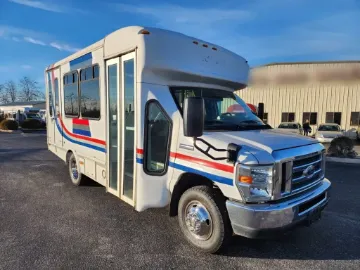
Low-Floor / Transit-Style Mini Bus. Transit-style mini buses use a flat floor with minimal or no step entry — the same boarding profile as a city bus. The floor sits 6–12 inches lower than a conventional body-on-chassis unit, which reduces lift travel distance and speeds up boarding for wheelchair users and ambulatory seniors. You'll find these less often in used inventory than cutaways or body-on-chassis units, but availability is growing as municipal fleets retire recent-generation vehicles.
Best for: ADA and senior transport operators where boarding speed and accessibility compliance are your primary requirements. If your operation receives federal or state funding, low-floor transit-style bodies often satisfy ADA requirements more cleanly than lift-equipped van conversions. See the ADA-compliant bus buying guide for lift specification and securement requirements before you purchase.
Popular Mini Bus Makes
Most used mini buses you'll find in this category are built on a Ford E450 or E350 cutaway chassis by body builders including Glaval, Starcraft, Champion, and ElDorado. When you're evaluating a specific unit, search by the body builder name alongside the chassis — parts and service follow the Ford chassis, while interior components and structural history follow the body builder.
Frequently Asked Questions
How much does a used mini bus cost?
Used mini bus prices range from $8,000 for older small cutaways to $40,000 for late-model, low-mileage large-mini units with ADA lifts. If you're targeting a well-maintained 14-passenger Ford E450 cutaway in the 100,000–150,000 mile range, expect to pay $12,000–$20,000. ADA-equipped units in any size class add $5,000– $12,000 to your budget for the lift system alone.
Do I need a CDL to drive a mini bus?
Not necessarily. If your mini bus has a GVWR under 26,001 lbs and carries 15 or fewer passengers, most states don't require a CDL — making the Ford E450 cutaway class the practical choice for non-CDL operators. Above either threshold, you'll need a CDL Class B with a Passenger (P) endorsement. Always confirm with your state DMV, as rules for compensated transport vary by state.
Can a mini bus be equipped with a wheelchair lift?
Yes — most body-on-chassis and low-floor mini buses support factory or aftermarket ADA lift installations. Look for a lift rated at a minimum 600 lb capacity (required for most power wheelchairs), Q'Straint or Sure-Lok securement tracks, and adequate floor space for the securement position. Buying a pre-equipped unit is almost always cheaper than retrofitting — expect $8,000–$15,000 for a new lift installation.
Is diesel or gas better for a mini bus?
Diesel is the better choice if you're running high annual mileage — better fuel economy, longer engine life, and higher resale value. Gas (typically Ford E450 / E350 with a 7.3L or 6.8L V10) costs less upfront and is cheaper to service in markets without diesel mechanics. If your operation runs 10,000–20,000 miles annually — typical for a church or daycare — a gas cutaway is usually the more practical buy.
How long does a mini bus last?
A well-maintained gas mini bus on a Ford E450 chassis typically runs 150,000–200,000 miles before major drivetrain work. Diesel body-on-chassis units regularly reach 250,000–300,000 miles. Body and interior condition often determines retirement before the powertrain does — inspect floors, roof seams, and lift mechanisms (if equipped) as carefully as you inspect the engine.
What's the difference between a mini bus and a passenger van?
A passenger van (Ford Transit, Ram ProMaster) seats 8–15 in a unibody vehicle with car-like ride and handling — no CDL required, lower purchase price, but limited durability under daily use. A mini bus uses a purpose-built bus body on a truck chassis: more durable, more serviceable, and better suited to multiple daily cycles. If you're running more than occasional group transport, the mini bus holds up significantly better over time.