Which School Bus Is Right for You?
School buses show up on more buyer shortlists than you might expect. Whether you're a fleet manager, a church administrator, or a first-time converter, the right type depends on your passenger count, driver licensing, and budget. Here's how the main use cases stack up.
School bus buyer-fit matrix by use case
| Buyer Type |
Recommended Type |
Typical Budget (Used) |
Key Consideration |
| School district / fleet operator |
Type C or D (66–90 passengers) |
$15,000 – $40,000 |
FMVSS 222 compliance, CDL Class B + P + S endorsements required for drivers, fleet pricing on multiples |
| Church / nonprofit |
Type A (14–20 passengers) or activity bus |
$8,000 – $18,000 |
Non-CDL operability below 26,001 lbs GVWR and 15 passengers; look for MFSAB (Multi-Function School Activity Bus) titles |
| Skoolie conversion |
Short Type C (40 ft or under), flat-nose preferred |
$3,000 – $12,000 |
Interior ceiling height (minimum 6 ft standing clearance), rust-free frame, no major accident history — cosmetics don't matter, structure does |
| Shuttle / charter operator |
Type A transit-style or activity bus |
$10,000 – $25,000 |
Passenger comfort, ADA lift option, low mileage relative to age; confirm title as activity or transit bus (not school bus) if drivers lack CDL S endorsement |
| Exporter |
Type C or D, any age |
$3,000 – $15,000 |
Clean title, no rebuilt/salvage designation, major mechanical systems intact; cosmetic and compliance condition matters less for export markets |
School Bus Types at a Glance
The federal classification system divides school buses into four types by body configuration and gross vehicle weight rating (GVWR — the maximum safe loaded weight). The type you choose determines CDL requirements, route fit, and resale value. If you're unsure which type fits your operation, the buyer matrix above is a good starting point.
School bus Type A through D: specifications and CDL requirements
| Type |
Passenger Capacity |
Typical Length |
GVWR Class |
CDL Required? |
Used Price Range |
| Type A |
Up to 24 passengers |
20 – 28 ft |
Under 10,000 lbs (A-1) or 10,001 – 14,500 lbs (A-2) |
No CDL if ≤15 passengers and <26,001 lbs GVWR |
$8,000 – $20,000 |
| Type B |
Up to 35 passengers |
23 – 30 ft |
10,001 – 26,000 lbs |
CDL Class B required above 26,000 lbs GVWR |
$10,000 – $22,000 |
| Type C |
Up to 66 passengers |
35 – 40 ft |
Over 10,000 lbs (conventional cab-over or flat-nose) |
CDL Class B + P + S endorsements |
$12,000 – $35,000 |
| Type D |
Up to 90 passengers |
40 – 45 ft |
Over 10,000 lbs (transit/flat-nose, rear engine) |
CDL Class B + P + S endorsements |
$15,000 – $50,000 |
Capacity figures reflect standard school-bus seating (three-abreast, padded compartmentalization). Actual capacity varies by manufacturer configuration and seat spacing.
Understanding the Four School Bus Types
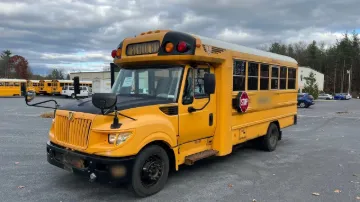
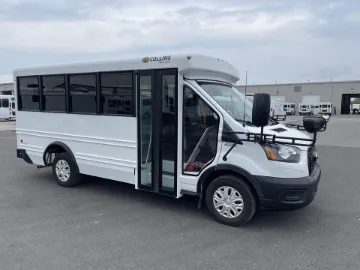
Type A — Small Body on Van or Cutaway Chassis. Type A buses are built on a van or cutaway chassis — essentially a commercial van extended into a bus body. You get seating for up to 24 passengers and a footprint that stays manageable in parking lots and urban routes. Many configurations stay under the CDL threshold, which is why they're the default choice for churches, daycares, and small nonprofits. Popular platforms include the Ford E-450 and Chevy Express cutaway.
Type B — Bus Body on Van or Truck Chassis. Type B buses extend a conventional bus body forward over the engine, mounted on a heavy-duty van or truck chassis. You're looking at seating for up to 35 passengers — useful when a Type A cutaway isn't enough but a full-size Type C feels like overkill. Less common than Type A or C in used inventory. One thing to verify before you buy: CDL requirements depend on the GVWR, so confirm whether your driver needs a license upgrade.
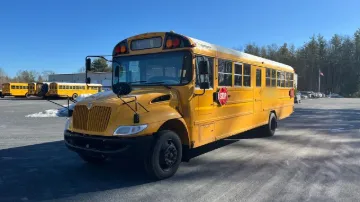
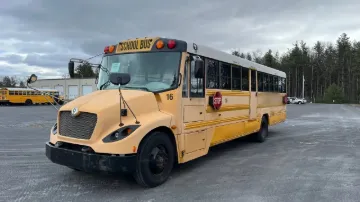
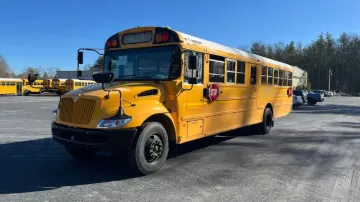
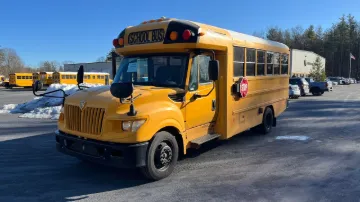
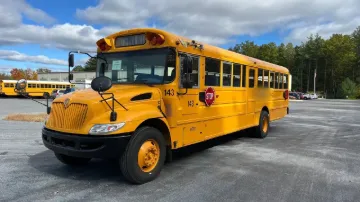
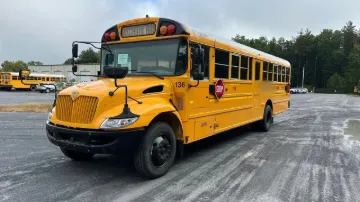
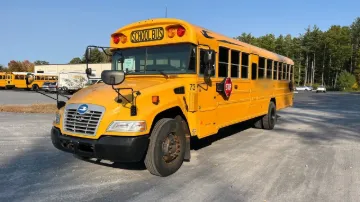
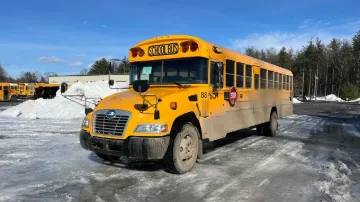
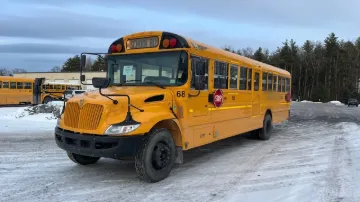
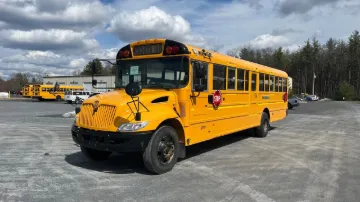
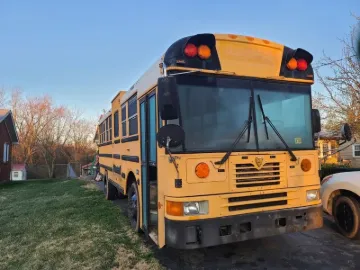
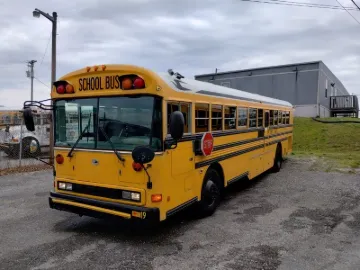
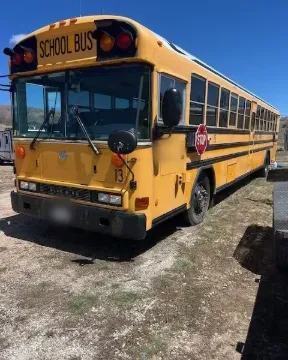
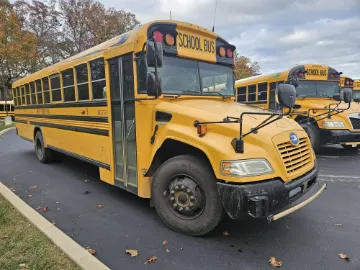
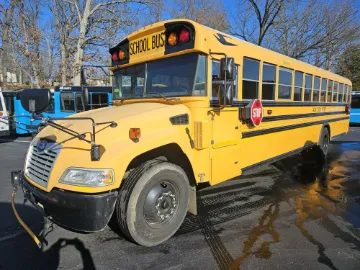
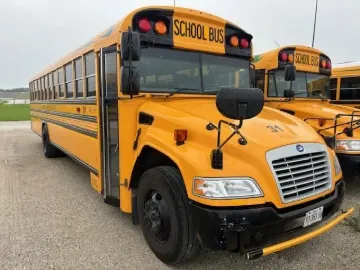
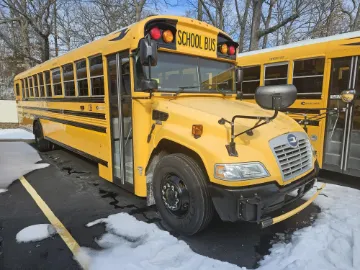
Type C — Conventional Full-Size School Bus. Type C is the iconic yellow school bus — flat-nosed or conventional cab-forward body on a heavy chassis, seating 48–66 passengers. If you're shopping used inventory, you'll find the Thomas Saf-T-Liner C2 and Blue Bird Vision dominating the listings. Both are well-supported nationwide for parts and service. Expect well-maintained examples with 100,000–200,000 miles to fall in the $15,000–$30,000 range. Your drivers will need a CDL Class B with P and S endorsements.
Type D — Transit-Style Full-Size School Bus. Type D buses use a transit (flat-nose, rear-engine) configuration — the same profile as a city bus. If you're running high-density routes, the 90-passenger capacity is hard to beat. The rear engine improves front-end serviceability and reduces passenger-area noise, which your drivers will appreciate on long runs. Used pricing typically starts around $15,000 and climbs to $50,000 for later-model, low-mileage examples. Same CDL endorsements apply as Type C.
Frequently Asked Questions
How much does a used school bus cost?
Used school bus prices range from $3,000 for high-mileage export candidates to $50,000 for late-model, low-mileage Type D units. If you're targeting the most common used option — a Type C conventional — expect to spend $12,000–$30,000 for a serviceable unit. Condition, mileage, model year, and title type (school bus vs. activity bus) all affect your final price.
How many miles is too many on a used school bus?
Diesel school buses — the majority of used inventory — routinely reach 250,000–350,000 miles with proper maintenance. Mileage alone is a poor indicator for your purchase decision: a 150,000-mile bus with documented oil changes and a clean frame is worth more than a 90,000-mile unit with deferred maintenance and rust. Always request service records and inspect the frame before you buy.
Do I need a CDL to drive a school bus?
In most states, yes — if you're transporting students. A CDL Class B with Passenger (P) and School Bus (S) endorsements is required for vehicles over 26,000 lbs GVWR carrying more than 15 passengers. Type A buses under 26,001 lbs with 15 or fewer passengers may not require a CDL, but state rules vary — confirm with your DMV before purchase.
Can I legally convert a school bus into an RV (skoolie)?
Yes, in all 50 states — but the process varies. You'll need to retitle the bus from "school bus" to "motor home" or "converted bus" with your state DMV, which typically requires photos of the completed conversion and a vehicle inspection. Most states don't allow school-titled vehicles to be registered for personal use without retitling. Budget $50–$300 for fees depending on the state.
What should I inspect before buying a used school bus?
Prioritize frame integrity (look for rust at crossmembers and outriggers), transmission function, engine oil condition, and brake system wear. Check the roof for delamination on older units. Request a Carfax or NMVTIS report to flag salvage or rebuilt titles. A pre-purchase inspection by a diesel mechanic familiar with Cummins or International engines typically costs $150–$300 and is well worth it.
What's the difference between a school bus and an activity bus title?
A school bus title restricts the vehicle to student transportation under state education regulations and requires CDL-endorsed drivers. An activity bus (also called MFSAB — Multi-Function School Activity Bus) title allows broader use — field trips, church groups, youth programs — and may not require the S endorsement. Activity-titled buses often sell at a premium for non-school buyers.