

Wheelchair Accessible Buses
Buying a used wheelchair accessible bus: Start with lift capacity, wheelchair positions, passenger seating, and whether the route requires full ADA compliance. Most buyers compare shuttle, paratransit, school, and coach platforms before choosing a layout.
- Best fit: NEMT, senior transport, schools, churches, hotels, airports, and public agencies.
- Budget: Often $18,000-$90,000 used depending on chassis, year, mileage, lift, and securement equipment.
- Check: Lift operation, Q'Straint or Sure-Lok tie-downs, door clearance, floor condition, ADA documentation, and CDL fit.
ADA Feature Checklist: What to Verify Before You Buy
Not every "ADA accessible" listing meets the same standard. Before you evaluate any unit, run through these features — each one has a compliance threshold that matters for your operation, your riders, and your funding source.
Wheelchair Lift — Capacity, Platform Size, and Manufacturer
The lift must be rated at a minimum 600 lbs to accommodate most power wheelchairs with occupant. Confirm the platform dimensions are at least 30 in wide × 48 in long — the ADA minimum for a standard occupied wheelchair. Ask for the manufacturer name and model number: Braun, Ricon, and BraunAbility are the dominant lift builders in the used market, and parts availability varies significantly. Request the last lift inspection date and service record before purchase.
Wheelchair Securement — Q'Straint or Sure-Lok Four-Point
Federal Motor Vehicle Safety Standard (FMVSS) 222 and ADA requirements mandate four-point tie-down securement for occupied wheelchairs in transit vehicles. The two dominant systems are Q'Straint and Sure-Lok — both use forward- and rear-facing belt anchors at four points on the chair frame. Verify the number of securement positions, the track condition, and whether the lap and shoulder belts for the occupant are present and undamaged. Missing or damaged belts are a compliance failure, not a cosmetic issue.
Kneeling Suspension
Kneeling suspension lowers the entry step height by 2–3 inches, significantly improving boarding for ambulatory passengers with mobility limitations and reducing the lift travel distance for wheelchair users. Not universally present on all accessible buses — verify by asking the seller to demonstrate the system in operation. If it's listed as a feature but hasn't been used, test it before you buy.
Ramp vs. Lift — Know Which You're Buying
Ramps are fixed or fold-out inclined surfaces — simpler, lower maintenance, and suitable for manual wheelchair users and ambulatory passengers. Lifts are powered platforms that raise and lower — required for power wheelchair users who cannot self-propel up a ramp grade. Most NEMT and senior transport programs require a powered lift, not a ramp. Confirm which system is installed before evaluating the unit against your program requirements.
Interior Maneuvering Clearance
ADA standards require a minimum 30 in × 48 in clear floor space at each wheelchair securement position. Measure the actual space in the vehicle — aisle obstructions, seat bases, and wheel wells can all encroach on the required clearance. Power wheelchairs are typically 25–27 in wide and 40–48 in long; confirm your most common chair type fits with room to maneuver to the securement position.
Handrails and Stanchions
ADA-compliant handrails must be present at the entry step and along the aisle for ambulatory passengers with mobility limitations. Check that handrails are securely mounted with no play or corrosion at the mounting points. Stanchions (vertical grab poles) near the securement area support passengers transferring from lift to seat. Missing or loose handrails are a fail on any accessibility inspection.
Understanding Wheelchair Positions vs. Passenger Seats
When you see a bus listed as "42 passenger + 2 wheelchair positions," those numbers don't add up to 44 total riders. Each wheelchair position occupies floor space that would otherwise hold two or three ambulatory seats — the positions replace seats, they don't supplement them.
Under ADA regulations and FMVSS 222, each wheelchair securement position requires a minimum clear floor area of 30 inches wide by 48 inches long, measured from the forward-most point of the securement track. That clearance cannot be shared with adjacent seat bases or aisle obstructions. In practice, each position typically reduces ambulatory seating capacity by two to three seats depending on vehicle width and seat pitch.
If your funding source is Medicaid, FTA Section 5310, or a state mobility grant, your program agency will specify a minimum number of wheelchair positions as a condition of vehicle eligibility. Some programs require two positions minimum; others define position specifications by chair type (manual vs. power) or by occupant weight rating. Confirm your program's vehicle eligibility requirements with your funding agency before you finalize any purchase — a vehicle that doesn't meet the position specification may be ineligible for reimbursement from day one.
How Wheelchair Positions Affect Total Capacity
Use this table to size your vehicle correctly before you shop. The ambulatory capacity after wheelchair positions are added is the number that determines your route efficiency — and whether the vehicle fits your ridership mix.
| Bus Size Class | Base Passenger Capacity | Typical ADA Positions | Ambulatory Capacity After Positions | CDL Threshold Note |
|---|---|---|---|---|
| Small accessible bus (8–14 passengers) | 8 – 14 ambulatory seats (base configuration) | 2 positions (standard); 4 positions (full accessible spec) | 4 – 10 ambulatory seats remaining depending on position count and vehicle width | Many configurations stay under 26,001 lbs GVWR — verify per vehicle before assuming non-CDL operation |
| Mid-size accessible bus (15–24 passengers) | 15 – 24 ambulatory seats (base configuration) | 2 – 4 positions (typical NEMT spec) | 11 – 20 ambulatory seats remaining | Most configurations exceed 26,000 lbs GVWR — CDL Class B + P endorsement typically required |
| Large accessible bus (25–35 passengers) | 25 – 35 ambulatory seats (base configuration) | 4 – 6 positions (transit or high-capacity NEMT spec) | 19 – 29 ambulatory seats remaining | CDL Class B + P endorsement required; confirm with state DMV for compensated passenger transport |
Actual capacity varies by body builder, seat pitch, vehicle width, and securement track configuration. Always verify the specific vehicle's seating diagram and position count against your program requirements before purchase.
Frequently Asked Questions
What lift capacity is required for a wheelchair accessible bus?
The ADA and FMVSS 222 require wheelchair lifts to accommodate a minimum combined load of 600 lbs — which covers most occupied power wheelchairs. Some bariatric chairs and their occupants exceed this; if your ridership includes bariatric passengers, look for lifts rated at 750–800 lbs. Always verify the lift's rated capacity on the manufacturer's data plate, not just the seller's description.
What's the difference between a wheelchair lift and a ramp?
A ramp is a fixed or folding inclined surface — lower maintenance, no mechanical failure risk, and suitable for self-propelling manual wheelchair users. A powered lift raises and lowers on a platform — required when riders cannot self-propel up a ramp grade, which includes most power wheelchair users and many seniors. NEMT and Medicaid-funded programs typically require a powered lift, not a ramp. Confirm which your program requires before purchase.
Does my accessible bus need to meet ADA requirements if I receive federal funding?
Yes. If your program receives FTA Section 5310, Medicaid, JARC, or similar federal or state funding, your vehicle must meet the accessibility specifications defined by your program agency — which typically align with or exceed ADA Title II requirements. Your funding agency will conduct a vehicle eligibility review before approving reimbursement. A vehicle that passes a dealer inspection may still fail program eligibility if it doesn't meet your specific grant specs.
Do I need a CDL to operate a wheelchair accessible bus?
It depends on the vehicle's GVWR and passenger count. If the bus has a GVWR above 26,000 lbs or carries more than 15 passengers, a CDL Class B with a Passenger (P) endorsement is required. Many small accessible buses on Ford E450 chassis stay under the GVWR threshold — but verify the specific vehicle's rating before assuming your drivers are exempt. State rules for compensated transport add additional requirements in some jurisdictions.
How much does a wheelchair accessible bus cost?
Used accessible buses range from $15,000 for an older small-capacity lift-equipped cutaway to $55,000+ for a late-model mid-size unit with low mileage and a recently serviced lift. Factory-installed lifts add $8,000–$15,000 to a base vehicle's value. Retrofitting a lift onto a non-equipped bus typically costs $8,000–$15,000 in parts and labor — buying pre-equipped is almost always the more cost-effective path.
How do I verify that a bus's securement system is compliant?
Ask for the securement system manufacturer and model number — Q'Straint and Sure-Lok are the two compliant systems for most NEMT and transit applications. Inspect all four anchor points per position for track damage, corrosion, or missing hardware. Test each belt for smooth retraction and positive latch. If the system has been modified or components mixed between manufacturers, treat it as non-compliant until a certified accessibility technician inspects it.
Ready to Find Your Accessible Bus?
Browse the full inventory of wheelchair accessible buses for sale — filter by lift capacity, passenger positions, state, and price.
Browse Wheelchair Accessible Buses for Sale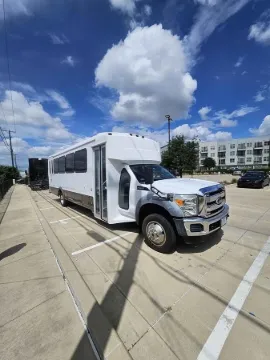
2012 Ford F-550 Glaval ADA Shuttle Bus Shuttle Bus
The 2012 Ford F-550 Glaval ADA Shuttle Bus is a fleet-ready solution designed to meet the needs of special education transport, churches, and universities. With only 18,500 miles on its powerful 6.8L Triton V10 Gas Engine and equipped with an ADA-compliant wheelchair lift, this shuttle ensures both reliability and accessibility for passengers. It's an ideal choice for organizations prioritizing safe and efficient transportation. Ford is renowned for its durable and robust chassis, while Glaval's expertise in shuttle conversion provides superior fit and finish. This combination results in a vehicle that delivers long-term reliability and compliance with regulatory standards, offering peace of mind to buyers focused on dependable service.
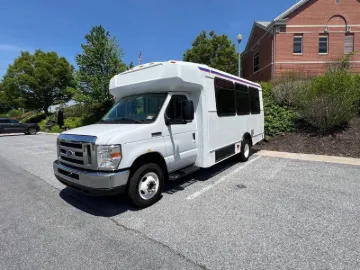
2016 Ford E450 Shuttle Bus
The 2016 Ford E450 Shuttle Bus is a fleet-ready, versatile vehicle that meets the dynamic transportation needs of churches and ministries. With seating for 12 passengers and up to 4 wheelchair positions, this ADA-compliant shuttle is ideal for non-emergency medical transport, senior care, and church group activities, ensuring your congregation can participate in mission-driven events with ease.
Ford's reputation for reliable engineering and robust performance makes it a trusted choice for organizations seeking dependable transportation solutions. This renowned quality allows your ministry to focus on its mission without the worry of mechanical issues, providing peace of mind for every journey.
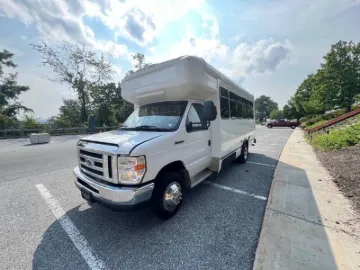
2016 Ford E450 Shuttle Bus
The 2016 Ford E450 Shuttle Bus is a fleet-ready vehicle designed to meet the needs of private student transportation services. With its robust V10 6.8L engine and automatic 5-speed transmission, this shuttle conversion delivers a smooth, reliable ride for up to 12 passengers. Accommodating up to 4 wheelchair positions, it ensures accessibility and comfort, making it an excellent choice for ADA-compliant transportation.
Ford is renowned for its commitment to quality and durability, ensuring that the E450 offers exceptional performance and longevity. This reputation makes it a trusted choice for those seeking a dependable shuttle bus for their fleet, providing peace of mind and outstanding value for buyers.
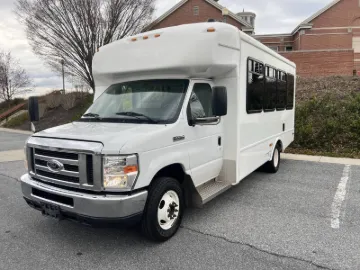
2018 Ford E450 ADA Shuttle Bus
The 2018 Ford E450 ADA Shuttle Bus is a fleet-ready solution designed to meet the diverse transportation needs of churches and ministries. With seating for 14 passengers and four wheelchair positions, this ADA-compliant shuttle is ideal for safely transporting youth groups, seniors, and congregation members to events and church activities.
Ford is renowned for its robust engineering and reliable vehicles. Choosing the E-450 ensures dependable service, allowing organizations to focus on their mission without worrying about transportation issues. Its reputation for ease of maintenance and durability makes it a smart investment for expanding ministry mobility.
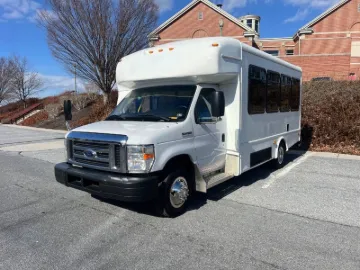
2018 Ford E450 ADA Shuttle
The 2018 Ford E450 Shuttle Bus is a fleet-ready vehicle tailored for churches and ministries seeking reliable and affordable group transportation. With seating for 12 passengers and accommodating up to 4 wheelchair positions, this ADA-compliant shuttle is perfect for non-emergency medical transport, youth groups, and senior care, ensuring safe and comfortable travel for your congregation's diverse needs.
Ford's legacy of producing durable and reliable vehicles makes the E450 an excellent choice for organizations aiming for long-term value and performance. Known for robust engineering and ease of maintenance, Ford buses provide peace of mind, allowing ministries to focus on mission-driven activities without concerns about mechanical reliability.
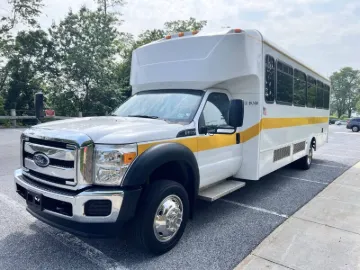
2014 Ford F550 ADA Shuttle Bus
The 2014 Ford F550 is a fleet-ready solution, ideal for special education transport and church ministries seeking reliable and ADA-compliant options. With seating for 28 passengers and space for up to two wheelchairs, this shuttle conversion ensures safety and comfort, making it perfect for those prioritizing accessibility and efficiency. With only 21,111 miles and having been fleet serviced regularly, this vehicle promises dependability for organizations committed to providing quality transportation.
Ford is renowned for manufacturing durable and dependable vehicles, and the F550 model exemplifies this tradition. With its robust V10 6.8L engine and automatic 5-speed transmission, buyers can expect long-lasting performance and peace of mind, ensuring that transportation needs are met with both reliability and efficiency.
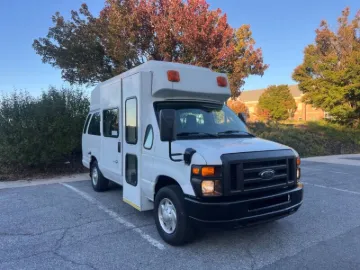
2012 Ford E350 SD ADA Passenger Van
The 2012 Ford E350 SD Mobility Van is designed for accessibility with a reliable wheelchair lift, ensuring ease of transportation for all passengers. Maintained to high standards, this van is fully reconditioned and ready for various transport needs.
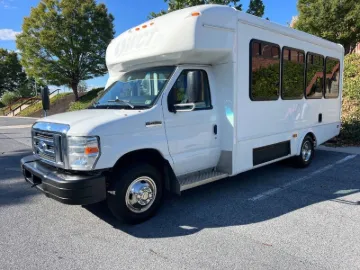
2020 Ford E450 ADA Shuttle Bus
The 2020 Ford E450 is a fleet-ready solution designed to meet the diverse transportation needs of churches and ministries. With its ADA-compliant shuttle conversion, this vehicle offers seating for 12 passengers and up to 4 wheelchair positions, making it perfect for transporting youth groups, seniors, and congregation members to various events. Whether for church services, retreats, or community outreach, this versatile shuttle ensures comfort and accessibility for all.
Ford is renowned for producing reliable and efficient vehicles, and the E-450 is a testament to this reputation. Equipped with a powerful V10 6.8L engine and smooth automatic transmission, this shuttle bus promises durability and performance for daily operations. Organizations can rely on the E450 for safe and cost-effective fleet management, providing peace of mind when prioritizing both safety and budget.
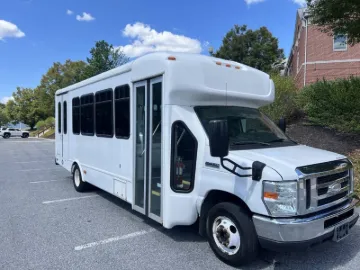
2016 Ford E450 ADA Shuttle Bus
The 2016 Ford E450 ADA Shuttle Bus is an excellent choice for churches and ministries seeking fleet-ready transportation solutions. With its 20-passenger capacity and robust 6.8L Ford V-10 engine, this shuttle bus is ideal for transporting youth groups, seniors, and congregants to church services, retreats, and outreach events. Its smooth ride and reliable performance make it a practical option for replacing aging vans or expanding ministry mobility without the need for CDL drivers.
Ford is well-regarded for its commitment to quality and durability, which ensures that the E450 Shuttle Bus meets the demands of frequent use while minimizing maintenance concerns. This reputation for reliable performance provides peace of mind, making the E450 a dependable transportation solution for organizations focused on mission-driven group travel.
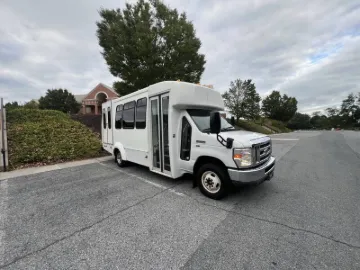
2015 Ford E350 ADA Shuttle Bus
The 2015 Ford E350 offers a versatile and inclusive transportation solution for churches and ministries looking to enhance their community outreach. With its capacity for four passengers and four wheelchair positions, this bus is ADA compliant, making it an excellent choice for transporting youth groups, seniors, and congregation members to various church activities. The robust V8 5.4L engine ensures reliable performance, and with only 70,824 miles, it is fleet-ready for your mission-driven endeavors.
Ford is renowned for producing durable and dependable vehicles, providing peace of mind to buyers who prioritize mechanical reliability. This shuttle bus, inspected until 2026, embodies Ford's commitment to quality, ensuring that your ministry can focus on its mission without worrying about transportation issues.
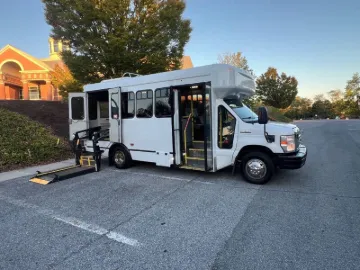
2018 Ford E-350 ADA Shuttle Bus
The 2018 Ford E350 ADA Shuttle Bus is a fleet-ready solution for churches and ministries seeking affordable, mission-driven group transportation. With seating for 12 passengers and up to 4 wheelchair positions, this ADA-compliant shuttle bus is perfectly suited for transporting youth groups, seniors, and congregation members to church services, retreats, and outreach events, offering reliable and versatile transportation for all your ministry needs.
Ford is renowned for its unwavering commitment to durability and performance. This ensures that the E350 delivers dependable transportation solutions for organizations, allowing you to focus on what truly matters—serving your community.
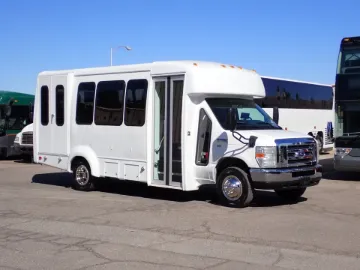
2014 Ford EC II Elkhart Coach ADA Shuttle Bus
The 2014 Ford EC II Elkhart Coach ADA Shuttle Bus is a versatile and fleet-ready solution, perfect for special education transport and university campus mobility. With seating for 12 passengers and two wheelchair positions, this ADA-compliant vehicle ensures safe and reliable transportation for all. Powered by a robust 5.4-liter V8 engine and featuring an automatic transmission, this shuttle bus is designed to meet the demands of daily use while remaining under the CDL requirement in most states, making it an ideal choice for cost-effective fleet management.
Ford is renowned for its commitment to quality and innovation in shuttle conversion, providing vehicles that are both durable and adaptable to various transportation needs. This reputation for excellence ensures that buyers receive a product that not only meets regulatory standards but also delivers long-term reliability and peace of mind.
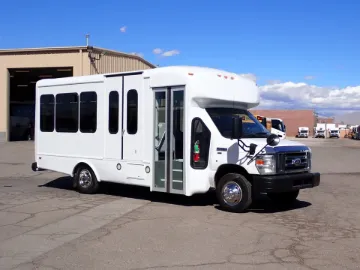
2017 Ford E350 Startrans Senator ADA Shuttle Bus
The 2017 Ford E350 Startrans Senator ADA Shuttle Bus, powered by a robust 5.4 Liter V8 engine and automatic transmission, is a fleet-ready option tailored for churches and ministries seeking reliable group transportation. With seating for 13 passengers and space for two wheelchairs, this ADA-compliant shuttle bus ensures safe and comfortable travel for youth groups, seniors, and congregation members to services, retreats, and outreach events, making it an ideal choice for mission-driven organizations.
Ford is celebrated for its dedication to producing dependable and high-quality vehicles, offering peace of mind to ministries focused on expanding their mobility without the worry of mechanical reliability. Their buses are crafted with durability and user-friendly features in mind, allowing organizations to prioritize their community missions confidently.
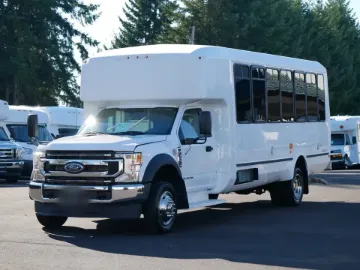
2021 Ford F550 Super Duty El Dorado Aero Elite ADA Shuttle Bus
The 2021 Ford F550 Super Duty El Dorado Aero Elite ADA Shuttle Bus is a versatile transport solution, accommodating 20 passengers and 2 wheelchairs, fully compliant with ADA standards. Powered by a Ford Powerstroke 6.7 Liter Turbo Diesel engine, it features heated mirrors and interior overhead parcel racks for added convenience.
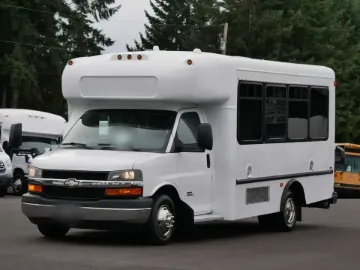
2012 Chevrolet 4500 Startrans ADA Shuttle Bus
Introducing the 2012 Chevrolet 4500 Startrans ADA Shuttle Bus, designed for accessibility with seating for 10 passengers and the ability to accommodate 4 wheelchairs, compliant with ADA standards. Powered by a Duramax 6.6 Liter V8 Turbo Diesel engine, this bus offers reliability and comfort for various transportation needs.
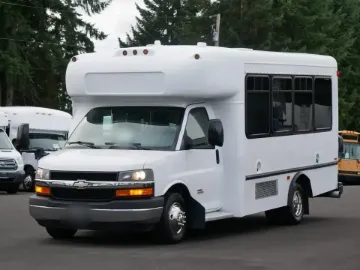
2012 Chevrolet 4500 Startrans ADA Shuttle Bus
Introducing the 2012 Chevrolet 4500 Startrans ADA Shuttle Bus, a versatile shuttle bus accommodating up to 10 passengers while also providing space for 4 wheelchairs, fully compliant with ADA standards. It features a powerful Duramax 6.6 Liter V8 Turbo Diesel engine and an automatic transmission, making it a reliable choice for various transportation needs.
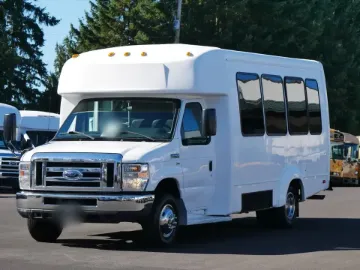
2012 Ford E450 Elkhart Coach ADA Shuttle Bus
The 2012 Ford E450 Elkhart Coach ADA Shuttle Bus is a versatile and fleet-ready vehicle ideally suited for universities seeking efficient campus mobility solutions. With seating for 14 passengers and accommodations for two wheelchairs, this ADA-compliant shuttle enhances student transportation, making it a cost-effective option for academic events and daily commutes.
Ford is renowned for its commitment to durability and reliability, making it a trusted choice for educational institutions. The Elkhart Coach model, equipped with a Triton 5.4 Liter V8 Gas Engine, ensures a smooth and powerful ride, minimizing maintenance concerns and providing peace of mind for campus fleet managers.
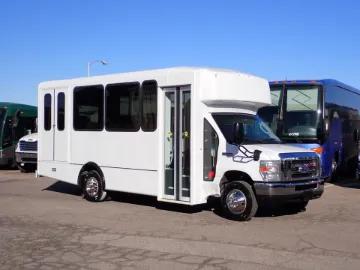
2017 Ford E350 El Dorado Advantage ADA Shuttle Bus
The 2017 Ford E350 El Dorado Advantage ADA Shuttle Bus is a fleet-ready solution tailored for organizations seeking reliable and ADA-compliant transportation. With seating for 12 passengers plus 2 wheelchairs, this shuttle is ideal for special education transport, universities, and churches that prioritize safety and accessibility. Powered by a robust 6.8-liter V10 Triton gas engine and equipped with an automatic transmission, this bus ensures dependable performance for daily use.
Ford is renowned for its commitment to quality and innovation in the shuttle bus industry, making it a trusted choice for organizations that demand safety and reliability. Their vehicles are engineered to provide comfort and durability, offering peace of mind for buyers who seek high standards in transportation solutions.
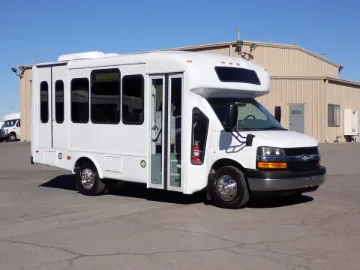
2015 Chevrolet G3500 Starcraft Startrans ADA Shuttle Bus
The 2015 Chevrolet G3500 Starcraft Startrans ADA Shuttle Bus is a versatile and fleet-ready vehicle perfectly suited for private student transportation needs. With room for 10 passengers and ADA-compliant features, including accommodations for two wheelchairs, this shuttle conversion ensures accessibility and comfort. Powered by the reliable 6.6-liter Duramax diesel engine and equipped with a Braun lift, it offers ease of operation for drivers and peace of mind for passengers.
Chevrolet is renowned for its commitment to quality and innovation in the shuttle bus industry, providing durable and efficient solutions for transportation needs. Their focus on user-friendly features and safety makes them a trusted choice for buyers seeking dependable vehicles that prioritize both operator and passenger satisfaction.
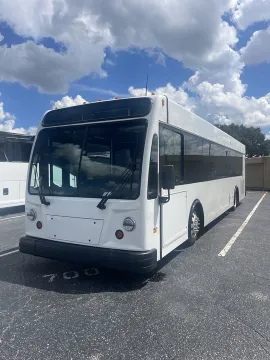
2025 Hometown Urban ADA Transit Bus
The 2025 Hometown Urban Transit Bus is a fleet-ready vehicle designed for efficient urban transportation, accommodating up to 32 passengers. With its robust L9 engine and features like a backup camera, this bus is an excellent choice, ensuring a safe and reliable ride.
Hometown is renowned for producing durable and dependable transit solutions, offering peace of mind to buyers who seek long-lasting vehicles. Their commitment to quality ensures that each bus is capable of meeting ADA compliance needs, making it a smart investment for any transportation fleet.
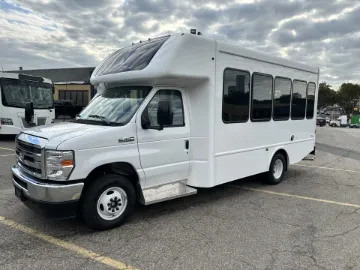
2026 Ford E450 Turtle Top ADA Shuttle Bus
The 2026 Ford E450 Turtle Top ADA Shuttle Bus is a versatile and fleet-ready solution designed to meet the needs of private student transportation services. With seating for up to 12 passengers and enhanced wheelchair accessibility, this bus ensures a comfortable and inclusive ride for all. Powered by a robust 7.3L engine and featuring an automatic 6-speed transmission, it promises reliable performance and smooth travel.
Ford is renowned for its commitment to quality and innovation in the transit industry, consistently delivering vehicles that are both durable and ADA compliant. This dedication to excellence ensures that buyers receive a product that not only meets but exceeds safety and efficiency standards, providing peace of mind and long-term value.

2016 Chevrolet Express 3500 Collins ADA School Bus
Check out this 2016 Chevrolet Express 3500 Collins ADA School Bus, featuring a powerful 6.0L V8 engine and 6-Speed Automatic transmission for reliable performance, with a stylish yellow exterior.
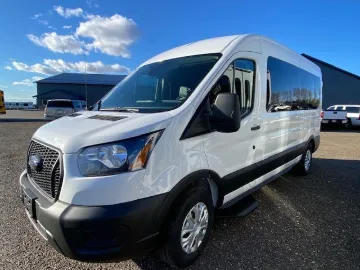
2025 Ford Shuttle Bus Passenger Van
Experience reliable transport for your passengers with the 2025 Ford Transit Shuttle Bus, a well-maintained vehicle designed for efficiency and comfort. This model features a robust gas engine, ensuring dependable performance on every route. With seating for up to five passengers, it is ideal for shuttle services, fleet operators, or organizations prioritizing consistent and secure travel. The rear lift option enhances versatility, streamlining loading and unloading for added convenience.
Ford is recognized for its innovation and commitment to safety, making their vehicles a trusted choice for transportation needs. The Transit line is celebrated for its durability and adaptability, providing operators with peace of mind and reliability on the road.

2026 Chevrolet Micro Bird 23P ADA
2026 Chevrolet Micro Bird NJ Spec 23 Passenger ADA Accessible Mini School Buses with delivery miles only. Floor tracks from front to back inside provide the highest level of seating flexibility. 2 Units in stock now and available without delay. New units with delivery miles only. Power door, rear air, seat belts, tinted glass, cameras and more. In Stock Now and READY TO SHIP RIGHT NOW. No ordering, no delays.


5.0


