Depending on your location, your Instagram feed shows that more city councils are voting to pull their license plate cameras off the poles. Coralville, Iowa pulled its Flock cameras the morning after the council voted to end the contract. Lynnwood, Washington killed its contract unanimously. Columbia Heights, Minnesota did the same. So far, more than 30 cities have canceled Flock Safety contracts in 2026, and the ACLU is running a national campaign with the unsubtle name "Get the Flock Out."
More comments at council meetings suggest the fear behind those votes isn't made up. The Institute for Justice has counted at least 20 cases of police officers using plate-reader systems to track romantic partners, exes, and strangers. One Florida officer ran his ex-girlfriend's plate 69 times. A Kansas police chief resigned after searching for his ex more than 200 times. Flock told 404 Media it was aware of 15 incidents of police abuse of its database.
So the public mood toward roadside cameras isn’t as welcoming, which is what makes the next idea bold. A company wants to put those same cameras on your kid's school bus.
A safety tool looking for a second job
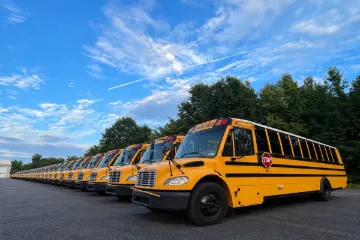
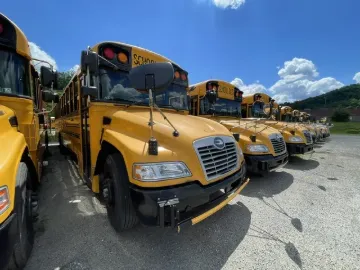
BusPatrol, headquartered in Lorton, Virginia, sells AI-powered stop-arm cameras for school buses. The cameras photograph drivers who illegally pass a stopped bus, and AI software reviews the footage and forwards violations to police. The company says it has more than 40,000 cameras across 24 states.
Recently leaked documents, reported by 404 Media, reveal more of the plans. BusPatrol wants the cameras to run constantly, reading the plate of every vehicle a bus passes and feeding the data to law enforcement. The report says the company has already moved to share that data with Axon, the policing-technology giant whose platforms put searchable records in front of officers nationwide. A one-bus pilot is reportedly underway, with plans to deploy 100 plate-reading buses by the end of the month.
The documents suggest BusPatrol expects pushback and is moving anyway. A source told 404 Media that a new investor is pressing the company to find fresh revenue. Jay Stanley, a senior policy analyst at the ACLU, told the outlet there is "a real risk that AI will be used to create a hellscape of over-enforcement."
That a child-safety vendor would reach for license-plate revenue is less surprising once you look at how the original business actually works.
Follow the money, not the mission
Stop-arm camera programs were sold as a way to protect kids. Whether or not they actually protect children is unproven. Independent studies of their effect on student safety are thin, and the programs run on tickets. Fines typically range from $250 to $500, and private vendors can take the majority of the money before a district sees a dime. One Nevada district's program was projected to generate $40 million in revenue.
A Maryland investigation found more than 70 percent of camera citations over two years were issued to drivers traveling in the opposite direction from the bus. And that was usually with a median or a lane of oncoming traffic between the bus and the kids.
Suffolk County, New York dismissed close to 8,000 camera tickets after a legal challenge. Almost 3,000 of the tickets were from a single stop where cross-traffic kept getting tagged. Tickets like those pay whether or not a child was ever at risk, which is why a camera that reads every plate all day is worth more to the vendor than one that only catches the rare driver who runs a stop-arm.
The reason the cameras were legal
There have been a lot of plate reader court challenges. But the readers have survived so far because they weren’t mobile.
In January 2026, a federal court sided with the City of Norfolk in a major case over its plate-reader network, Schmidt v. City of Norfolk. Days later, Washington's Court of Appeals reached a similar conclusion in State v. Simonson. The logic in both came down to geography. Because the cameras sit in fixed spots, any one car gets photographed only now and then and at random times. The courts decided that was not the kind of sustained tracking the Fourth Amendment treats as a search.
Both courts added a warning, saying the answer could change if the data ever became comprehensive, or if the system started following one person's movements over time. Legal analysts have flagged the same issue, noting the rulings carefully avoid the harder question of what happens when plate data stops being occasional and starts being complete.
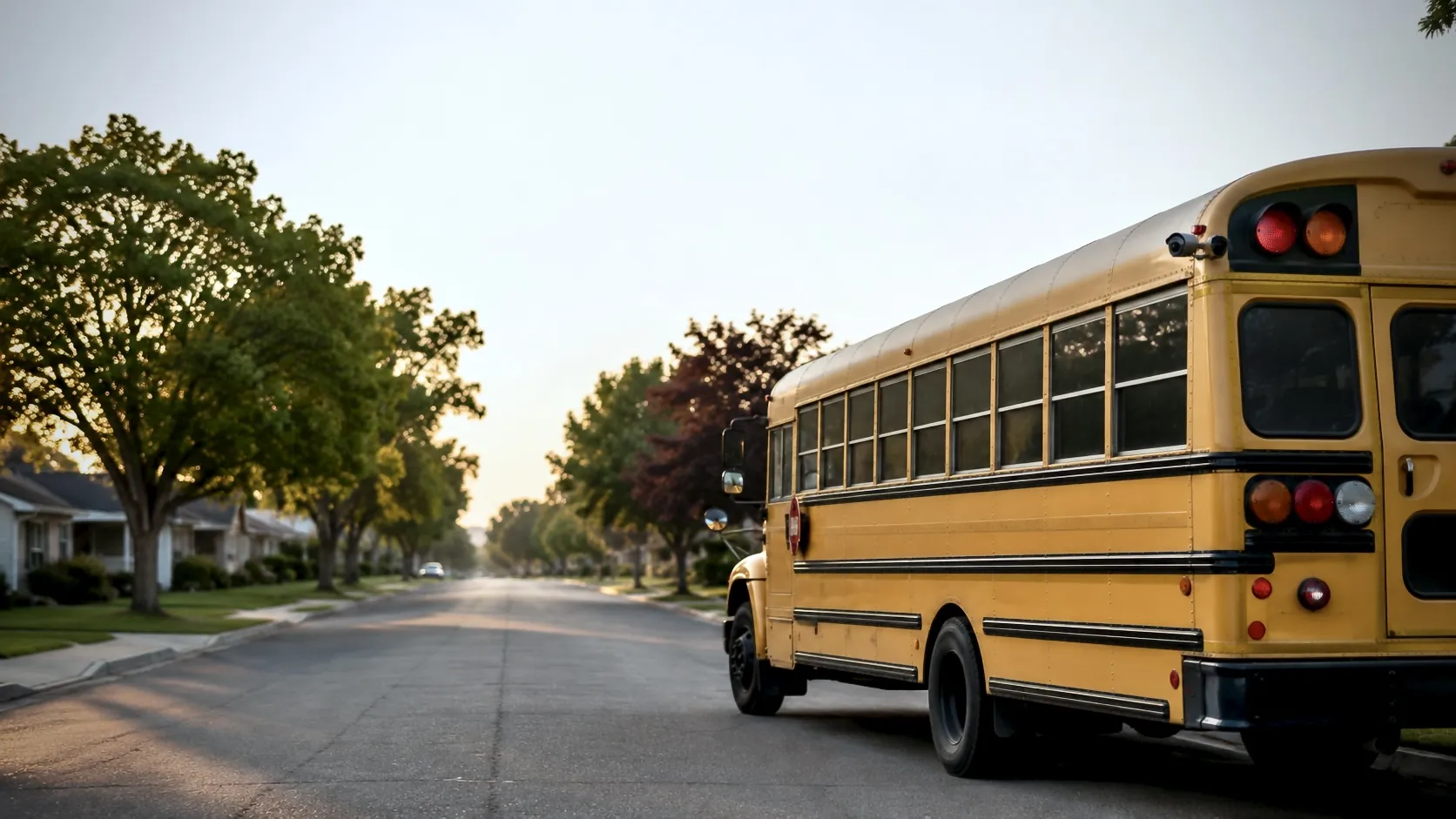
A friendly, trundling school bus isn’t an obvious surveillance device. But mount a plate reader on it, and it can perform repeatable neighborhood-level surveillance that courts have warned about. What makes a bus useful for this is that it covers the same residential routes twice a day, past the same houses, on a published schedule, through the parts of town where children live. And, even though no court has ruled on a school bus yet, that is exactly the kind of comprehensive repeated tracking that courts have flagged as a problem.
The net keeps widening
School buses wouldn't be the first tool repurposed this way. The same industry is already testing readers that capture phone and wearable signals, not just plates. The data then gets sold to agencies that can search it without a warrant, because, as one security expert put it on a recent podcast, the laws are years behind the hardware.
What makes the school bus version different is the object itself. People may accept a lot of monitoring from a pole on a commercial strip. But a bright yellow vehicle designed to carry children is harder to picture as a data-collection platform driving past your front window every morning.