The bus doesn't get much respect in Hollywood. It's not a sports car. It stops every two blocks, smells like diesel, and has been vomited on more than a toddler. And yet it has produced some of the most enduring moments in American entertainment. Scenes that defined careers. Scenes that shaped social movements. And in at least one case, a scene that accidentally became the most discussed ending in cinema history.
From civil rights history to a $350 million action blockbuster, the bus keeps showing up. Here are five moments that prove it.
1. The Graduate (1967): The ending nobody planned
Director Mike Nichols' coming-of-age film was the highest-grossing movie of 1967 and won the Oscar for Best Director.
Its most famous moment was an accident.
The scene where Benjamin and Elaine collapse into the back of a city bus — after crashing her wedding — was supposed to end with them smiling. Nichols was under pressure. Police were blocking city traffic for the shoot, and he snapped at his actors for the first time during production. Dustin Hoffman and Katharine Ross were rattled. The camera kept rolling.
What audiences saw was their real anxiety. Smiles that faded into something uncertain. The scene was supposed to be a happy ending. Film school textbooks still haven't finished analyzing what it became.
2. Rosa Parks and the Montgomery Bus Boycott (1955): The seat that changed America
On December 1, 1955, Rosa Parks refused to give up her seat to a white passenger on a Montgomery city bus. She was arrested.
Four days later, 90 percent of Montgomery's Black residents stayed off the buses — a coordinated boycott that lasted 381 days. It ended with the U.S. Supreme Court ruling bus segregation unconstitutional.
African Americans made up roughly 75 percent of the system's ridership. The boycott crushed the bus company's revenue. It also launched a 26-year-old pastor named Martin Luther King Jr. into history.
The bus didn't start the civil rights movement. A seat on one did.
3. Speed (1994): The bomb movie Paramount said nobody would watch
Paramount passed. Their reasoning: nobody would sit through two hours on a bus. 20th Century Fox took the project — but only on one condition. The film had to include action beyond the vehicle. That's how the freeway jump ended up in the script.
Director Jan de Bont spotted an unfinished California interchange during a location scout. He told the writer to add it. The production destroyed two buses in explosions, rigged a third for under-bus filming with Keanu Reeves on a dolly car, and drove a fourth from the roof so actors could sit in the driver's seat on camera.
Halle Berry was offered Sandra Bullock's role and turned it down. The movie grossed $350 million on a $30 million budget. Paramount passed on the sequel too, for different reasons.
4. Almost Famous (2000): The scene the studio demanded be cut
The studio wanted it gone. They were behind schedule and "Tiny Dancer" wasn't moving the story forward. Director Cameron Crowe kept it anyway.
What he had: a tour bus full of feuding musicians, a song on the radio, and a manager — played by Noah Taylor — who genuinely couldn't stand Elton John. Taylor's visible discomfort during filming became the emotional key to the scene. The one person who won't give in, eventually gives in.
Elton John saw the film and reportedly told Crowe it made him realize how much he'd undervalued the song. He started playing it in concert again. The scene outlasted the film's modest box office and became the centerpiece of the Broadway musical version.
The film won the Oscar for Best Original Screenplay. The studio's note did not.
5. The Dark Knight (2008): The most invisible getaway vehicle in Gotham
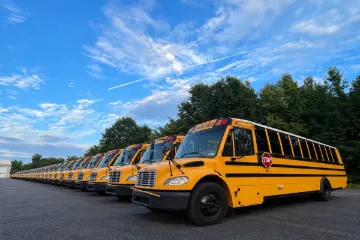
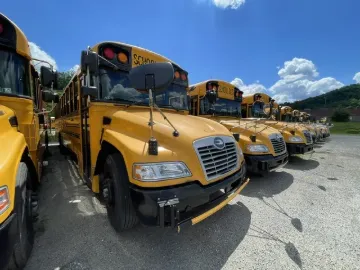
The Joker walks out of the bank and boards a school bus. The bus backs through the wall, pulls into traffic, and disappears into a line of identical school buses already leaving. That's the getaway.
It works because a yellow school bus is the single most ignored vehicle on an American street. Everyone assumes it belongs there. Everyone assumes someone authorized it. Everyone assumes it's not their problem.
Director Christopher Nolan and Heath Ledger understood something most filmmakers miss: the school bus is invisible precisely because it's familiar. The film cleared $1 billion worldwide — the first superhero film to do it — and earned Heath Ledger a posthumous Academy Award.
The Joker's bank robbery is a masterclass in logistics. The bus wasn't the escape. It was the camouflage.
There are roughly 480,000 school buses on American roads. Yellow is federally mandated. The color is called National School Bus Glossy Yellow, standardized in 1939 specifically because it stands out in low-light conditions. Christopher Nolan used that visibility — that ubiquity — as cover. The most conspicuous vehicle became the most invisible one.
The bus keeps showing up
From Rosa Parks to Keanu Reeves, the bus shows up at the wrong moment in the best possible way. It goes where the car can't afford to. It carries who the airplane won't. Filmmakers keep coming back to it for the same reason they like phone booths and elevators: you can't leave. The door closes and the story starts.
The yellow school bus in The Dark Knight was a retired transit vehicle. Most of the school buses in American pop culture are, too — old fleet units pulled out of service and given a second life. That's the same inventory BusesForSale.com specializes in: used school buses, inspected and priced, ready for their next role.
Browse Used School Buses
→ View used school buses for sale → BusesForSale.com
→ Talk to a specialist: 877-287-7253
Sources: Wikipedia (The Graduate, Speed, The Dark Knight), Britannica (Montgomery Bus Boycott), Rolling Stone (Almost Famous), Far Out Magazine (The Graduate ending). All film revenue and historical statistics cited from linked sources.
.webp)