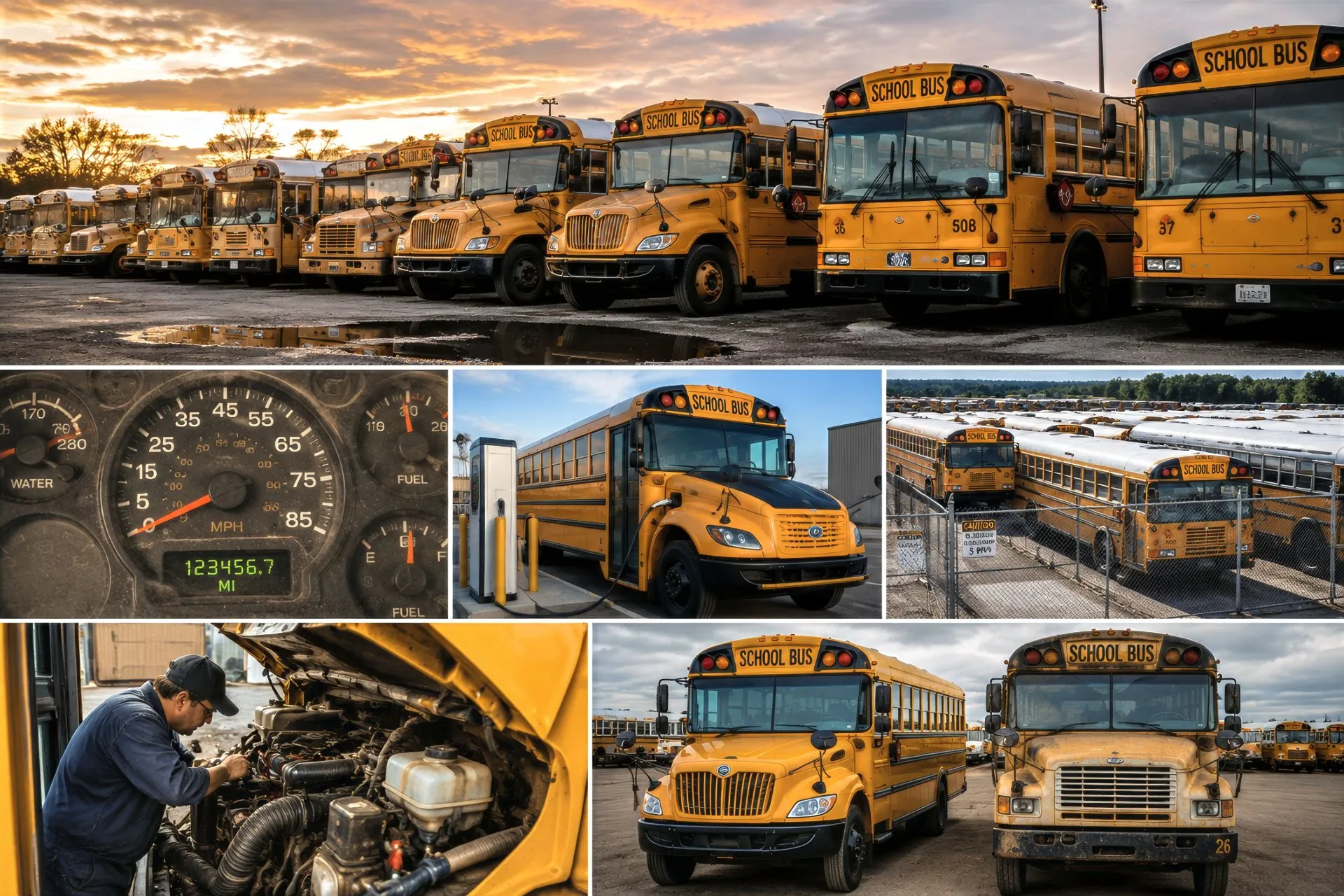
A complete buyer's guide to new and used school bus pricing, by type, brand, and condition.
Bottom Line Up Front New school bus: $40,000–$150,000 depending on type. Type C full-size diesel buses (the most common) run $90,000–$130,000 from district bid contracts. Used school bus: $10,000–$60,000. The best value range is a 10–12 year old Type C with 100,000–150,000 miles, typically $15,000–$30,000. Electric school bus: $350,000–$400,000 before EPA grants. Not economical for private buyers without federal funding access. |
School bus pricing spans a range that stops most buyers cold. How much is a school bus? It depends on the type and whether you're buying new or used. A retired district bus at auction can sell for $8,500. A new electric transit coach can clear $400,000.
This guide covers what drives school bus cost, current price ranges by type, and what the total cost of ownership looks like. Whether you're a church administrator, camp director, fleet operator, or nonprofit, the numbers here give you a working baseline before you start shopping.
New School Bus Prices
How much does a new school bus cost? Expect to pay $40,000–$150,000 depending on type. Most new buses are sold through competitive bid contracts to school districts. Private buyers rarely purchase new. District procurement records are the most reliable source of pricing data for the market.
Bus Type | Capacity | Price Range (New) |
Type A (mini/small) | Up to 30 passengers | $40,000–$75,000 |
Type B (body-on-chassis) | Up to 48 passengers | $65,000–$90,000 |
Type C (conventional) | Up to 90 passengers | $90,000–$130,000 |
Type D (transit-body) | Up to 90 passengers | $100,000–$150,000 |
Electric (Type C or D) | Up to 90 passengers | $350,000–$400,000 |
Source: Public school district procurement bid records, 2024–2026.
Type A Buses
Type A buses are built on cutaway van or medium-duty truck chassis. They cover routes where a full-size bus won't fit, including rural roads, charter runs, and routes for students with mobility needs. At $40,000–$75,000 new, they're the most affordable entry point in the school bus category and the most common type in the used market for private buyers.
Type C Buses
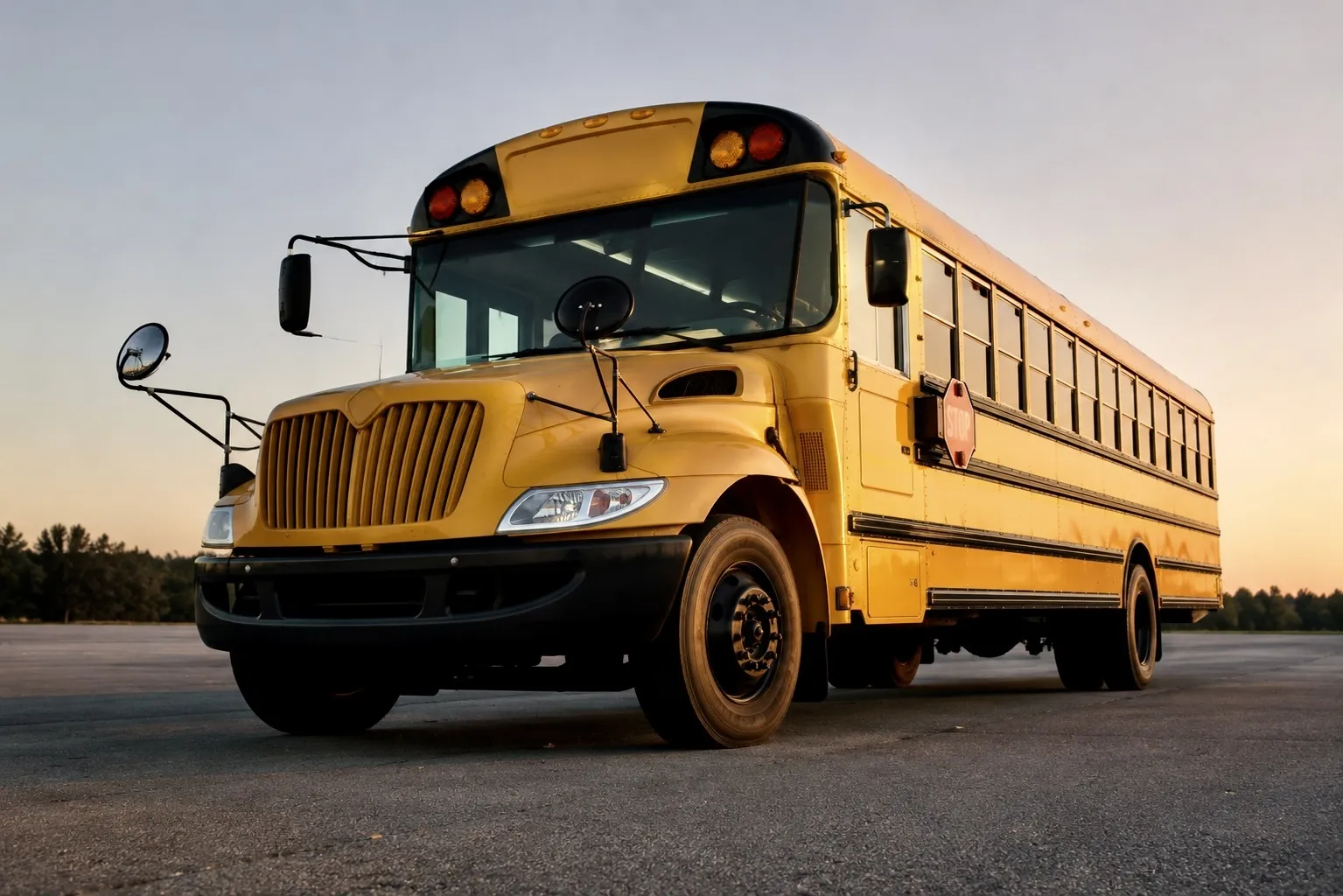
Type C is the conventional school bus most people picture. Flat nose behind the engine, up to 90 passengers, diesel powered. District bid contracts cluster here. New pricing in recent bid cycles runs $90,000–$130,000 depending on seating configuration, accessibility equipment, and state compliance requirements. A standard 72-passenger Type C diesel without special equipment typically comes in around $95,000–$110,000.
Type D Buses
Type D buses use a flat-front transit body similar to a city bus. They're common for high-capacity suburban routes and special needs transportation where wide aisles and flat-floor access are required. Pricing runs $100,000–$150,000 new, reflecting the more complex body structure and typical accessibility configurations.
Electric school buses
Electric school buses from Blue Bird and Thomas Built list at $350,000–$400,000. That price point was prohibitive before the EPA Clean School Bus Program, funded by the Infrastructure Investment and Jobs Act. Eligible districts can receive grants covering full bus replacement costs, which is why electric adoption has accelerated sharply in well-funded districts. For private buyers without access to federal grant programs, electric school buses are not economical.
Used School Bus Prices
The used market is where churches, camps, nonprofits, small businesses, and individual buyers operate. Prices here are driven by age, mileage, and condition more than brand.
Bus Age | Typical Mileage | Price Range (Type C Diesel) |
Under 5 years | Under 100,000 miles | $40,000–$80,000 |
5–10 years | 100,000–150,000 miles | $20,000–$45,000 |
10–15 years | 150,000–200,000 miles | $12,000–$28,000 |
15+ years | 200,000+ miles | $5,000–$15,000 |
Prices based on BusesForSale.com listing data; editorial analysis. Figures reflect Type C diesel buses in fair to good condition.
School bus price varies significantly by age, mileage, and condition. These ranges are starting points. The final price depends on how the bus was used and how well it was maintained.
Where the value lives
School districts typically retire buses at 12–15 years or 150,000–200,000 miles, following NHTSA school bus service life guidance. That is a budget decision, not a mechanical limit. Districts retire buses when upkeep costs more than they want to spend. The bus may still run fine.
A well-maintained 10–12 year old Type C diesel with 100,000–150,000 miles sits in the best value window. These buses are past their district utility but far from mechanical failure, especially if they ran short local routes rather than long highway miles. Expect to pay $15,000–$30,000 in this range.
Type A buses sell for roughly 30–40% less than comparable Type C buses across all age bands. Type D buses carry a modest premium over Type C for the same age and mileage.
School Bus Brand Price Comparison
Three manufacturers account for the majority of the used school bus market: Blue Bird, Thomas Built Buses (a Daimler Truck subsidiary), and IC Bus (part of International/Navistar). All three produce reliable buses. School bus price differences between brands in the used market are real but not dramatic.
Brand | Primary Model | Used Market Position |
Blue Bird | All American | +5–10% above market average |
Thomas Built | Saf-T-Liner C2 | At or near market average |
IC Bus | CE Series | At market or slight discount |
Pricing position based on BusesForSale.com listing data; editorial analysis.
Blue Bird's brand premium exists because of its reputation for reliability among fleet mechanics and strong parts availability nationwide. That said, brand matters less than maintenance history. A well-documented Thomas Built with complete service records is a better buy than a neglected Blue Bird with no paper trail. When shopping used, ask for maintenance records before you ask about brand.
A Note on Electric School Bus Economics
Electric school bus pricing deserves separate treatment because the sticker price is almost irrelevant to how the economics actually work.
Blue Bird Vision Electric and Thomas Built Surterra list at $350,000–$400,000. Under the EPA Clean School Bus Program, school districts can receive grants covering up to $375,000 per bus for zero-emission replacements. That grant structure makes the per-bus cost competitive with diesel for qualifying districts. The EPA Clean School Bus Program has allocated over $5 billion for this purpose through 2026.
For private buyers like churches, camps, nonprofits, and small businesses, access to those grants is limited or unavailable. At $350,000+, an electric school bus does not pencil out against a $25,000 used diesel. If you're not a school district with grant access, diesel is the right answer for the foreseeable future.
Total Cost of Ownership
The sticker price is just the start. Operating a school bus costs money every year. Here is what to plan for.
Maintenance
Annual maintenance costs for a diesel school bus run $5,000–$10,000 under normal operation. That covers routine service intervals, tires, brakes, and moderate repair. Older buses trend toward the higher end of that range as wear items accumulate. Budget separately for annual inspections, which vary by state but typically run $500–$2,000.
Insurance
Insurance depends on use type, coverage level, and carrier. A church running one bus seasonally pays far less than a company on daily commercial routes. Plan on $2,000–$5,000 per year for a single-bus operation. Get actual quotes before you commit to a budget.
CDL requirements
Under FMCSA regulations, any bus built to carry 16 or more passengers requires the driver to hold a Commercial Driver's License (CDL). This covers school buses, shuttle buses, and similar vehicles. If your drivers don't hold CDLs, budget for the time and cost to get them licensed before the bus goes into service.
Fuel
Diesel fuel costs depend on usage volume and local pricing. A Type C diesel bus gets roughly 7–8 miles per gallon. A bus running 200 miles per week will burn approximately 25–28 gallons weekly. At current diesel prices, that's roughly $100–$120 per week in fuel for moderate use.
Where to Buy a School Bus
School district surplus auctions
Districts sell retired buses through surplus auctions, either directly or through platforms like GovPlanet and PublicSurplus. Auction prices can come in below market rate. You are typically buying without warranty, without a guaranteed inspection, and sometimes without a test drive. Know what you're bidding on. Bring a mechanic or hire an independent inspection service before you bid.
Bus dealers
Dealers inspect and recondition buses before resale. You pay more than auction price, but you get a mechanical inspection, limited warranty in many cases, and often financing options. For buyers without a trusted mechanic to evaluate a private-sale bus, a reputable dealer is the lower-risk path.
Online bus marketplaces
BusesForSale.com carries one of the largest inventories of used school buses in the country. Filter by type, age, mileage, and price to narrow the list to buses that match what you're actually looking for. Listings include photos, mileage, and condition details, and you can contact sellers directly.
Frequently Asked Questions
How much does a school bus cost?
How much does a school bus cost? A new one runs $40,000–$150,000 depending on type. Type A mini buses start around $40,000; full-size Type C and D diesel buses run $90,000–$150,000. Used school buses range from under $10,000 for an older retired bus to $60,000 or more for a recent model in excellent condition. The most common price range for a usable used Type C bus is $15,000–$40,000.
How much does a used school bus cost?
Used school buses typically sell for $12,000–$45,000 for a Type C diesel in fair to good condition. Buses under five years old with low mileage can reach $40,000–$80,000. The best value is usually a 10–12 year old bus with 100,000–150,000 miles, which prices in the $15,000–$30,000 range on the open market.
Is buying a used school bus worth it?
For the right buyer, yes. Churches, camps, nonprofits, and small shuttle operations have been running used school buses economically for decades. Maintenance costs are predictable, parts are available nationwide, and the buses are engineered for hard daily use. The main risk is buying a bus with deferred maintenance you can't see. A pre-purchase inspection from an independent diesel mechanic is essential before any used bus purchase.
How long does a school bus last?
School districts retire buses at 150,000–200,000 miles or 12–15 years of service, per NHTSA guidelines. That is a budget policy, not a mechanical limit. A well-maintained diesel school bus can run 300,000 miles or more. Buses on short local routes with service records often have a lot of life left when districts sell them.
What is the best school bus brand?
Blue Bird, Thomas Built, and IC Bus all produce reliable school buses. Blue Bird's All American has the strongest reputation in the used market, which is reflected in a slight price premium. For most buyers, the condition and maintenance history of the specific bus matters more than the brand. A clean Thomas Built with service records beats a neglected Blue Bird without them every time.
How much does a Blue Bird school bus cost?
A used Blue Bird All American in good condition, typically 8–12 years old with under 150,000 miles, prices at $25,000–$45,000. New Blue Bird buses are sold through school district bid contracts at $90,000–$130,000 depending on specification. Blue Bird does not sell new buses directly to private buyers.
How much does an electric school bus cost?
Electric school buses list at $350,000–$400,000. School districts with access to EPA Clean School Bus Program grants can receive full or near-full cost coverage. For private buyers without grant access, electric school buses are not financially viable. Diesel remains the practical choice for most non-district buyers through the foreseeable future.
Where can I buy a used school bus?
School district surplus auctions and online marketplaces like BusesForSale.com are the main channels. Auctions offer competitive prices with higher risk; dealers like BusesforSale.com offer inspected inventory with more buyer protection. BusesForSale.com lists a wide selection of used school buses searchable by type, age, mileage, and price.