Understanding the Used School Bus Market: Safety Regulations & Pricing Guide
Navigate the U.S. used school bus market while staying fully compliant with federal and state safety standards.
Introduction
The used school bus market in the USA has grown into a sophisticated ecosystem, driven by predictable fleet replacement cycles, diverse buyer needs, and stringent safety requirements. Every school day, 26 million American children rely on yellow school buses—and NHTSA data shows they’re 70× safer than cars¹. Whether you’re a district fleet manager, charter operator, ministry coordinator, or “skoolie” converter, this guide combines market insights and up-to-the-minute regulatory updates so you can purchase wisely and operate safely.
1. Used School Bus Market Overview: Supply, Demand & Pricing
Steady Supply
Districts typically replace buses every 10–12 years, releasing low- to mid-mileage units (< 100 K miles) into resale channels.
Auctions, dealer lots, and online marketplaces list thousands of pre-owned units annually.
Diverse Buyer Base
K-12 Public & Private Schools seeking cost-effective fleet expansion
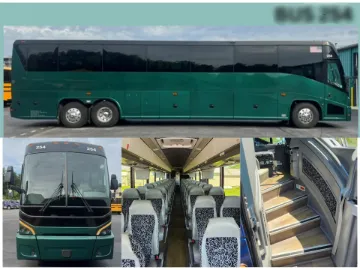
Charter & Tour Operators requiring premium coach-style features
Church Ministries & Shuttle Services focused on passenger comfort and storage
Conversion Enthusiasts (“Skoolies”) targeting specific model years and layouts
Key Pricing Drivers
Age & Mileage: Units under 10 years old with < 100 K miles often fetch 15–25% premiums.
Engine Type: Cummins diesel–powered buses typically outvalue older gasoline models by up to 10%.
Maintenance History: Complete service logs can add 5–15% to resale value.
Regional Climate: Vehicles from arid Sunbelt states command higher prices than salt-belt counterparts prone to corrosion.
Pro Tip: For a full acquisition roadmap, see our How to Buy a Bus: The Ultimate Bus Buying Guide.
2. Key Considerations in the Used School Bus Market
Intended Use & Capacity
Student routes under DOT regulations vs. charter operations vs. conversions
Seating configurations (e.g., 41-passenger vs. 54-passenger) aligned with your ridership forecast
Fuel Efficiency & Emissions
Older diesels may require Diesel Particulate Filter (DPF) installs or emissions retrofits
Investigate EPA/state clean-air grants that offset upgrade costs
Financing & Insurance
Rates vary by vehicle age, mileage, and compliance features
Specialty lenders and insurers often offer better terms for commercial-grade fleets
Parts Availability & Warranty
Confirm aftermarket support for engine, chassis, and body components
Negotiate short-term service agreements or extended warranties when possible
3. Safety Regulations for Used School Buses
3.1 FMVSS Standards Impacting the Used School Bus Market
FMVSS 220–222: Rollover protection & seating crashworthiness
FMVSS 217: Emergency exits, window retention & barrier requirements
FMVSS 108: Exterior lighting, reflectors & conspicuity markings
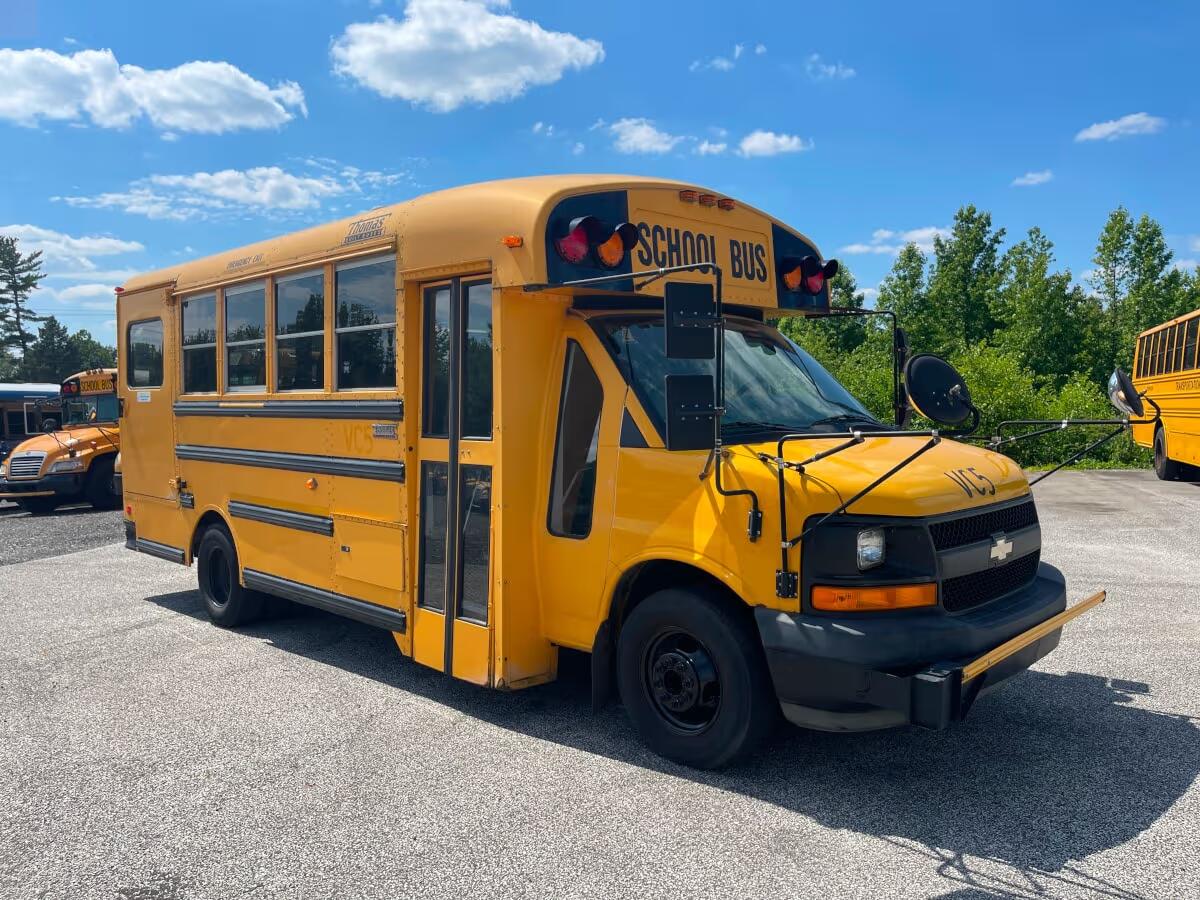
Glossy Yellow Paint: High-visibility color mandated for all school buses
3.2 State-Specific Rules
Stop-Arm Distance: In New York, motorists must stop ≥ 20 ft from a stopped school bus with flashing reds.
Fines & Speed Zones: Texas imposes $500–$1,250 fines for illegal passing; Florida enforces 20 mph in school zones with double fines for speeding.
Stop-Arm Violations: Over 95,000 daily illegal passes reported across 39 states—highlighting the value of stop-arm camera systems.
Learn about accessible conversions in our ADA Compliance in Buses: What to Check Before Purchase.
4. Professional Standards for Drivers
Commercial Driver’s License (CDL)
School-bus endorsement required; background checks and drug testing mandatory
Minimum Training
40 hours of classroom and behind-the-wheel instruction, plus hazard-avoidance drills
Ongoing Requirements
Annual DOT physical exams, random drug/alcohol testing
Continuing education in emergency response, student management, and defensive driving
Studies show well-trained drivers experience significantly fewer accidents and onboard incidents than under-trained counterparts.
5. Advanced Safety Technologies
Stop-Arm Cameras: Cut illegal passing incidents by 30%
GPS Fleet Tracking: Real-time route monitoring and rapid incident response
RFID Student Tags: Verify student boarding and departure events
AI-Driven Predictive Maintenance: Reduce unplanned breakdowns by 35% and extend vehicle life
Driver-Assist Systems: Lane-departure warnings and collision-avoidance alerts
6. Environmental Impact & Future Outlook
Electric School Buses
Reduce greenhouse gases by ~ 54,000 lbs/year and lower maintenance costs by 60%
Perform reliably in extreme temperatures
Federal & state grants often subsidize purchases—check with your clean-air agency
Autonomous & AI Safety Aids
In-testing pedestrian detection and collision-avoidance promise further risk reduction
Dive deeper into electrification in Electric Buses 101: Are They a Smart Investment for Small Fleets?
7. Essential Guidelines for Parents & Students
“Danger Zone” Awareness
Most injuries occur within 10 ft of the bus
Teach students to wait ≥ 10 ft back and approach only after driver signal
Seating & Seat Belts
Remaining seated reduces injury risk by 80%
Although federal law doesn’t mandate lap belts on large buses, many states now require three-point belts—confirm local requirements
8. Maintenance & Best Practices
Pre-Purchase Inspection: Hire a certified mechanic to evaluate brakes, suspension, frame integrity, and fluid systems.
Service-Log Review: Demand comprehensive oil-change, brake-service, and repair records.
Aftermarket Upgrades: Consider electronic stability control, upgraded lighting, or collision-warning systems.
9. Steps to a Confident Purchase
Define Requirements: Seating capacity, route profile, climate considerations
Survey & Compare: Benchmark prices via auctions and online listings
Inspect & Negotiate: Use mechanic’s report to justify fair offers
Finalize Compliance: Pass all inspections, register the vehicle, secure insurance
For detailed cost breakdowns, see School Bus Costs: Buying & Operating a Used School Bus.
.jpeg)