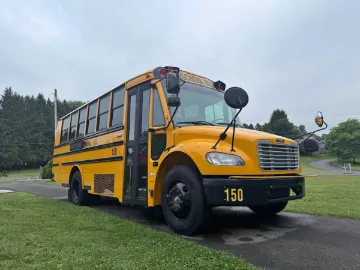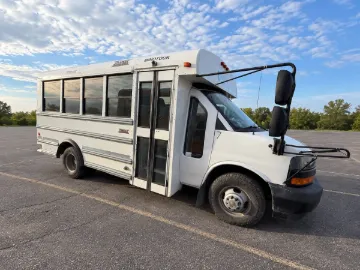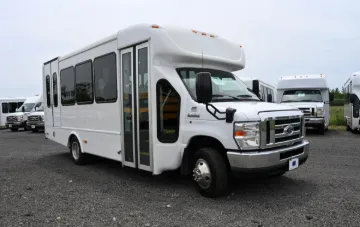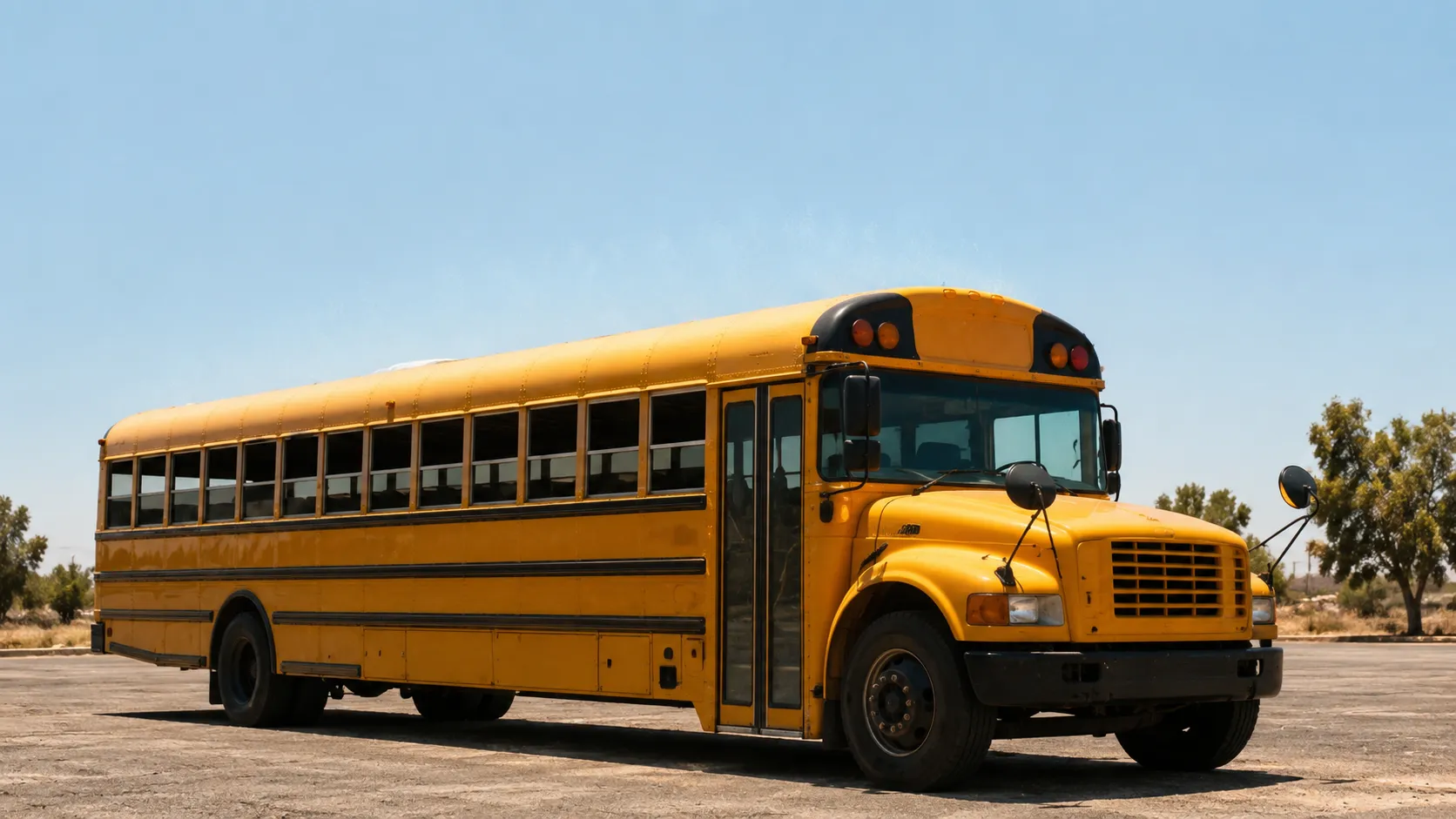
The American school bus has looked about the same for eighty years. Yellow paint, high vinyl seats, a heater up front, and windows you crank down by hand. That last part is the tell. For most of the fleet, the windows are the air conditioning.
No federal rule has ever required cooling on a school bus. The federal safety standards call for a heater and say nothing about air conditioning, which made sense when the buses were designed around cold morning runs in the Upper Midwest. Federal standards treat AC as optional equipment, the same way heated seats are optional on a car. The difference is that nobody's kid rides to school in the heated seats for a week straight in September.
Here is the honest part of the story. Nobody keeps a national count of how many buses have no air conditioning. Not the federal government, not the industry groups. The numbers that exist are state and local, and they point one direction. Alabama's education department found that fewer than half of the state's school buses have AC. A transportation specialist there, Chad Carpenter, said a bus "can get 20 degrees hotter than the air outside."
Twenty degrees on top of a hot day adds up quickly. During a July 2023 heat wave in New York City, a parent and a member of the city education panel walked the bus yards with a thermometer and found one bus reading about 110 degrees inside. "If we've got thousands of buses on the road, that means we've got hundreds of hot ones," the panel member, Tom Sheppard, said. "That's a lot of opportunity for our young people to have heat related issues."
Children are the wrong passengers to gamble with here. The CDC notes that kids heat up faster than adults and are slower to shed that heat, because of their size and how their bodies regulate temperature. A grown commuter can tough out a warm ride and complain about it later. A first grader on a stalled route in August is a different situation.
You do not have to imagine it. In August 2024, a district north of Austin started the school year in a heat spike with the outside air at 109 degrees and 16 of its 100 buses running with broken AC. The district handed out water and cooling towels and packed ice chests. "On the older buses the air might be working this morning and by this afternoon it might not be," the interim superintendent, Cara Malone, said. A great-grandmother described what pickup looked like. "She always jumps off the bus and says, Oh Granny I'm hot, I'm so hot," she said of her kid. "So we immediately sponge her down to get her cool and give her some water."
So why not fix it. This is where the story stops being about weather and starts being about a budget line.
Adding air conditioning to a bus runs somewhere around ten to fourteen thousand dollars a unit, based on figures districts put forward in 2023. Multiply that by a fleet of a few hundred buses and you are into real money, on top of the price of the buses themselves, which has climbed hard the last few years. When lawmakers have tried to make cooling a requirement, that number has done the talking. Colorado floated a bill in 2024 to require AC on new school buses and its own education committee killed it on a 10 to 0 vote. Louisiana, a state that knows something about heat, ran a similar mandate the same year and the House voted it down, largely over who would pay.
That is the quiet standoff. Everyone agrees a 110-degree bus is bad. Nobody wants to be the one to fund the fix across an entire fleet at once, so it happens the slow way, a few new buses at a time as old ones age out. Some places have moved faster when the law forced their hand. New York City, after a change to its local law, is on the hook to put every student with a disability on an air-conditioned bus by 2035. Most of the country has no such deadline.
The likely ending is the same one that played out in passenger cars. Air conditioning used to be a checkbox you paid extra for. Then it got cheaper, buyers stopped tolerating the alternative, and it quietly became standard. The Alabama official put the bus version plainly. "I wouldn't be real surprised if air conditioning on school buses doesn't become pretty standard in the next few years," he said.
If you are the one doing the shopping, air conditioning is one line on a longer checklist, and it helps to know which buses on the lot already have it. You can browse used school buses for sale at BusesForSale.com and see what each one comes with before you buy.