The school field trip is quietly disappearing, and the bus is where it starts
Ask an adult to name a day from grade school and a lot of them will land on the same kind of memory. The museum, the state capitol, the farm, the aquarium. Almost none of them will name a Tuesday spent on a worksheet. That gap tells you something about what a field trip is worth, and it makes the slow disappearance of the field trip a bigger loss than the line item suggests.
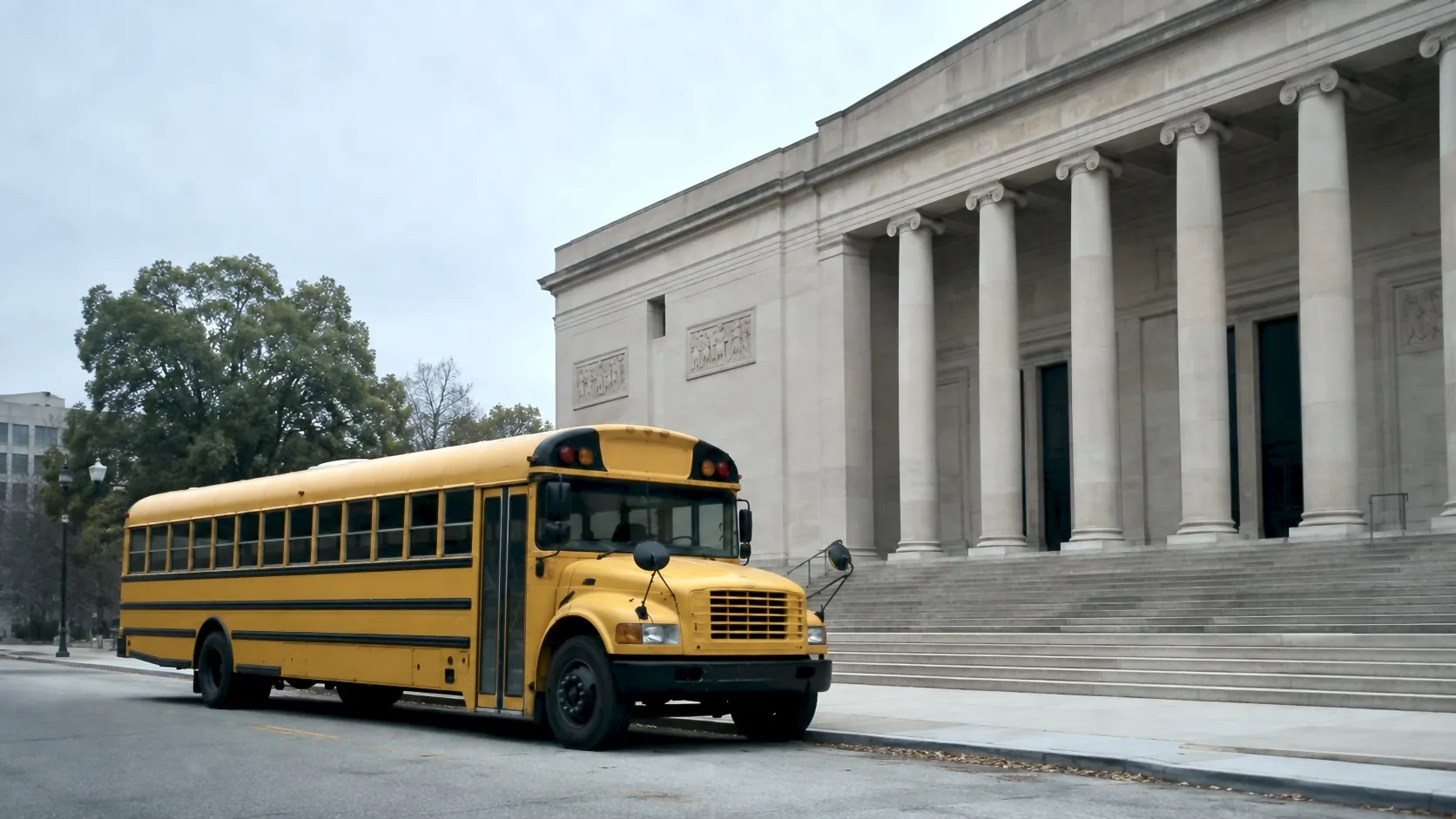
The trip is fading, and the reasons meet on a yellow bus.
Start with the money, because that is where it started. When school budgets tighten, field trips are close to the first thing cut, since they read as an extra rather than a requirement. The best hard numbers on this are older than you would like. A 2015 survey by the school administrators' association found that 10 percent of districts eliminated field trips that year, after roughly a third had done so during the recession years. The group is careful to say the sample is not perfectly representative, so treat the figures as a lit match rather than a spotlight. But the direction is not in doubt, and nobody who works in a school will tell you field trips have made a roaring comeback since.
What changed after the budget squeeze is the bus itself, or rather the person driving it. The country is short school bus drivers by about 12 percent compared with 2019, according to the Economic Policy Institute, which also found the median driver earning 43 percent less than the median weekly wage for all workers. That is a job with heavy responsibility, split hours, and pay that has slipped, which is a fair description of a job people quit.
When a district does not have enough drivers to cover its morning and afternoon routes, guess what does not get a driver. An industry survey of school transportation leaders in 2024 found more than 90 percent reporting a shortage and a majority saying it forced them to shorten or combine regular routes. One transportation official put the tradeoff in plain terms in that survey, describing how a shortage of substitute drivers means "we now just combine routes or run one late" whenever a driver is pulled away for an activity. The activity loses. The daily route has to win.
None of this is a scandal. It is arithmetic. A charter bus for a day of a class trip runs several hundred dollars, sometimes more once you clear the mileage and the driver minimum, and that is a check a principal has to justify against a stack of other checks. Put a real bus-cost line next to a driver shortage next to a budget cut and the field trip does not stand a chance in the meeting. It just quietly falls off the calendar, and no one has to vote to kill it.
Here is why that should bother people who care about results, not just nostalgia. The best study we have on field trips is a genuine experiment. Researchers led by Jay Greene ran a lottery for school tours of a new art museum in Arkansas and surveyed nearly 11,000 students afterward. The kids who won the trip showed measurable gains in critical thinking about art, more historical empathy, and more tolerance, and the effects were largest for the students who usually get the least. Rural kids and kids from high-poverty schools gained the most. Weeks later, most of them still remembered the substance of what they saw.
The same researchers flagged the part that stings. As field trips get squeezed, the ones that survive tend to be the wrong ones. Schools "are increasingly choosing to take students on trips to reward them," they wrote, "rather than to provide cultural enrichment. Schools take students to amusement parks, sporting events, and movie theaters instead of to museums." So the trip that builds something gets cut, and the trip that is a party gets kept, and a kid whose family cannot cover a museum on a weekend loses the one shot the school was giving them.
That is the real cost hiding behind the transportation cost. A well-off kid gets to the museum either way. The field trip was never really for that kid. It was the equalizer for the one who does not have a parent free on a Saturday or the money for the tickets, and it is that kid who loses when the bus does not come.
The shortage that drives a lot of this is not lifting fast. Reporting late in 2025 found the driver gap still hanging over the school year despite some gains in pay and hiring. Districts have tried the obvious fixes, raising wages, offering signing bonuses, leaning on outside vendors, and the routine routes now get first call on whatever drivers show up. The extras wait.