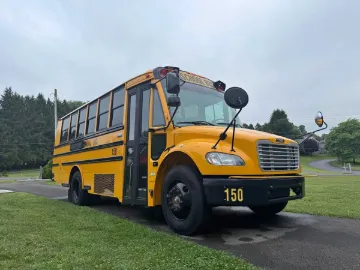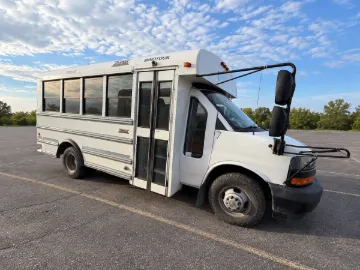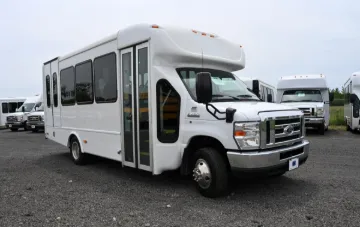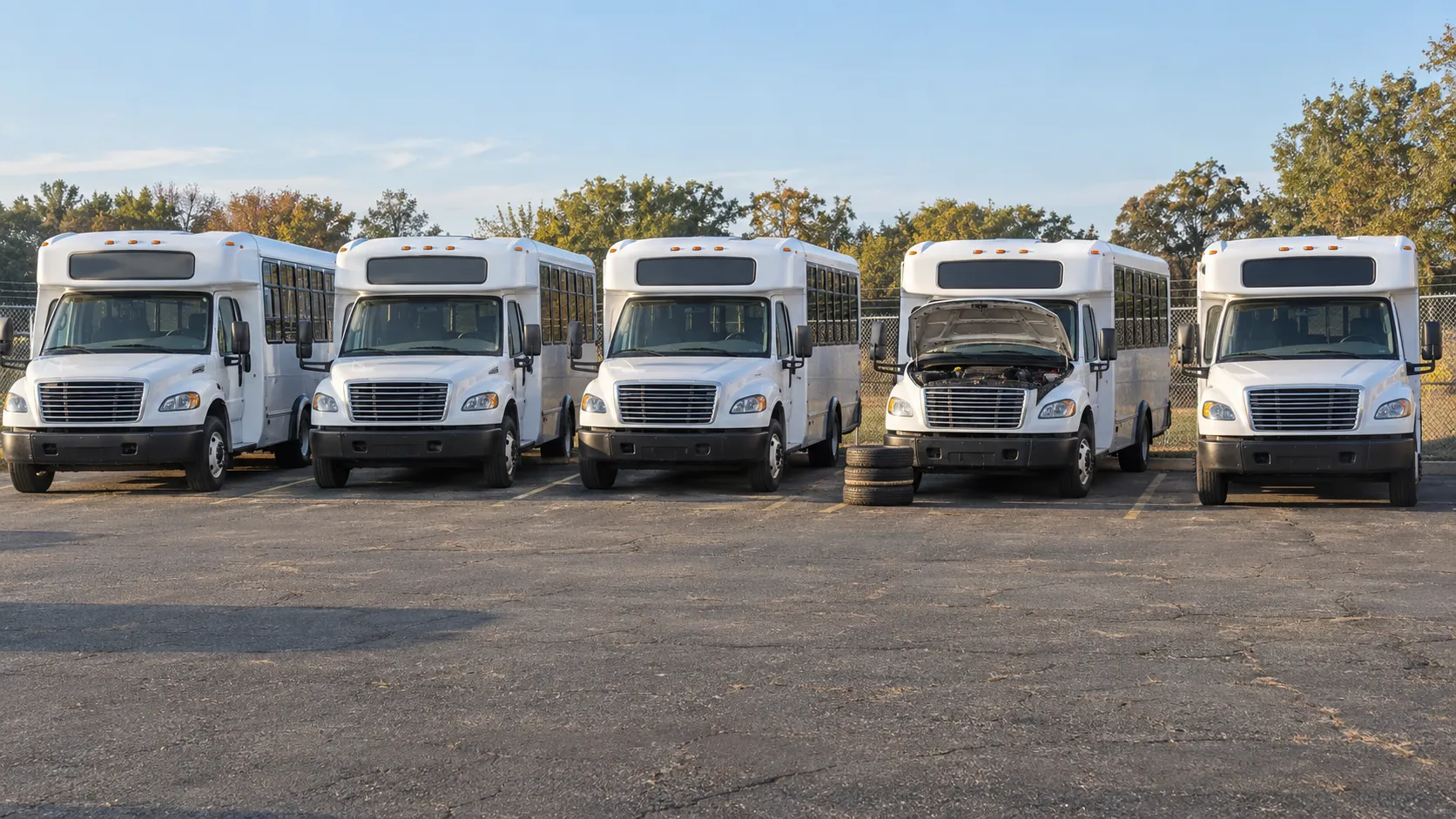
Five buses in the same paint, lined up in the same lot, can look like an easy purchase. Same model, same seating, one price for the group.
One might need tires and brake work before it can run a route. The other four might be ready, and the paint won't tell you which. You need to know before deciding whether the package price is a good deal.
Buying several used buses can make sense when you're adding school routes, replacing aging equipment or putting employee shuttles into service. Similar vehicles may simplify driver familiarization and maintenance planning. Buying them together can also save you the trouble of assembling a fleet one listing at a time.
You'll still need to inspect each bus and price the work it needs. The package only works if the buses fit your routes and you can afford to get them ready.
Decide what has to match
A set of buses for a fixed employee shuttle has different requirements than vehicles carrying sports teams with equipment or serving several school routes.
Write down what every bus must have. Include usable passenger capacity, accessibility needs, storage and the physical limits of the route. Seating also decides whether your drivers need a CDL, so settle it before you shop. Check that the actual vehicle configuration meets the intended service and contract requirements.
Then separate those requirements from preferences. Matching upholstery might be pleasant. An engine your shop already services keeps routine work in-house.
Even the same year and model don't establish that every bus has identical components. Have your technician compare the engine, transmission, brakes and installed equipment by vehicle. Confirm parts compatibility before you count on a shared shelf of spares.
Give every bus its own row
Ask for a unit list before you travel. Tie each stock number to its VIN so that photographs, records and inspection findings stay attached to the correct bus.
A useful comparison can fit on one sheet.
| For each bus | What belongs in the row |
|---|---|
| Identity and configuration | VIN, stock number, model year, mileage, seating and required equipment |
| Available history | Service records, inspection reports, major repairs and gaps in documentation |
| Current condition | Independent inspection findings and unresolved questions |
| Work before service | Written repair estimates, parts availability and expected completion |
| Paperwork | Ownership documents, any lien-release requirements and documents needed to register it |
| Cost to put it to work | Agreed unit price, allocated delivery and fees, immediate repairs and required changes |
For what to check on each individual bus, work through our Used Bus Buyer's Checklist once per unit.
If records are missing for one bus, ask about that bus. A service invoice for another vehicle in the group doesn't fill the gap.
Ask for an independent pre-purchase inspection of every candidate. All of them. Inspecting one may help you decide whether to pursue the package. Before buying, you'll need findings for the others, too.
Have the inspector cover the chassis and body. If the buses carry wheelchair lifts, make sure the inspector knows lifts. Ask for photographs and a written report organized by VIN, and agree on the scope and fee before anyone picks up a flashlight.
For recalls, use NHTSA's lookup and check with the relevant manufacturers where needed. NHTSA identifies limits to its VIN results, including some older recalls and specialty manufacturers. A blank result doesn't establish a complete service history.
The average price can hide the expensive bus
Here's a deliberately simple example. These are invented figures to show the calculation, not current bus prices or repair estimates.
Suppose a three-bus package costs $90,000. For comparison, you've allocated $30,000 to each bus and allowed $2,000 per unit for delivery and fees. Your inspections produce the following estimates for work needed before service.
| Vehicle | Allocated purchase price | Delivery and fees | Immediate work | Total before service |
|---|---|---|---|---|
| Bus A | $30,000 | $2,000 | $1,000 | $33,000 |
| Bus B | $30,000 | $2,000 | $3,000 | $35,000 |
| Bus C | $30,000 | $2,000 | $12,000 | $44,000 |
| Package | $90,000 | $6,000 | $16,000 | $112,000 |
The purchase price averaged $30,000 per bus. With delivery, fees and the estimated repairs, you're spending $112,000 on the group. Fuel, drivers and ongoing operating costs still need their own budget.
Now look at Bus C. Under these assumptions it costs $44,000. Compare that with another bus that meets the same requirements, including its delivery and repair costs. Ask when Bus C's work can be finished, especially if you need all three vehicles on the same day.
An equal allocation is useful for this illustration. For a real purchase, ask for an itemized agreement. Don't assume you can remove one vehicle and keep the same per-bus price on the rest.
Matching buses can need matching repairs
If several buses have similar equipment and service histories, check whether major service or replacement items are approaching together. Check the tires on every bus before budgeting for one replacement set. You may need several.
Ask your shop to look across the group as well as at each vehicle. Which jobs can be scheduled? Which must happen before service? What happens to the routes if two buses need work at once?
A higher-priced bus may need less work before service. Use its records and inspection findings to compare the total cost with the cheaper candidate. Don't assume the asking price reflects its condition.
Leave yourself room to reject one
Before money changes hands, have the purchase agreement address the actual units, the agreed condition and any work the seller will complete. Clarify inspection conditions, substitution, deposits and what happens if one vehicle fails to meet the agreement.
Ask whether you can reject an individual bus after inspection and how that would change the package price. Get the answer in writing before paying a deposit. If the purchase is all-or-nothing, you'll need to be satisfied with the condition and cost of every bus included. At a bankruptcy auction, expect that choice to be gone.
Buying several buses? Let's talk through the options.
Call BusesForSale.com at 877-287-7253 with the number of buses you need, your required specifications, budget and service date. If you've found a package, have the listing or stock numbers handy.
Ask our team about available matching units, what records exist for specific buses, and delivery costs. We can help narrow the search to buses that fit your requirements and talk through how to get an independent inspection before you commit.
We help people move people.