 Excellent on Google from verified customers


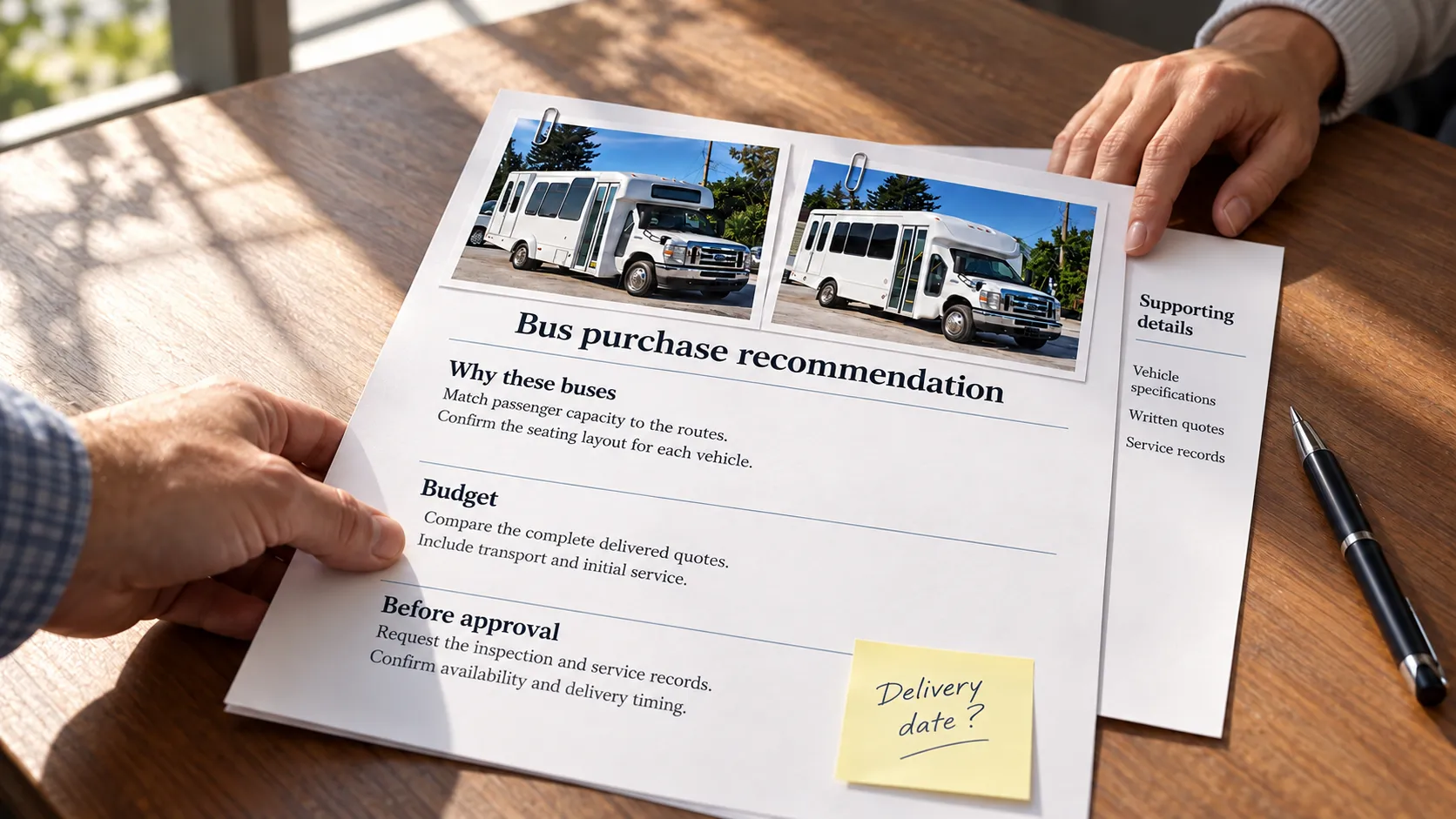
You've found the buses. Now someone who hasn't spent the past week looking at them has to approve the purchase.
Forwarding six listings with “What do you think?” gives that person most of your homework. A short recommendation will get them closer to a decision.
For a private school, university or employee shuttle operation, the useful questions are much the same. What work will the buses do? Why these vehicles? What are you asking the organization to spend, and what still needs checking?
Ask for a specific decision
Start with what you want authorized. Buying the named buses is one request. Paying for inspections before making a purchase recommendation is another.
Find out who can approve that step and what your organization requires. A budget allocation may still need a separate purchase approval. A supervisor's agreement may need to go through purchasing. Use the process your organization actually has.
Put the amount requested beside the proposed action. Include any conditions, such as completing an inspection or confirming a delivery charge. If you'll need another approval afterward, say so.
Give the decision maker a date and explain it. A service start date and a seller's quote expiration are different deadlines. Neither establishes that the buses are being held for you. Confirm availability separately.
Explain why you need this group
Describe the work in terms the approver can picture. For an employee shuttle, show the passenger demand at shift change and whether trips overlap. For a school, explain the intended use and requirements confirmed by the transportation team.
Then connect those requirements to the buses you're recommending. Use the actual stock numbers and VINs so the quote, photos and inspection findings all refer to the same vehicles.
Keep the explanation short. The approver needs to know why each bus belongs in the purchase. They don't need a history of every listing you rejected over lunch.
Our guide to buying several used buses covers the per-vehicle checks. Summarize the findings that affect your recommendation and attach the supporting information.
Show the choice you made
Explain why you're recommending this group and what the credible alternative would involve. That might be another group of buses or continuing the current arrangement for a defined period.
Use actual quotes and operating information where available. If only one suitable option has been found, say so. An unsuitable bus doesn't become a useful alternative because the approval form has a second column.
Be equally clear about anything still unresolved. If required equipment hasn't been verified, name the question and who is checking it. Make the request clear. Are you recommending a purchase now or asking permission to take the next step?
Make the spending request complete
Show the current written quote, its date and the vehicles it covers. Add separately priced costs that your organization would pay, without counting anything twice. Keep unpriced items visible.
For each unknown amount that could change the decision, identify who will get the answer. Some costs may still be unconfirmed when you request a spending limit. Explain who can authorize the expense and what happens if it exceeds that limit.
Keep the ongoing operating budget separate and available. An approver may want to see how staffing and maintenance will be funded after the buses arrive. A purchase quote won't answer that. A lender application is also a separate process; this brief is for the decision inside your organization.
Give them one page they can use
Use this as the first page of your request, with the current quote and supporting records attached. Adapt it to your organization's own form if there is one.
| Approval brief | Your entry |
|---|---|
| Decision requested | Action, amount and conditions |
| Prepared for | Decision maker and person preparing the request |
| Decision date | When it's needed and why |
| Transportation need | Work to be covered, number of buses and required service date |
| Recommended buses | Stock numbers or attached VIN list, requirements met and reason for choosing them |
| Alternative considered | Available option and the important difference |
| Cost | Dated seller quote, additional priced costs and amounts still unconfirmed |
| Availability | Date last checked and any stated conditions |
| Open questions | Each question, person responsible and answer due |
| Supporting information | Current quotes, relevant vehicle records and operating-budget review |
| Approval record | Decision, conditions and authorized next step |
Before sending it, check that the stock numbers and totals agree across the attachments. Replace superseded quotes. Keep the current recommendation at the front so the reader doesn't have to decide which email is the latest.
If the buses are needed for a new service commitment, our new-contract article can help with the schedule behind your requested decision date.
Need vehicle information for the approval meeting?
Call BusesForSale.com at 877-287-7253 with the stock numbers you're recommending and the date of your review. Ask which vehicle records, photos and written quote details are available for those buses. Tell us what the person approving the purchase still needs answered.
Keep confidential internal documents within your organization. Bring us the vehicle questions so you can take the answers back to the meeting.
We help people move people.