 Excellent on Google from verified customers


Buying a used wheelchair-accessible bus starts with the passengers it needs to carry. Check the lift's rated capacity and the space for wheelchairs. Count the seats available when those wheelchair positions are occupied. Have the lift and securement equipment inspected.
If you're buying several buses, compare those details on each one, including the bus you expect to use as a spare.
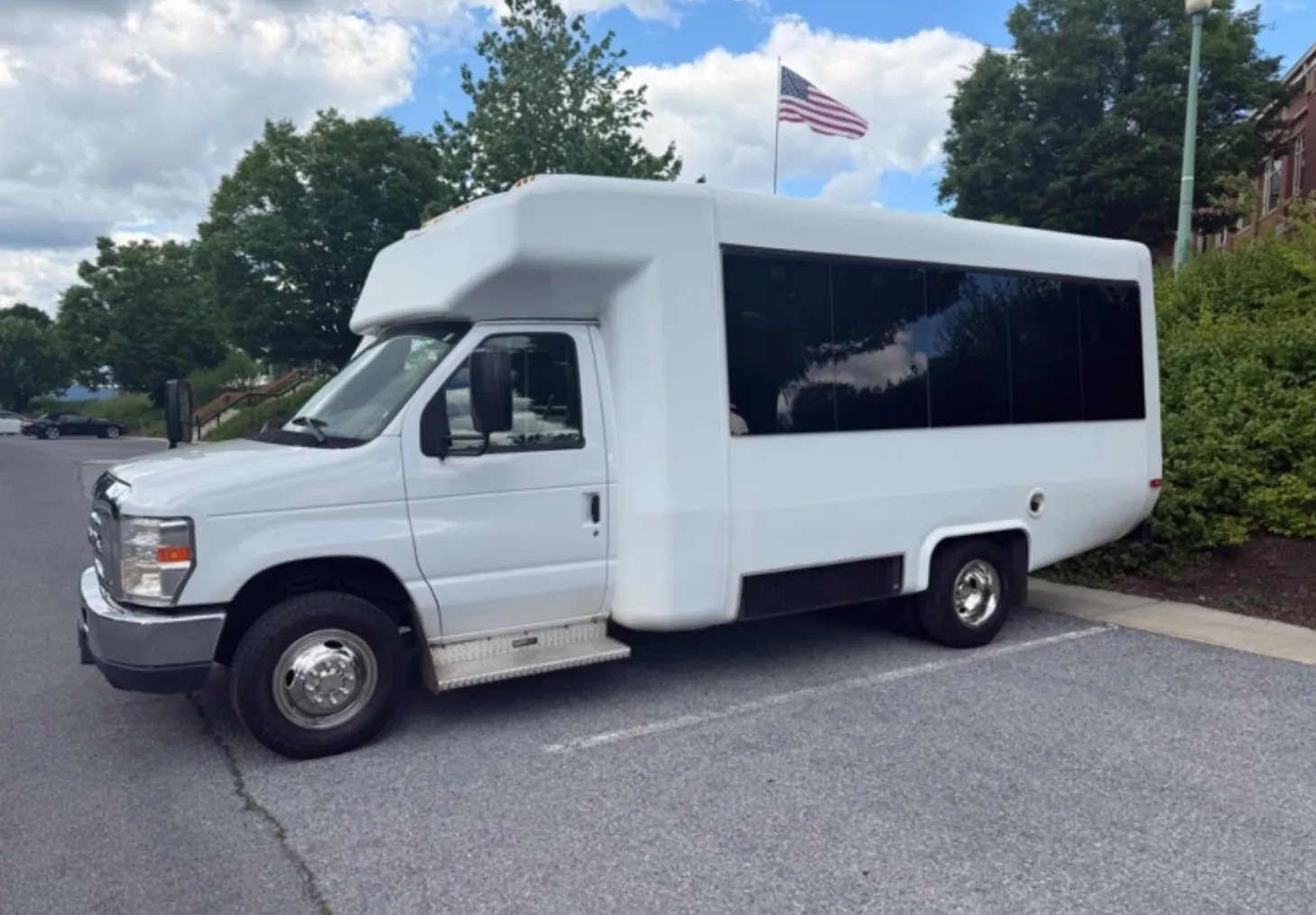
Two white shuttles can look interchangeable from the parking lot. Before one becomes the spare, your dispatcher needs to know whether it can carry the same riders.
Start with the passengers on the route
For a senior living community, a campus shuttle or an employee transportation service, start with the busiest trip you expect to run. How many passengers will use regular seats? How many will remain in wheelchairs? Will attendants or companions need seats, too?
Ask for the floor plan in that configuration. A listing's largest seating number may describe a different arrangement from the one you'll use with wheelchair positions occupied. If seats fold or move, ask which positions you can use together. Request a layout supported by the manufacturer or upfitter.
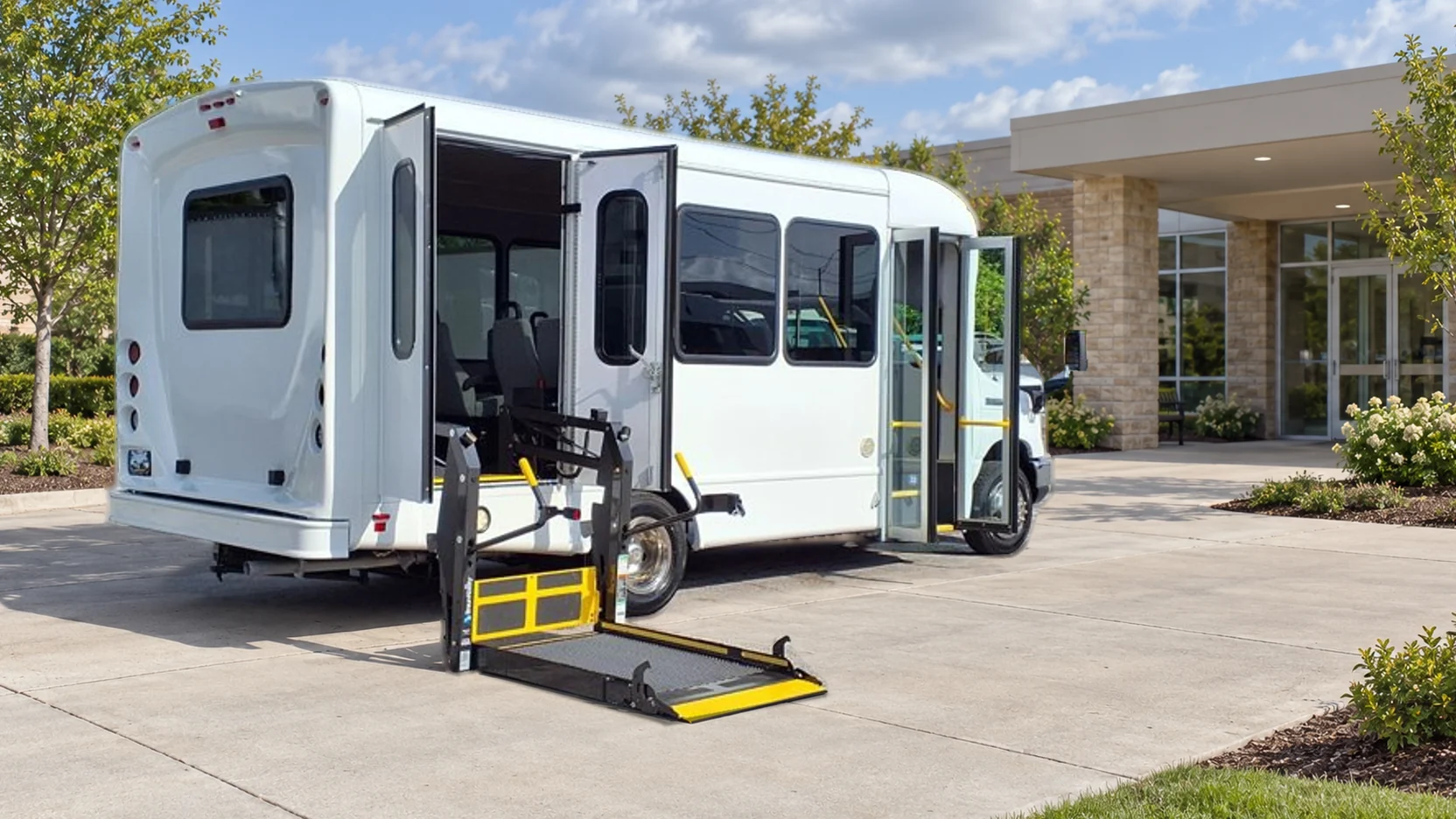
Walk through the boarding path. There's the lift platform, the doorway, the turn into the aisle and the space where the wheelchair will be secured. Ask for measurements where the fit is close, rather than trying to judge it from a wide-angle interior photo.
For known passenger needs, include the mobility device's dimensions and occupied weight in the vehicle comparison. You don't need to send a seller anyone's medical history to explain the equipment you need to accommodate.
Read the rating on the actual lift
“Has a lift” is a starting point. Ask for a clear photograph of its identification plate and record the manufacturer, model, serial number and rated capacity.
Even lifts in the same product family can differ. BraunAbility's Century 2 information identifies NCL91 models at 800 pounds and NCL1000 models at 1,000 pounds. Those figures describe those models, not every BraunAbility lift or every used bus.
Compare the actual rating with the combined weight of the passenger and mobility device. Check the platform dimensions and the vehicle's usable space as well. A weight rating alone won't tell you whether a particular wheelchair can pass through the doorway and reach its position.
The Federal Transit Administration's wheelchair guidance makes another distinction worth understanding. Minimum equipment standards are not a blanket passenger limit. Under the DOT rules it explains, operators must accommodate wheelchairs and occupants within the actual capabilities of the lift and vehicle, subject to legitimate safety requirements.
For the purchase, get the actual equipment specifications. Don't substitute a remembered minimum for the rating on the bus in front of you.
Include the accessibility equipment in the inspection
A video of the lift operating is useful when you're narrowing the choices. For a purchase inspection, tell the technician that the lift, its installation and the wheelchair securement equipment are part of the job.
Ask the technician to check the controls, safety features, manual backup and mounting condition against the manufacturer's instructions. Have a qualified technician perform any load testing according to the manufacturer's procedure. An employee standing on the platform isn't a substitute.
Request available lift service records separately from the chassis records. Then identify who can service that particular lift near your operation. BraunAbility provides model-specific manuals and service guidance; use the corresponding manufacturer's information for other equipment.
Include the wheelchair securement system and passenger restraints in the inspection. Have the technician check their attachments and the floor underneath. Securing the wheelchair and restraining its occupant are separate functions. The equipment needs to be complete, compatible and used according to its instructions.
Get any recommended work and its cost into your purchase comparison. That gives you a more useful number than the asking price alone.
Compare the spare with the buses on the route
Suppose you're buying two route buses and a spare. All three have lifts. Before treating them as interchangeable, compare their lift ratings, platform dimensions and occupied wheelchair layouts.
The spare may have fewer usable wheelchair positions. It may use a different securement system. Your drivers may need training on different controls and backup procedures.
Those differences don't automatically rule out a purchase. They tell you what you can assign to each bus and what needs to happen before it enters service. A spare that can cover only one of your routes needs to be scheduled accordingly.
Use a separate column for each VIN when you compare the group.
| What to compare | What your team needs to know |
|---|---|
| Lift model and rating | Which passenger and mobility-device combinations the equipment can accommodate |
| Platform, doorway and interior space | Whether boarding and movement to the securement position are practical |
| Lift location | Whether the boarding area at each stop accommodates the side or rear lift |
| Occupied wheelchair layout | Wheelchair positions and regular seats available at the same time |
| Securement and passenger restraints | What equipment is installed, whether it is complete and what training it requires |
| Inspection and service | Findings, available records, work needed and local service support |
| Backup coverage | Which routes each bus can cover with its actual configuration |
If the buses use the same equipment, confirm that by model and configuration. Matching paint isn't much help to the person assigning tomorrow's routes.
What does “ADA” in a listing tell you?
ADA stands for the Americans with Disabilities Act. If a listing says “ADA” or “lift-equipped,” ask for the specifications. The label alone does not establish that a bus meets every requirement for your operation.
Give the specifications and floor plan to whoever approves vehicles for your service. Buying for a school or a transportation contract? Check its vehicle requirements while you're still choosing buses.
Build equipment training and any required inspections into the time between delivery and service. Let the staff who will operate the buses review the layouts, too. They're the people who will be helping passengers board and securing equipment several times a day.
Tell us what each bus needs to carry
Call BusesForSale.com at 877-287-7253 with your bus count, passenger seating needs, wheelchair positions and service date. If you need a spare to cover the same routes, tell us that at the start.
We can confirm availability and get you specifications, photos and videos for the buses you're considering. We can also help arrange an independent inspection with a qualified bus-specific technician. Confirm that the technician is qualified to inspect the installed lift and securement systems. Agree on that work before the inspection.
Start with our wheelchair-accessible bus listings, or bring the stock numbers you've already found when you call.
We help people move people.
Shop by make: Ford buses · Turtle Top buses · Chevrolet buses · all wheelchair-accessible buses