 Excellent on Google from verified customers


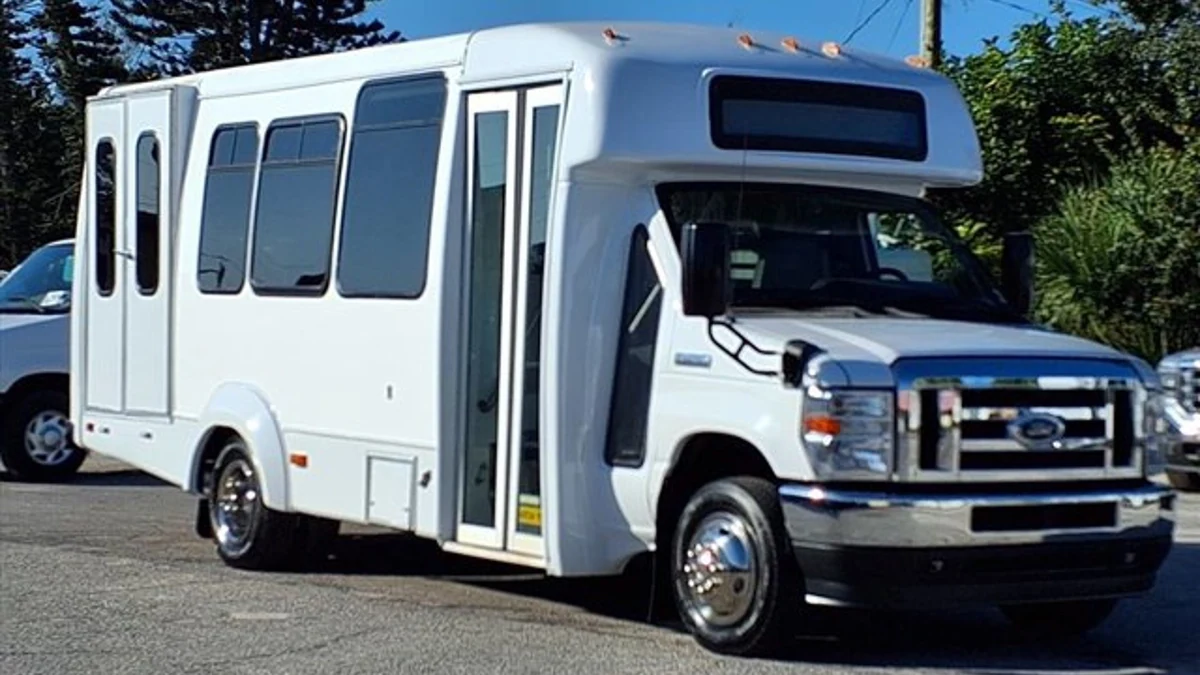
A bus with better fuel economy may be worth paying more for on your daily route. The same price premium may take longer to recover than you plan to keep your spare.
In the hypothetical example below, fuel savings recover a $12,000 premium in 2.4 years on a busy assignment. Give that bus a spare's annual mileage and it takes 9.6 years. Before buying several used buses, work out the fuel bill for the job each one will do.
Start with the miles your drivers actually cover
For each planned assignment, count the full day's driving. Include the trip from the yard to the first pickup and the return after the last passenger gets off. Add travel to fuel or service the bus when it takes the driver off the normal route.
Multiply daily miles by operating days, then add trips outside that schedule. A university shuttle running during the academic year needs a different estimate from an employee shuttle running throughout the year. Treat a spare separately, using the work you expect it to cover.
The Department of Energy's fleet planning guidance starts with the job, mileage and use of each vehicle. That's a useful place to begin a purchase conversation, too. Tell the seller how many passengers each bus must carry before comparing fuel costs. A smaller bus that requires an extra trip may change the calculation considerably.
Ask where the MPG number came from
When someone gives you a fuel-economy figure, ask how it was measured.
Was it recorded across several fill-ups? On a highway run or a route with frequent stops? Was it the actual bus you're considering, a similar vehicle or an estimate?
Your own fuel records for comparable buses doing comparable work can help. Divide miles traveled during the period by gallons consumed during the same period, keeping the starting and ending fuel levels consistent. Several complete fill-up intervals are more useful than one convenient trip.
Check whether that figure already includes normal idling and passenger heating or air-conditioning use. If it does, adding a separate allowance for the same fuel would count it twice. If the figure came from steady highway driving, don't assume it describes a shuttle waiting between trips.
When you don't have a reliable operating figure, run a range and label it as an assumption. An estimate to two decimal places is still an estimate.
Compare annual fuel cost and fuel cost per mile
Annual miles divided by miles per gallon gives you estimated annual gallons. Multiply those gallons by your fuel price to estimate the annual fuel bill.
Here's a hypothetical comparison of two buses suitable for the same assignment. These figures are arithmetic examples, not measured results for a model or promises about inventory. The $5-per-gallon price is an assumption, not a current market quote.
| Fuel calculation | Candidate A | Candidate B |
|---|---|---|
| Annual miles | 24,000 | 24,000 |
| Assumed fuel economy in that service | 6 MPG | 8 MPG |
| Annual gallons | 4,000 | 3,000 |
| Assumed price per gallon | $5 | $5 |
| Annual fuel cost | $20,000 | $15,000 |
| Fuel cost per mile | About $0.83 | About $0.63 |
The difference is $5,000 a year for that assignment. If Candidate B costs $12,000 more, fuel savings alone would take 2.4 years to recover the difference, assuming those inputs hold. That calculation leaves out financing, maintenance and resale value, so it can't settle the purchase decision on its own.
Give the same buses a 6,000-mile annual spare assignment and the fuel difference falls to $1,250. Recovering the same $12,000 price difference would then take 9.6 years on fuel alone. How long you expect to keep the bus belongs in that conversation.
For a group purchase, compare each bus separately. Put each route and the spare on its own line, then run the candidates against the mileage for that assignment. Multiplying the busiest bus's savings by the number you're buying can overstate what the group will save.
If the candidates use different fuels, enter a separate price and fuel-economy assumption for each. For an electric bus, use electricity consumed and the applicable charging costs rather than this gallons calculation.
Try a higher fuel price before deciding
Run the estimate at the price you pay now and again at a higher price your team wants to plan for. This is a budget test, not a fuel-price forecast.
In the example above, a $1-per-gallon increase adds $4,000 to Candidate A's annual bill and $3,000 to Candidate B's. The annual difference grows to $6,000, recovering the hypothetical $12,000 premium in two years on the busy assignment. At the spare's lower mileage, it still takes eight years.
Keep the worksheet with the listings you're comparing. Update it when the planned route changes or better operating information becomes available. You want to know which assumptions made a bus look like the better buy.
Call us with the routes you're buying for
Call BusesForSale.com at 877-287-7253 with the number of buses you need and the work each will do. Bring your expected mileage and passenger requirements, along with any listings or stock numbers you're considering.
We'll confirm availability and provide the vehicle details so you and your maintenance team can compare the options against your operating budget. We can also help arrange an independent inspection with a qualified bus-specific technician.
We help people move people.