 Excellent on Google from verified customers


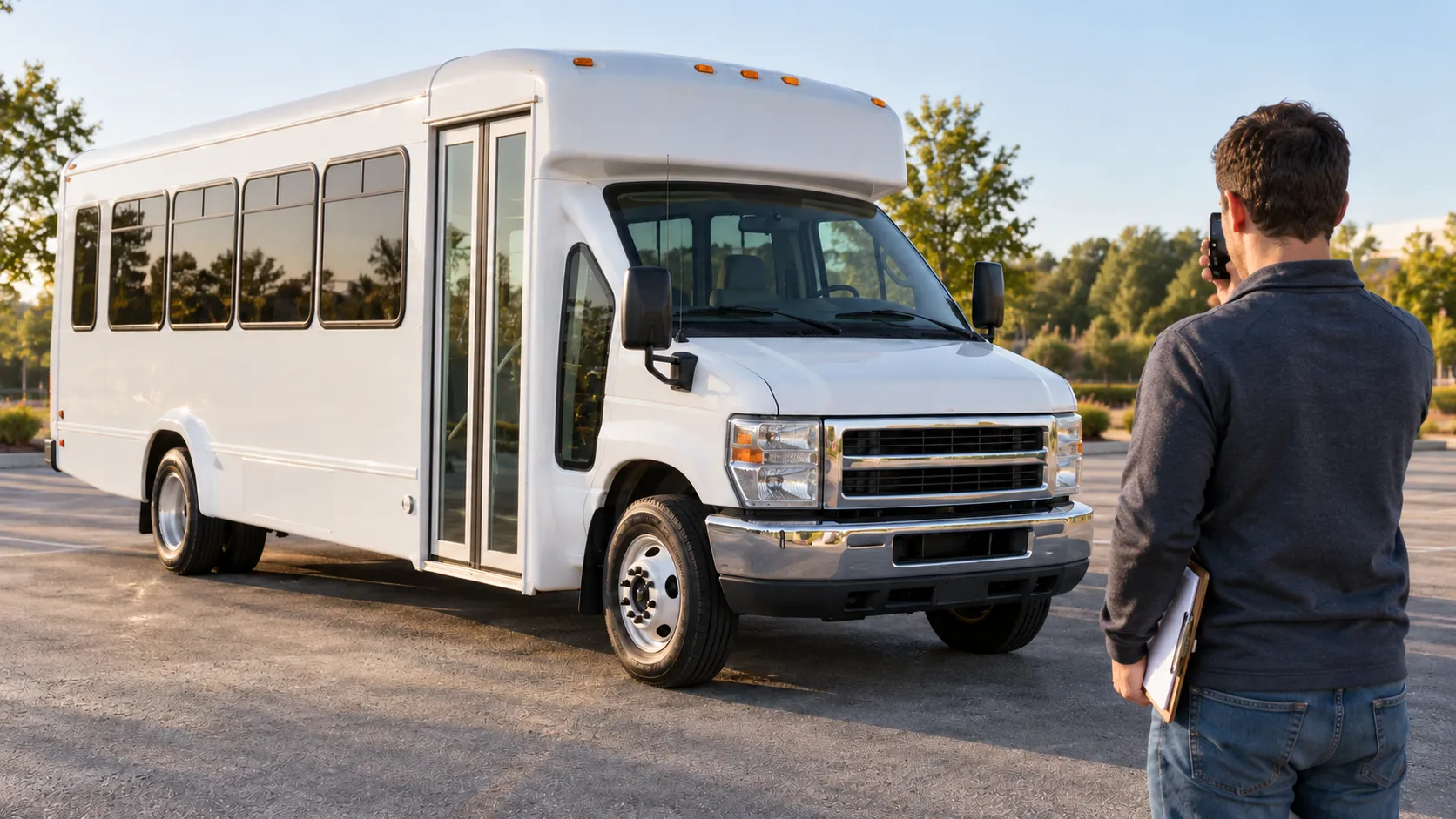
AI-generated illustration, not an inventory photograph. Before signing for delivery, know who to call about each issue.
The inspection finds a problem. The seller agrees to fix it. The bus ships. Somewhere between those three steps, you need a clear answer about who's doing the work and how you'll know it's finished.
Get that answer before dispatch. Then settle two separate questions about arrival day and the weeks afterward. Who handles damage during delivery? Who do you contact if something breaks once the bus is in service?
Turn findings into an agreed repair list
An inspection report tells you what the inspector found. The purchase agreement should identify which findings the seller has agreed to address, who will perform the work and what the price includes.
Our used bus inspection checklist covers the condition review and the records to request. Use those findings to make the repair agreement specific. If the agreement says “fix the air conditioning,” ask what work that includes, how it should perform afterward and how you’ll check it.
Ask for the completion record before the bus leaves. Depending on the work, that could include a dated work order, parts information, photos and a follow-up check by your inspector. Match it to the VIN. If you're buying three buses and one needs a compressor, the paperwork should identify that bus.
The person selling the bus, the shop doing the work and the company delivering it may be different businesses. Know who is responsible for each step and who will resolve a disagreement if the agreed work isn't complete.
Read the coverage before you need it
Ask for any warranty or service contract that applies to the specific bus, including its provider, price, term, exclusions and claim instructions. Confirm whether remaining manufacturer coverage transfers to your purchase and whether your intended use is eligible.
The FTC's explanation of auto warranties and service contracts makes a useful distinction between a warranty and a separately purchased service contract. Its consumer guidance isn't a substitute for the terms of a commercial bus purchase, but the practical questions are worth asking.
Who authorizes a repair? Which shops can do it? Is there a deductible? Does towing require approval? What maintenance records must you keep?
Save the contact information where the person responsible for the bus can find it. If coverage requires authorization before work begins, calling after a shop has finished the repair may create a problem. Have that conversation before approving work.
Agree on the delivery handover
Before shipping, ask who is transporting the bus, what condition documentation they'll provide and how to report damage. Establish when responsibility for the vehicle changes under your agreement. Delivery arrangements vary, so don't assume the seller, transport broker and carrier have the same role.
Request dated photos at pickup and compare the bus with those photos when it arrives. Check the exterior and the agreed repair items as far as you reasonably can. Record visible damage or discrepancies on the delivery paperwork before you sign, and contact the named parties promptly. Keep copies and your own photos.
For an interstate transport company, FMCSA's carrier registration pages provides a starting point for checking its authority. Ask separately about the insurance and claims process for your shipment. Registration by itself doesn't establish what a particular loss would cover.
Give each issue a contact
Before dispatch, you should be able to fill in four lines.
- Inspection finding, who decides whether it becomes agreed repair work.
- Agreed repair, who completes it and supplies the completion record.
- Breakdown after arrival, who handles any applicable coverage claim and authorizes work.
- Delivery damage, who receives the report and explains the claim process.
Keep those contacts with the purchase agreement, inspection report and delivery documents. Your driver or maintenance manager shouldn't have to reconstruct the sales conversation while the bus is waiting at a shop.
Leave time to receive the bus
Build a receiving check into your schedule before the bus carries passengers. If a new contract sets the deadline, use our guide to working backward from the service start date to allow for the work that remains after arrival. That gives your team time to compare the vehicle with the agreed work, review the documents and address discrepancies.
Browse our available bus models, then call 877-287-7253 about the ones that fit your needs. We’ll help clarify who handles inspection, agreed repairs and delivery for each bus, and what remains to be confirmed. We work to keep the purchase moving with clear expectations and timely next steps, so you know what’s happening before the bus reaches you.