 Excellent on Google from verified customers


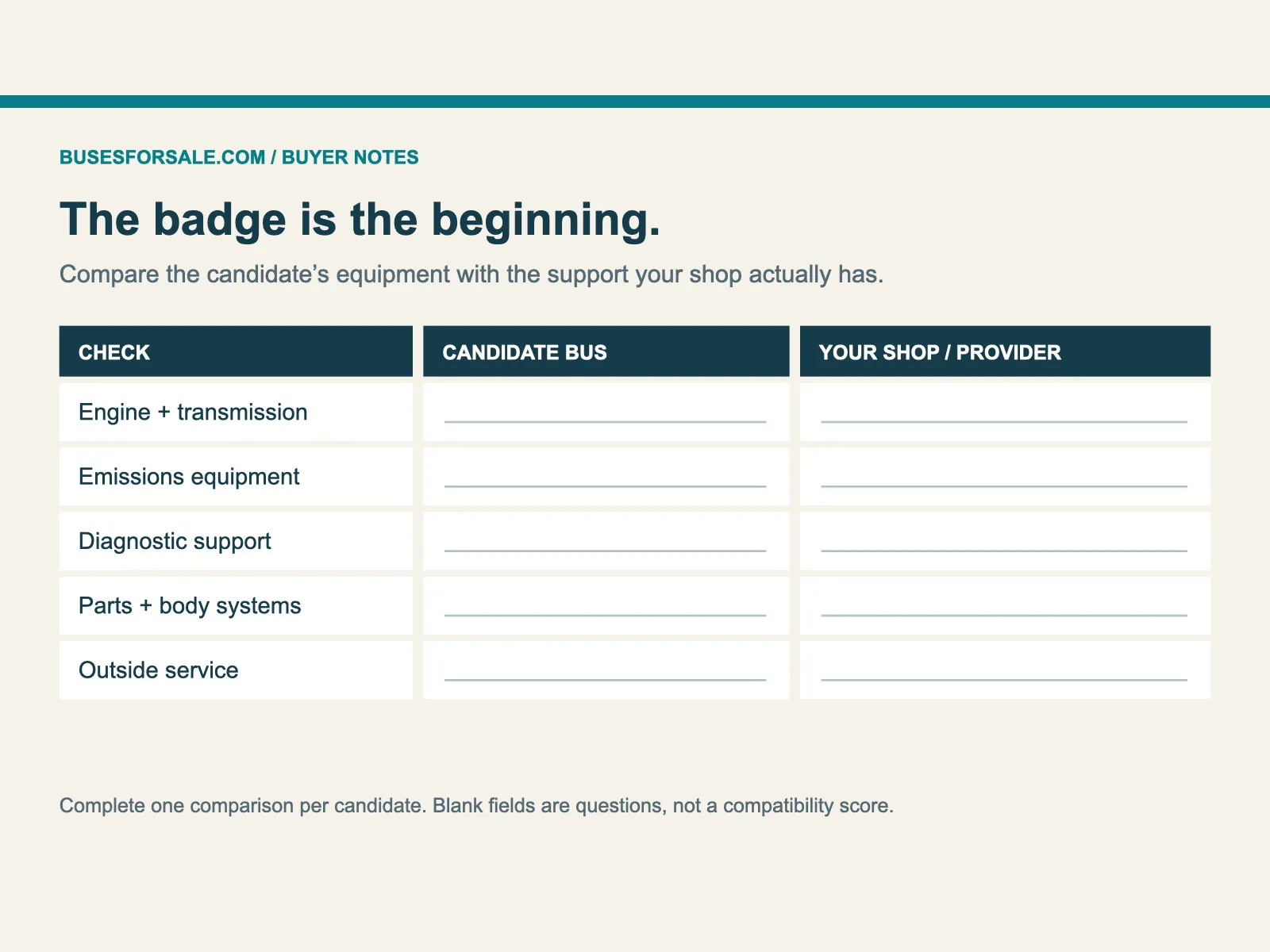
Compare the exact equipment and the support behind it before deciding whether the next bus needs to match the fleet.
A used bus can look like a bargain in the listing photos. The person who has to maintain it may have a few questions before joining the celebration.
Does the shop know that engine? Can its diagnostic tools support the configuration? Who supplies the parts locally? Those questions belong in the purchase discussion while you still have a choice.
Fleet standardization means keeping equipment consistent across the fleet. Matching the fleet can make sense. So can buying a different make. The useful comparison is between the actual equipment you’re considering and the people who’ll keep it working.
Find out what you would be matching
School Bus Fleet’s 2026 maintenance survey reported increased manufacturer diversity among its respondents. It does not establish how every fleet buys.
There are practical reasons to favor common equipment. In School Transportation News’ September 2025 reporting on parts standardization, Eagle County School District fleet manager Chad Eaton described how repeated experience with the same brand simplified inventory and repair work. That is an operator’s experience, not a savings formula for your fleet.
The question for your purchase is more specific. Which components would be familiar, and which would require a different support plan?
Compare more than the name on the body
Use the exact vehicle details rather than the badge as your parts list. Ask for the engine identification and model year, transmission information and relevant build documentation. Have your maintenance provider check the configuration against what it already supports.
Even an engine-family name needs context. Cummins’ 2021 B6.7 school-bus page, for example, describes updates for that emissions generation. The name alone is not a substitute for the applicable service information.
A familiar logo is pleasant. It doesn’t tell you which filter fits.
Our Blue Bird, Thomas and IC comparison covers the broader brand discussion. For this decision, put a specific candidate beside your existing fleet and work through the support questions below.
| Area to compare | Information to request | Question for your maintenance provider |
|---|---|---|
| Engine and transmission | Exact identification and model years | What do we already service? |
| Emissions equipment | Installed configuration and available service records | Can we support this configuration? |
| Diagnostics | Applicable service-tool requirements | Does our current equipment cover this bus? |
| Routine parts | Verified part numbers for the candidate | What is common, and what must be ordered? |
| Body equipment | Door, lift and HVAC identification | Who can maintain each system? |
| Outside support | Suitable service locations and any claimed coverage | What is available locally, and under what terms? |
Don’t fill the last column from memory if the answer controls the purchase. Ask the technician or service provider who will do the work. Confirm any claimed warranty separately, including transferability and exclusions.
Give the unfamiliar bus a fair comparison
A bus that differs from the rest may still have the right configuration and documented condition for the route. Compare what it would actually add to your operation before rejecting it on brand alone.
Would you need a different service arrangement? Does the shop need training or access it does not currently have? Can the supplier support the parts you expect to need? Obtain current quotes where costs matter.
Leave an unanswered question visible instead of assigning it a guessed dollar value.
Repeat the exercise for the familiar candidate. Matching equipment does not erase worn components, missing records or work found during an inspection.
If you outsource maintenance, the same comparison still applies. The relevant shop is your provider’s shop. Our fleet maintenance guide covers the broader ownership planning. Ask about its experience with the candidate and how it would handle work outside its capabilities.
Compare the purchase and the support plan together
Keep the shop’s notes beside the vehicle quote. Add any documented immediate work and the support arrangements you would need. Avoid a numerical score that makes a missing answer look precise.
An independent inspection can help assess the specific bus and identify issues the listing does not settle. Give the inspector your intended use and the concerns raised by your maintenance provider. A matching badge doesn’t replace that condition check. A favorable price doesn’t replace it, either.
Browse the available bus models and inventory at BusesForSale.com. Send us the candidates that interest you, along with the equipment your maintenance provider already supports. We can help clarify listing details and identify questions to take back to the seller.
We want a transparent buying process that keeps moving, with the important questions answered before you commit. Your shop should have a say before the bus arrives.