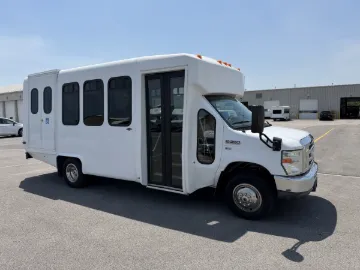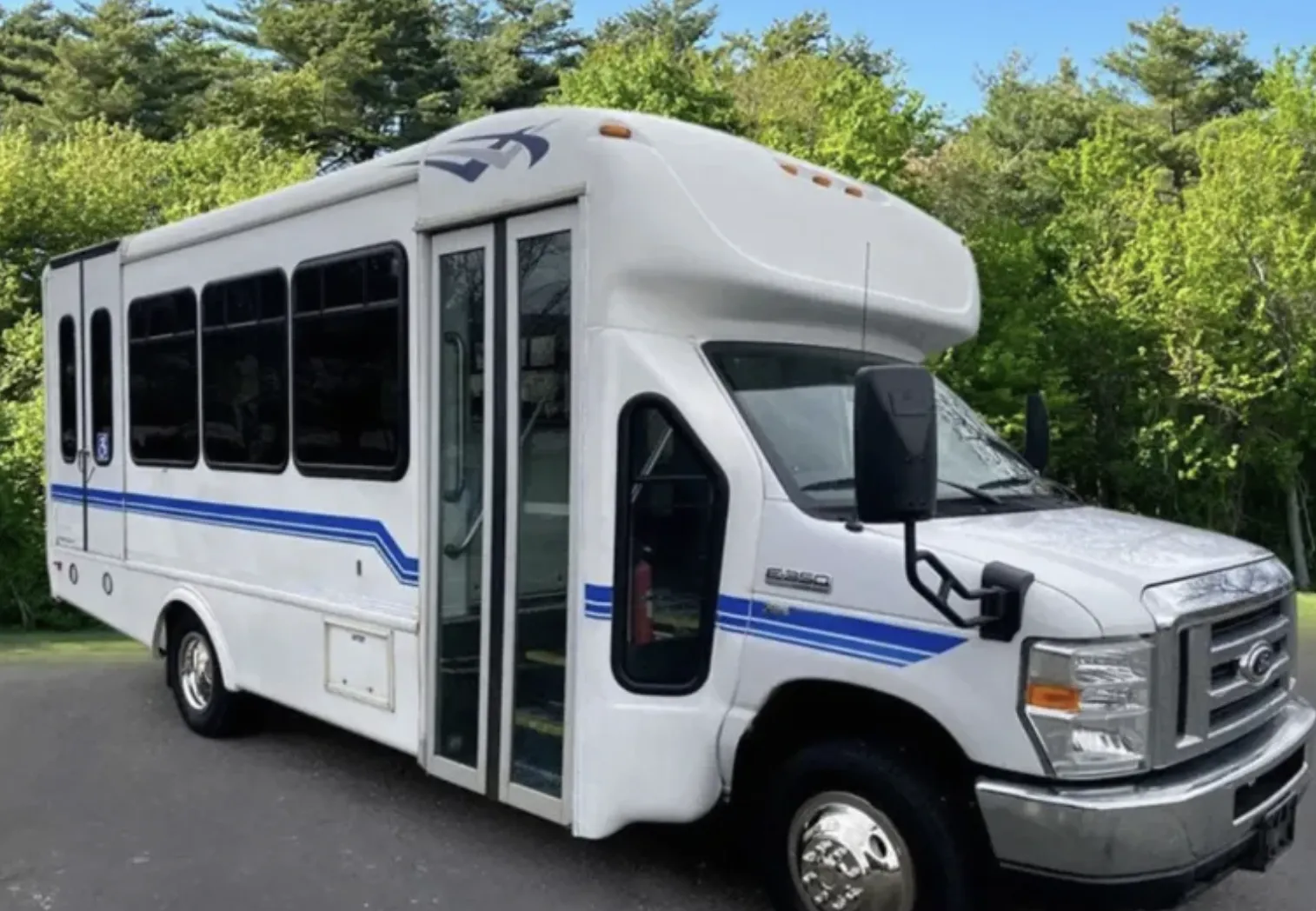
A mini bus seats 8–30 passengers on a van or light-duty chassis — most commonly the Ford E-Series, Ford Transit, or Chevrolet Express. Used units run $10,000–$40,000; new conversion builds start around $50,000. Buses under 26,001 lbs GVWR with 15 or fewer seats do not require a CDL, making them the go-to choice for churches, daycares, senior centers, and small shuttle operators.
Mini Bus Buyer-Fit Matrix
Not every mini bus fits every operation. Use this matrix to match your buyer profile to the right vehicle configuration before you start shopping.
Mini bus buyer type, recommended configuration, budget range, and key consideration:
| Buyer Type | Recommended Configuration | Typical Budget (Used) | Key Consideration |
|---|---|---|---|
| Church / Nonprofit | 12–15-passenger, non-CDL, Ford E-Series or Transit | $12,000–$28,000 | Must stay under 26,001 lbs GVWR and 15 seats to avoid CDL requirement for volunteer drivers |
| Daycare / Youth Program | MFSAB-compliant, ≤15 seats, high-visibility yellow or white | $15,000–$32,000 | MFSAB (Multi-Function School Activity Bus) classification is required for student transport in most states |
| Senior Center / ADA Facility | ADA-equipped, wheelchair lift, 8–12 ambulatory + 2 wheelchair positions | $22,000–$45,000 | Lift capacity (typically 600–800 lbs), Q'Straint or Sure-Lok securement, and kneeling suspension add $8,000–$15,000 to the base cost |
| Airport / Hotel Shuttle | 16–24 passengers, luggage bay or overhead storage, livery finish | $18,000–$38,000 | 16+ passengers trigger CDL requirement; budget for DOT registration and commercial insurance ($3,500–$6,000/year) |
| Charter / Tour Operator | 20–30 passenger, premium interior, climate control, 48V USB charging | $25,000–$55,000 | Amenity level directly impacts day-rate pricing; a well-equipped 24-passenger commands $200–$350 more per charter day |
| School District (supplemental routes) | FMVSS-compliant school bus body, ≤16 passengers, Type A chassis | $20,000–$40,000 | Must meet FMVSS 222 (passenger seating) and state pupil-transport standards — confirm with your state DOE before purchase |
Mini Bus Specifications by Type
Mini buses span a wide range of chassis, body, and capacity configurations. Here is how the four most common types compare on the dimensions that matter most to buyers.
Mini bus type, passenger capacity, approximate length, GVWR class, CDL requirement, and typical used price range:
| Type | Passenger Capacity | Approx. Length | GVWR Class | CDL Required? | Typical Used Price |
|---|---|---|---|---|---|
| Van conversion (Ford Transit / Chevy Express) | 8–15 passengers | 20–24 ft | Class 3–4 (10,001–16,000 lbs) | No — under 26,001 lbs and ≤15 seats | $10,000–$30,000 |
| Cutaway mini bus (Ford E450 / E350) | 14–24 passengers | 24–30 ft | Class 4–5 (14,001–19,500 lbs) | No if ≤15 seats and under 26,001 lbs; Yes if 16+ passengers | $15,000–$40,000 |
| ADA-equipped shuttle (lift-equipped cutaway) | 8–12 ambulatory + 2 wheelchair positions | 25–32 ft | Class 5–6 (16,001–22,000 lbs) | Depends on total capacity — typically no for ≤15 seats | $22,000–$50,000 |
| Mid-size bus (25–30 passengers) | 25–30 passengers | 30–35 ft | Class 6 (19,501–26,000 lbs) | Yes — 16+ passengers require a CDL Class B | $28,000–$60,000 |
CDL rule of thumb: Any vehicle designed to transport 16 or more passengers (including the driver) requires a Commercial Driver's License (CDL) Class B, regardless of weight. If your drivers are volunteers or staff without a CDL, keep your seat count at 15 or fewer.
Types of Mini Buses: Which One Fits Your Operation?
The term "mini bus" covers several distinct vehicle families. Choosing the wrong category — even with the right budget — means you end up with a bus that technically fits but practically fails your operation within 18 months. Here's how to tell them apart.
Ford E450 and E350 cutaway — the workhorse
When you start shopping for a used mini bus, you'll find the Ford E-Series cutaway on more lots than any other chassis. The E450 carries heavier body conversions; the E350 suits lighter van builds. You'll see it wearing badges from Starcraft, Collins, Eldorado, and Diamond Coach. If you're targeting value, a 2014–2018 E450 Starcraft with 90,000–130,000 miles typically lists in the $18,000–$28,000 range. That's solid if the chassis is rust-free and the body conversion has been properly maintained. You get two engine choices: the 6.2L V8 gasoline, which is cheap to service at any shop, and the 6.7L Power Stroke diesel, which returns better fuel economy once you're running high-mileage routes.
Ford Transit — lighter duty, easier to drive
If your drivers aren't experienced with commercial vehicles, the Ford Transit high-roof is where you should start. In the 10–14-passenger configuration, it's narrower than an E450 cutaway — under 7 ft wide — so it parks in standard spaces and most staff adapt to driving it in an afternoon. You're looking at $55,000–$85,000 for new Transit-based builds from Eldorado and Diamond. For used units, 2019–2022 models with 40,000–80,000 miles list between $22,000 and $38,000. If you run a church or daycare and need non-CDL transport that your staff can drive without special training, the Transit is the answer.
Chevrolet Express and G-Series — ADA-ready chassis
If your passengers include anyone using a wheelchair or mobility device, you'll want to look closely at the Chevrolet Express platform. The G3500 and G4500 body-on-frame architecture accommodates under-floor wheelchair lift systems more cleanly than most van-based alternatives. You'll find current examples like the 2026 Chevrolet G3500 ADA Shuttle Bus and the Starcraft Starlite series in the BusesForSale.com inventory. For used ADA-equipped units from 2015–2020, budget $24,000–$42,000 — and set aside an additional $1,200–$2,000 for lift inspection and recertification at the time of purchase. That inspection isn't optional if you're transporting passengers who depend on it.
Mid-size buses (25–30 passengers) — when you've outgrown a mini bus
If your headcount consistently exceeds 24, you've moved out of mini bus territory. At that point, you're looking at mid-size vehicles — the Starcraft Starlite 30 or International IC Bus, for example. Here's what that means for your operation: you'll need a CDL Class B license and commercial insurance, which add $3,500–$6,500 per year to your costs. For airport shuttle operators, charter companies, and school districts running supplemental routes, that's the right trade. For most churches and daycares, you're taking on licensing and insurance obligations you don't need.
For a full breakdown of commercial bus insurance types and what coverage a mini bus operation needs, read our guide: mini bus insurance types and costs explained.
If your operation requires a wheelchair lift or ramp access, see our step-by-step ADA compliance checklist: guide to ADA-compliant buses: what to look for before you buy.
Browse available Ford E450 and E350 mini buses in the BusesForSale.com inventory — inventory is updated daily and includes cutaway builds from Starcraft, Collins, and Eldorado.
See current Ford Transit shuttle bus listings — filter by year and mileage to find the right non-CDL unit for your needs. How much does a used mini bus cost? If you're shopping used, expect to pay $10,000–$40,000 depending on age, mileage, and configuration. A 2014–2018 Ford E450 cutaway with 90,000–120,000 miles will typically list between $18,000 and $28,000. If you need a new build on a Ford Transit or Chevrolet Express, your starting price is around $50,000 — ADA-equipped or premium-interior models can exceed $85,000. Do you need a CDL to drive a mini bus? You need a CDL for any vehicle designed to carry 16 or more passengers, including the driver. If your seat count is 15 or fewer and your GVWR is under 26,001 lbs, you're below the CDL threshold — your staff and volunteers can drive it without a commercial license. That's why most churches, daycares, and senior centers target this configuration. How many miles is too many on a used mini bus? On a Ford E450 or E350 with a well-maintained 6.7L Power Stroke diesel, you shouldn't automatically walk away from 150,000–200,000 miles. These diesel engines on commercial chassis are built to run past 300,000 miles when properly serviced. If you're looking at a gasoline V8 unit, your ceiling is closer to 120,000–150,000 miles. Mileage tells you less than maintenance history and chassis condition. Can you legally live in a converted mini bus (skoolie)? In most states, you can title a converted bus as a recreational vehicle (RV), which opens up campground access and simplified insurance. Before you buy a mini bus for conversion, check your state's RV title requirements — the process varies. Also consider that a mini bus gives you less ceiling height and floor space than a full school bus, which limits your livability options. What should I inspect before buying a used mini bus? Start with the chassis frame — look for rust and weld cracks at the mounting points. Then check all fluid systems (coolant, transmission, brake), the body-to-chassis junction, and interior HVAC. If you're buying an ADA-equipped unit, test the wheelchair lift through a full cycle under load. Request the maintenance log and run a VIN check. A commercial bus mechanic pre-purchase inspection costs $200–$400 and is worth every dollar. What insurance does a mini bus need? You'll need commercial auto liability — your personal auto policy won't cover passengers. For a non-CDL 15-passenger bus used by a church or daycare, budget $1,800–$3,200/year. Add CDL operation, more passengers, or commercial routes, and you're looking at $3,500–$6,500 annually. If your bus has an ADA lift system, ask your insurer about additional riders covering the lift. See our bus insurance guide for a full breakdown. Browse our full inventory of mini buses — updated daily with cutaway shuttles, ADA-equipped units, and non-CDL van conversions from dealers and fleet sellers across the country.Frequently Asked Questions About Buying a Mini Bus
Ready to Find Your Mini Bus?