 Excellent on Google from verified customers


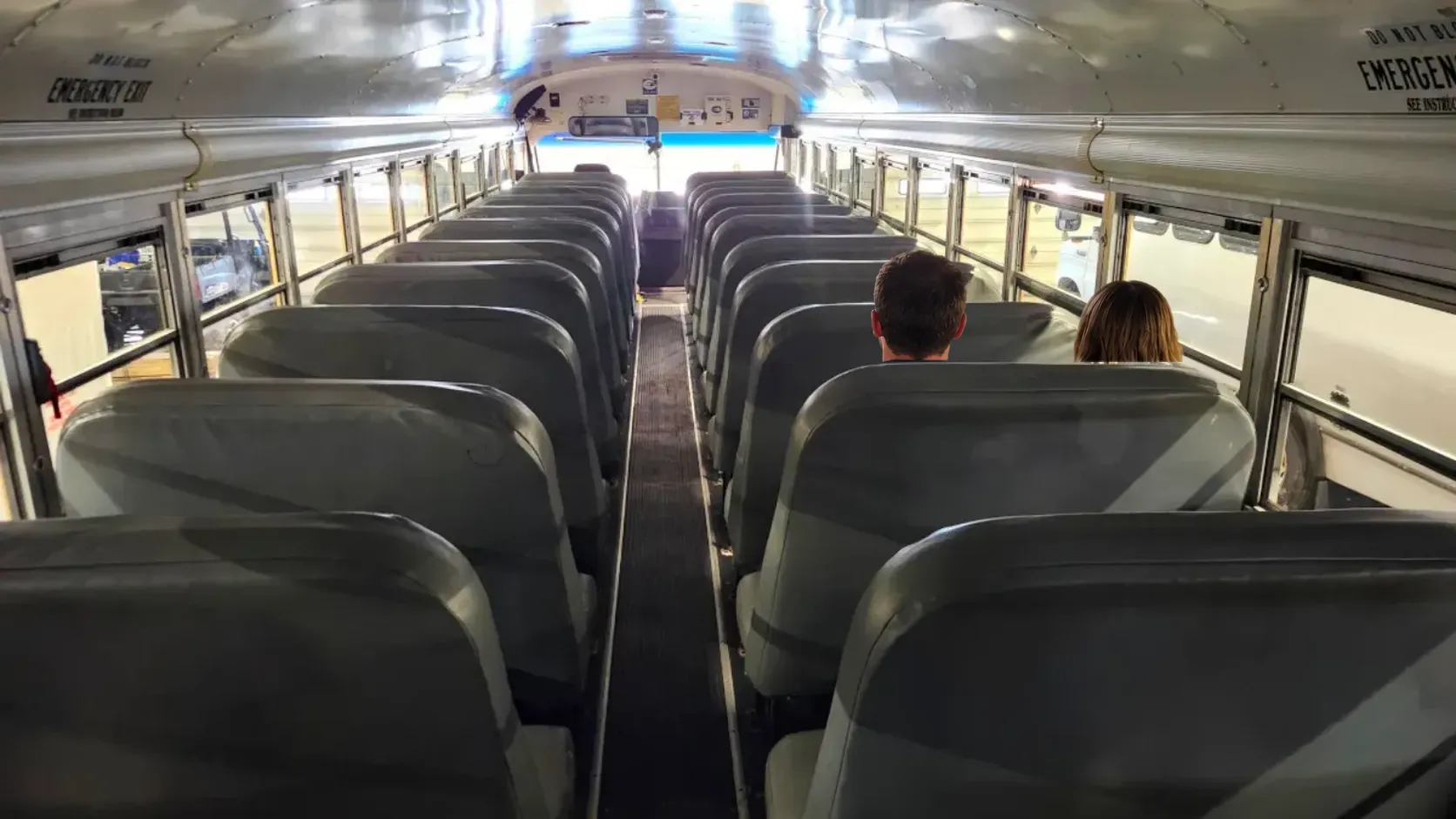
Image: AI-assisted editorial illustration using a real bus interior; not a measured seating assessment.
A listing says 72 passengers. You need to move 50 employees. That sounds like room to spare, until you find out who those 72 passengers were expected to be.
School bus capacity often assumes small children sharing bench seats. The adult count depends on the actual seating layout, the people riding and the bus's limits. Before buying, ask how the listed number was calculated and what the installed seats can accommodate.
Why the number changes
NHTSA explains that manufacturers commonly base capacity on three small elementary students per typical 39-inch bench. Transportation providers generally fit two adult high-school students on that same bench. NHTSA recommends that everyone sit entirely within the seat while the bus is moving.
That helps explain why a school bus can have a much higher advertised count than the number of adults you'd plan to carry. It doesn't establish a standard adult capacity for every school bus.
Where the 72-to-48 calculation comes from
Picture a bus with 12 rows, each containing one three-child bench on each side of the aisle. That's 24 benches. Three children per bench produces a 72-passenger count. Two people per bench produces 48.
That's an illustration of the arithmetic, not a measured bus from our inventory or confirmation that 48 adults can safely and comfortably use a particular bus.
Counting the installed seats matters. A shorter rear bench, a different belt arrangement or space reserved for wheelchairs can change the answer. A school bus fitted with individual passenger seats needs a different assessment from one with school benches.
Ask to see the seats, not another exterior photo
A clear interior walk-through is more useful here than another picture of the hood. We'd ask for views from the front and rear, photographs of any unusual rows, and measurements of the usable bench width and space in front of it.
Then, at the inspection, sit in the positions you'd expect people to use. Check knee room and whether passengers can sit fully on the cushion. Think about the length of the trip and what people will be wearing. A winter coat takes up room too.
Seat belts deserve their own check. Ask which seat model is installed and how its manufacturer intends the seating positions and belts to be used. Counting buckles alone won't answer that.
HSM offers variable-occupancy seating in its 39-inch QS11 model. Check the instructions for whichever seat is installed in the bus you're considering.
If passengers use wheelchairs, ask for the seating count with those positions occupied. Don't add the maximum seated-passenger figure to the maximum wheelchair figure unless the documented layout supports using them together.
For more on seating configurations with wheelchair positions, see our guide to buying used wheelchair-accessible buses.
A useful comparison sheet
Keep the answers with each bus's VIN or stock number, especially when you're buying several.
| Question | What to record |
|---|---|
| What does the advertised count describe? | Children or adults, and whether the driver is included |
| What is installed now? | Bench or individual seats, usable widths, row layout and any seating changes |
| Which positions will you use? | Seats available with wheelchair positions occupied and equipment stored |
| Do the passengers fit? | Full seating support, knee room and the correct restraint arrangement where fitted |
| Does the loaded bus stay within its limits? | Vehicle and axle ratings checked against the planned passenger and equipment load |
There is a weight check as well
A bus can have enough seats and still exceed its weight rating. The driver, passengers and whatever travels with them contribute to the load.
Thomas Built Buses' C2 driver's manual defines maximum loaded vehicle and axle weights and warns against exceeding the gross vehicle weight rating. It also addresses load distribution and explains that weighing the vehicle establishes actual axle loads.
Use a vehicle weighing facility that can measure the axle loads, then compare the loaded weights with the bus's ratings. Headcount alone won't establish that it's within them.
If the answer involves moving or replacing seats, get the proposed layout assessed before buying. HSM, a bus-seat manufacturer, notes that seats are often tested for compliance in particular locations within a specific vehicle. Empty floor space isn't permission to install another row.
Carrying fewer riders also doesn't, by itself, change a bus's designed seating capacity for driver-licensing purposes. Check the licensing requirements for the vehicle and its intended use separately.
For a fleet purchase, check each bus
Three buses with the same model name can arrive with different interiors. Compare the layouts before treating them as interchangeable on your routes.
Suppose you need to carry 50 adults on one departure. A bus whose checked layout accommodates 48 doesn't meet that requirement. You can compare a larger suitable bus, a different seating arrangement or another service plan. It's better to have that conversation while you're choosing vehicles.
Tell the team the adult headcount first
Call BusesForSale.com at 877-287-7253 with the number of adults per trip, how many buses you're considering, and where and when they'll be used. Include wheelchair positions and any equipment that needs to travel.
Tell us what the bus needs to carry. We can start with that instead of a passenger number that may describe a very different group.
Shop by make: Blue Bird buses · Thomas Built buses · IC Bus buses · all used school buses