

150 The Blue Bird Vision is a Type C conventional school bus built on Blue Bird's proprietary chassis in Fort Valley, Georgia. It seats 47–78 passengers and is available with Cummins B6.7 diesel, Ford 7.3L gasoline, propane, or electric powertrains. It's the primary competitor to the Thomas C2 in the Type C segment and has a strong dealer presence near its Georgia manufacturing base. Used units from 2015–2022 list at $12,000–$45,000 depending on configuration and condition. A note on capacity figures: the ranges in this guide are national ratings. States set their own limits — New Jersey, for example, caps Type C and Type D at 54 passengers because the state requires 15 inches per student where the industry rates at 13. Confirm the rule where the bus will run before finalizing a purchase. The Blue Bird Vision is one of two buses you'll compare when you're shopping for a Type C school bus — the other being the Thomas Built Saf-T-Liner C2. Blue Bird has been building school buses in Fort Valley, Georgia since 1927, and the Vision is their current conventional Type C platform. It's a well-engineered bus with a strong safety record and multiple powertrain options — including an electric variant — that gives districts more flexibility than most competitors in the segment. This guide covers the Vision's specifications, powertrain options, key differences from the Thomas C2, what to look for when buying used, and how to connect to live inventory. Blue Bird Vision school bus specification overview: The Blue Bird Vision's powertrain flexibility is one of its genuine competitive advantages over the Thomas C2. Here's how to think about each option for a used purchase. The vast majority of used Vision units you'll encounter run the Cummins B6.7L diesel with Allison PTS transmission. This is the right choice if your district runs routes longer than 30 minutes one-way and your drivers need a powertrain that any commercial diesel shop can service. Emissions considerations are the same as on the Thomas C2: 2010+ units carry DPF/SCR systems that require attention on short-cycle routes. The gasoline Vision uses Ford's 7.3L V8 with a Ford 6R140 transmission. No DPF, no DEF, simpler emissions equipment — and any Ford-trained mechanic can work on it. For smaller districts with limited maintenance infrastructure, the gasoline Vision is worth considering. Fuel cost per mile runs higher than diesel on highway routes, but the lower maintenance overhead often offsets this for operations under 15,000 miles per year. The electric Blue Bird Vision with a 194 kWh battery pack delivers up to 150 miles of range. It's well-suited for fixed suburban routes under 80 miles round-trip with overnight charging. For districts that qualify for federal clean vehicle incentives (EPA Clean School Bus Program), the electric Vision can reach attractive net pricing after rebates. New builds only — you won't find electric Visions in the used market yet. Blue Bird Vision listings — 2017 diesel, 2019 gasoline, 2024 Vision, and more — are available daily in the BusesForSale.com school bus category alongside Thomas C2, IC Bus CE, and Freightliner C2 units. Blue Bird Vision, Thomas C2, IC Bus CE — all Type C configurations. Updated daily. Retired Type C shells, including Blue Bird — diesel, various lengths, condition-graded. How many passengers does a Blue Bird Vision hold? A Blue Bird Vision seats 47–78 passengers depending on body length, seat configuration, and whether a wheelchair position is included. Standard district configurations typically specify 72 or 77 passengers. Shorter Vision builds for smaller districts or activity bus use seat 47–54. The Vision's capacity range is roughly comparable to the Thomas C2, which runs 48–77 passengers. What fuel options does the Blue Bird Vision offer? The Blue Bird Vision is available with four powertrains: Cummins B6.7L diesel (most common in the used market), Ford 7.3L V8 gasoline (lower maintenance complexity), ROUSH CleanTech propane, and an all-electric 194 kWh battery variant with up to 150-mile range. Diesel and gasoline are available on used units; the electric Vision is new-build only and not yet represented in the used market. Is the Blue Bird Vision better than the Thomas C2? Neither is objectively better — the right choice depends on your location and priorities. The Blue Bird Vision has a broader powertrain choice (gasoline, propane, electric) and stronger dealer coverage in the Southeast. The Thomas Resale performance for both buses tends to track local dealer coverage, and parts support more than the brand itself; the Thomas C2's broader parts availability outside Blue Bird's core markets can still be an advantage for buyers outside the Southeast. For most districts, the decision comes down to which manufacturer's dealer network is closer and which your maintenance team already knows. How much does a used Blue Bird Vision cost? Used Blue Bird Vision buses range from $12,000 for older high-mileage units to $45,000 for low-mileage late-model configurations. A 2017 Blue Bird Vision diesel in serviceable condition lists in the $18,000–$28,000 range; a 2024 Blue Bird Vision gasoline represents the upper end of the current used market at $35,000–$45,000. New builds start significantly higher depending on powertrain and specification. Is the Blue Bird Vision good for a skoolie conversion? Yes, though the Blue Bird Vision is less common as a skoolie platform than the Thomas C2, primarily due to lower supply in the pre-2010 no-DEF model years that converters prefer. The Vision's proprietary chassis means some body components require Blue Bird sourcing — less convenient in a remote conversion or live-aboard situation compared to the Freightliner-based Thomas C2. For conversions in the Southeast, where Blue Bird parts availability is strongest, it's a solid platform.Blue Bird Vision School Bus: Complete Buyer's Guide
Blue Bird Vision Key Specifications
Spec Detail Bus type Type C conventional school bus (cab-forward, large hood ahead of driver) Manufacturer Blue Bird Corporation — Fort Valley, Georgia (publicly traded: BLBD) Chassis Blue Bird proprietary chassis (not shared with other OEMs) Engine options Cummins B6.7L diesel; Ford 7.3L V8 gasoline; ROUSH CleanTech propane; 194 kWh electric (zero-emission) Transmission Allison PTS automatic (diesel/propane); Ford 6R140 (gasoline); single-speed (electric) Passenger capacity 47–78 passengers depending on body length and seat configuration GVWR Approximately 29,500–33,000 lbs (Class 6–7) CDL required Yes — CDL Class B with P and S endorsements Safety features Angled hood for improved pedestrian sightlines; optional Bendix ESP stability; backup camera standard on current builds Electric range (EV model) Up to 150 miles on a 194 kWh battery Typically used price $12,000–$45,000 depending on year, mileage, and powertrain Powertrain Options: Which One Is Right for Your District?
Cummins B6.7L diesel — the standard fleet choice
Ford 7.3L V8 gasoline — the low-maintenance alternative
Electric Vision — for districts with charging infrastructure
What to Inspect on a Used Blue Bird Vision
Browse Blue Bird Vision Inventory
School buses
Skoolie conversions
Frequently Asked Questions: Blue Bird Vision School Bus
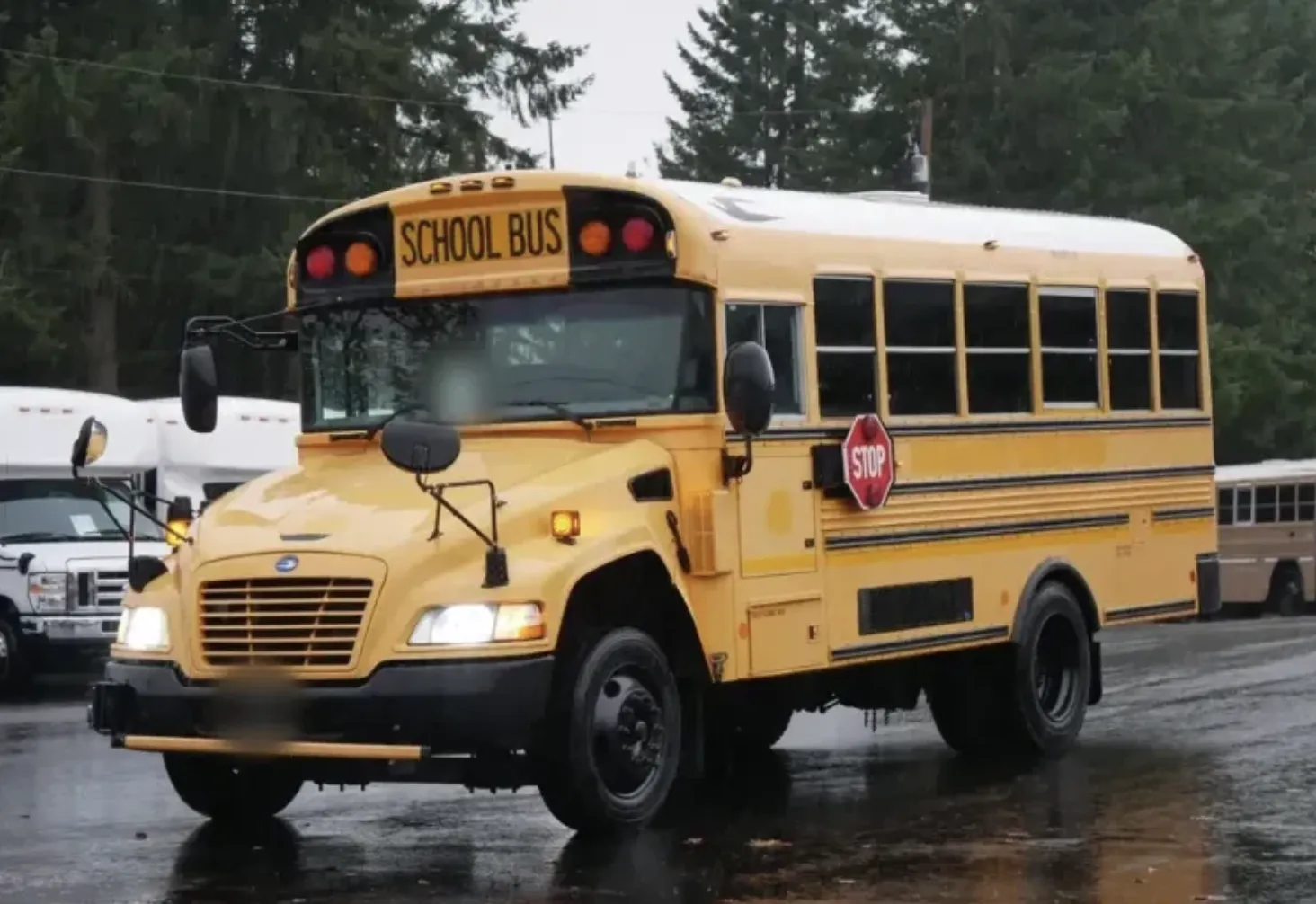
Blue Bird Vision School Bus
Table of Contents
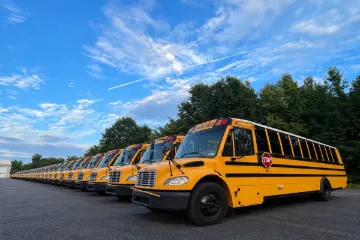
10 Matching Buses 2011 Thomas C2 77P
Ten Matching used school buses that were recently retired from daily school bus fleet use. These buses are matching units from the same fleet. 2011 Freightliner Thomas C2 Saf-T-Liner 77-81 Passenger full size yellow school buses. These buses are in stock now and ready wiuth no delay. We ship nationwide and worldwide. Diesel powered with tinted glass and power entry doors. This is a perfect group of buses for any large job site, construction company, data center project, private school, church organization or any fleet company interested in providing large group transportation options.
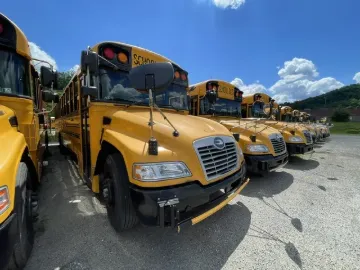
20 Matching 2017 Blue Bird Vision 72P
20 Matching Bus Package Deal. These buses are fresh from daily school bus fleet use and ready to get back to work. These are matching buses from the same fleet. 2017 Blue Bird Vision full size 72-Passenger School Buses with Cummins Diesels, air brakes, air doors and more. These buses are in stock now and ready to ship with no delay. They are perfect for large job sites, data center buses, employee transport, public schools, private schools and more.
We ship nationwide and worldwide.
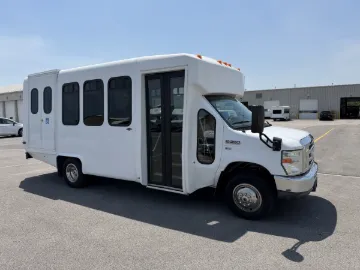
2014 Ford E350 Shuttle Bus ADA
Meet the 2014 Ford E350 Shuttle—a versatile, fleet-ready solution designed for shuttle service, guest transport, and short-haul routes. With seating for 12 passengers plus 2 wheelchair positions, this ADA-compliant bus ensures every rider enjoys a comfortable and safe journey. The Braun wheelchair lift makes accessibility effortless, catering perfectly to retirement communities, hospital systems, hospitality groups, and airport transport operators. Passengers benefit from amenities like rear auxiliary heat and AC for climate comfort, electric entry door for smooth boarding, and vinyl seats with armrests and aisle grabs for added stability.
Built on the renowned Ford E350 chassis, this shuttle bus is engineered for reliability and ease of maintenance. Ford’s reputation for durability and performance makes it a trusted choice for shuttle fleets nationwide. The Diamond body combines practical design with lasting value, ensuring your investment serves your team and riders for years to come.